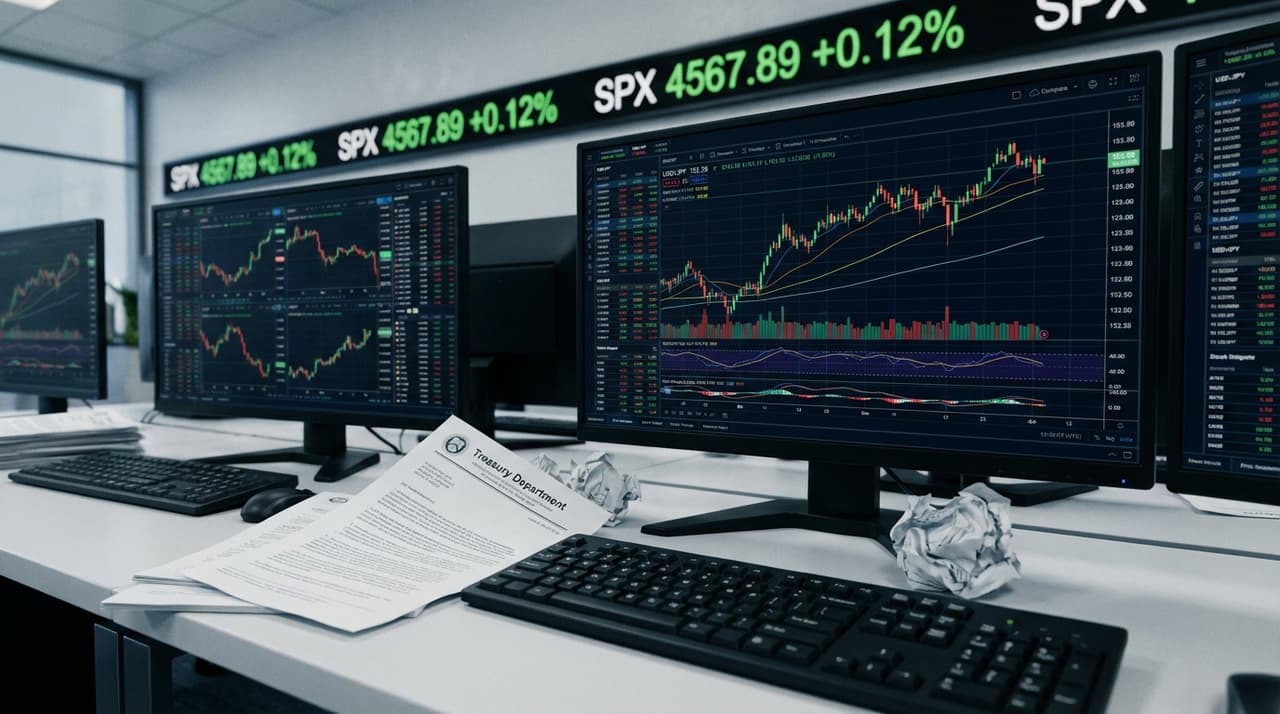
- The US dollar gained 0.9% against the yen to 153.55 following Treasury Secretary Scott Bessent's affirmation of a strong dollar policy.
- Bessent's aggressive deregulatory agenda, including plans to free $2.5 trillion in bank lending capacity, is boosting market confidence in US economic growth.
- The move pressures yen-funded carry trades and aligns with Bessent's history of profitable currency bets, such as his $1.2 billion yen-short profit in 2013.
Efforts to bolster the US economy through financial deregulation have hit a new milestone, with Treasury Secretary Scott Bessent's recent statements reinforcing a strong dollar policy. According to people familiar with the matter, this stance contributed to the dollar's 0.9% rise against the yen, reaching 153.55 in late trading. The move echoes Bessent's broader agenda to prioritize economic growth over prophylactic regulations, a shift detailed in his December 2025 annual report letter as chair of the Financial Stability Oversight Council—the first such letter since 2011.
Bessent has outlined aggressive plans to free up $2.5 trillion in bank lending capacity, reform rules on debt reliance, modernize money laundering guidelines, and encourage AI use in banking. In a recent public statement, he emphasized that "regulatory stability and growth are key drivers for institutional investors," aligning with his October 2025 "community bank comeback" agenda aimed at countering the loss of 3,600 community banks since 2010. This includes regulatory tailoring, capital relief, and AML/CFT modernization, with recent initiatives like FinCEN investigations and training in Minnesota to combat fraud.
Market participants interpret these moves as supportive of dollar strength, given their potential to enhance lending for housing, AI, and crypto sectors. The strong dollar gain versus the yen is putting pressure on yen-funded carry trades and export competitiveness in Japan, amid US capital arbitrage reforms that favor traditional bank lending over nonbanks. Bessent's coordination with Federal Reserve, FDIC, and OCC regulators under the Trump administration is more intense than prior Treasury involvement, according to sources close to the discussions.
Critics, however, warn of risks. Nellie Liang of Brookings noted the emphasis shift in regulatory priorities, while Graham Steele of Stanford cautioned about subordinated risk management. Without adequate checks, increased leverage from expanded lending could erode financial stability, though stakeholders like banks and consumers may benefit from cheaper credit. A March 2025 House Financial Services letter congratulated Bessent as FSOC chair, highlighting the political support for his deregulatory push.
Looking ahead, further dollar gains are possible as deregulation signals growth, with community bank reforms and capital parity expected to boost lending in the short term. Long-term, experts predict a focus on economic expansion but raise concerns about stability erosion if AI and crypto financing expand unchecked. Bessent, a 40-year macro investor with a history at Soros Fund Management, has built his expertise on such currency dynamics, and his current policies reflect a continuation of that strategic approach.
In related developments, banking regulators have ended climate and reputational risk policies, aligning with Bessent's agenda, and FSOC coordination on examiner compliance is ongoing. The dollar's rise underscores the global impact of US policy shifts, with implications for international investors and markets.