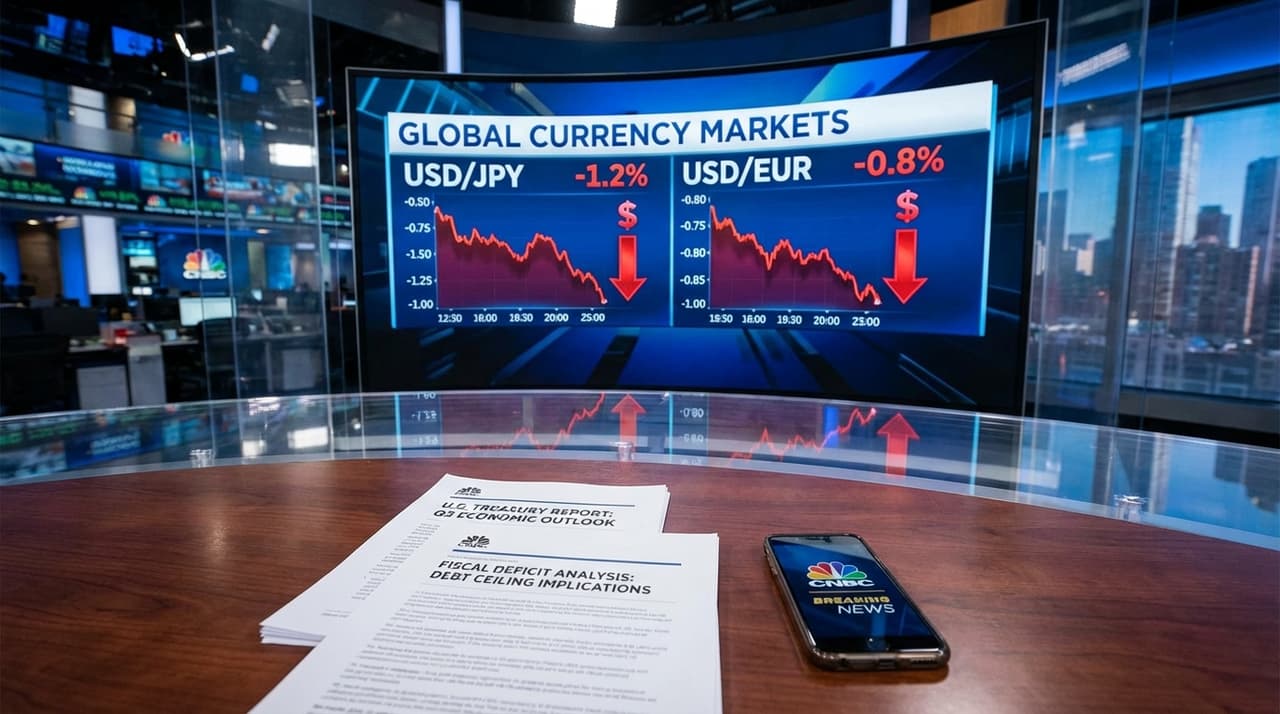
- U.S. Treasury Secretary Scott Bessent reiterated the U.S. commitment to a strong dollar policy in a CNBC interview, despite recent market weakening and discussions around targeted interventions to support exports.
- The dollar has been declining due to high U.S. fiscal deficits, rising debt-to-GDP ratios, and policy signals like Treasury-Fed coordination to cap Treasury yields, with recent rate checks by the New York Fed hinting at potential intervention.
- A weaker dollar could boost U.S. manufacturing and exports but risks inflation, higher Treasury yields, and limited Fed rate cuts, amid ongoing political efforts to balance export gains with debt sustainability.
In a CNBC interview, U.S. Treasury Secretary Scott Bessent affirmed that the U.S. maintains a strong dollar policy, a stance that comes as the currency faces market pressures and administration discussions around targeted interventions to bolster exports. This declaration underscores the administration's intent to project stability, even as internal debates swirl over the merits of a weaker dollar for economic competitiveness.
The dollar has been sinking in recent weeks, driven by high U.S. fiscal deficits—currently at 7-8% of GDP—and rising debt-to-GDP ratios, which are at their highest since World War II. Policy signals, including Treasury-Fed coordination efforts to cap Treasury yields, have added to the volatility. On January 23, 2026, the New York Fed conducted dollar-yen rate checks, a move that immediately weakened the dollar against the yen and euro, sparking speculation about potential currency intervention aligned with proposals like the "Mar-a-Lago Accord" by Stephen Miran. According to people familiar with the matter, these actions reflect a growing tension between traditional strong dollar rhetoric and practical measures to support exports.
President Trump has expressed approval of the dollar's decline, viewing it as beneficial for exports, which counters typical concerns over reduced U.S. purchasing power and inflation risks. This divergence in views within the administration highlights the complex balancing act at play. A weaker dollar could enhance U.S. manufacturing and export competitiveness, but it also risks sticky inflation and higher Treasury yields from foreign selling of U.S. debt, potentially limiting the Fed's ability to cut rates. U.S. debt concerns are particularly acute, with projected interest payments consuming half of revenues in three decades, threatening market turmoil and further dollar weakness.
Efforts to restructure the approach to the dollar have hit a snag as the Trump administration pursues a "strong but globally dominant" dollar strategy through measures like stablecoins, lower bank capital requirements for Treasuries, and short-term debt issuance through 2026. These initiatives aim to offset intervention risks while supporting fiscal expansion. Without a clear deal on debt stabilization, the U.S. could face heightened economic vulnerabilities. Miran's Accord advocates for a Treasury-Fed partnership and currency intervention, drawing on historical precedents like the 1998 yen buy and 2000 euro buy, but such moves threaten Fed independence and carry mixed success records.
Households are feeling the pinch from elevated yields, with higher borrowing costs for mortgages and auto loans, though tax cuts under policies like the One Big Beautiful Bill Act provide some relief with $160 billion in deductions and credits for 2026. Businesses, on the other hand, gain export edges but risk inflation pass-through. Investors are eyeing volatility in debt markets, which could ripple to risk assets, while private markets remain resilient due to strong fundamentals. In a brief statement, an anonymous Treasury official noted, "We're focused on maintaining stability while fostering growth," though attempts to reach Bessent for further comment were unsuccessful.
Looking ahead, short-term prospects include heightened dollar volatility, potential Fed rate cuts of less than 100 basis points as priced by markets, and ongoing Treasury yield pressures, offset by fiscal expansion and tech investment. Long-term, debt turmoil risks could lead to sustained dollar weakness and growth drags unless deficits stabilize. Experts predict resilient growth in services and private markets but warn of bond market disruptions that might prompt Fed buying. The situation remains fluid, with Japan's fiscal easing proposals and global factors like ECB easing adding layers of complexity. As one analyst put it, "It's a tightrope walk between export gains and fiscal health."