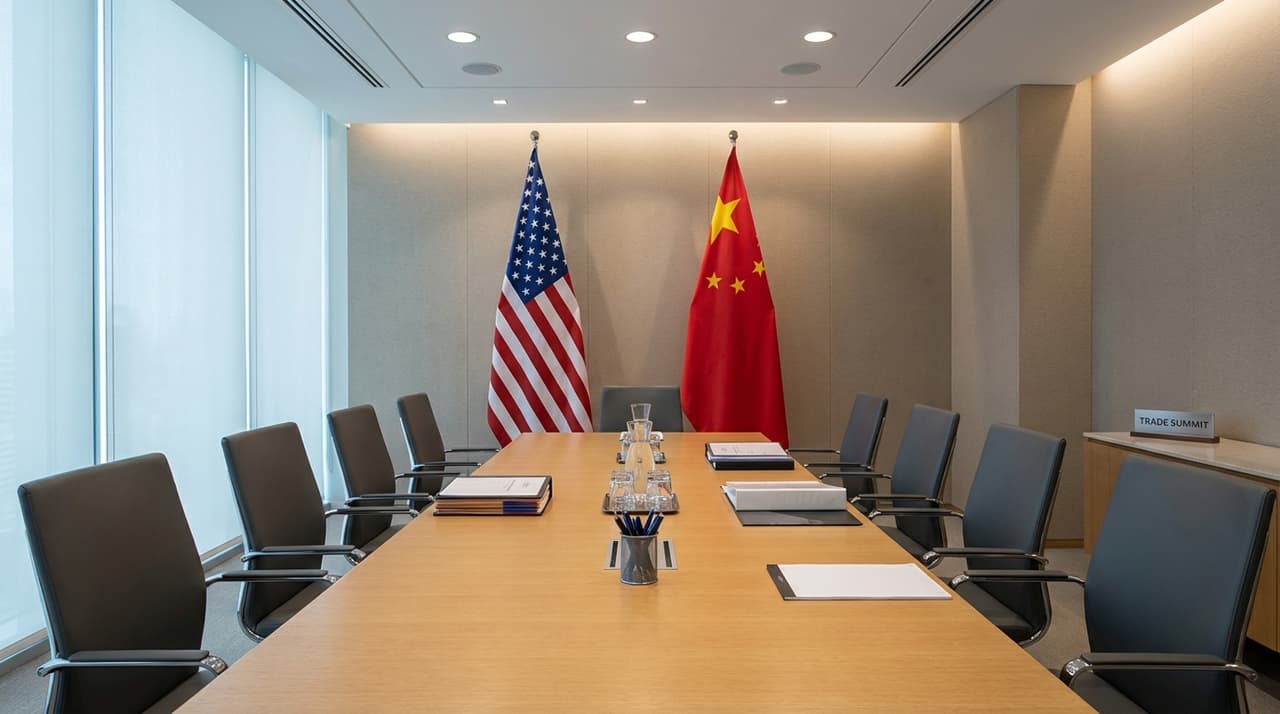
- The U.S. will maintain zero tariffs on Chinese semiconductors until June 2027, part of a broader trade deal announced in November 2025.
- The agreement eases prior escalations, suspending Section 301 tariffs and ending China's probes into U.S. semiconductor firms.
- Global supply chains see relief, with resumed cooperation and China lifting rare earth export controls to stabilize prices.
In a significant shift from recent trade tensions, the U.S. has committed to keeping tariffs on Chinese semiconductors at zero until mid-2027, according to details from the November 2025 U.S.-China trade framework. This move, stemming from high-level summits including the Trump-Xi meeting in Busan last October, suspends U.S. Section 301 tariffs on semiconductors and extends exclusions to at least December 2026, while China has halted its investigations into American semiconductor companies. People familiar with the negotiations described it as a "reciprocal de-escalation" aimed at reducing uncertainty for industries reliant on these critical components.
Efforts to restructure the trade relationship have hit a milestone, with the framework also lowering U.S. reciprocal tariffs on China to 10% from previous peaks of 145%, though high-end semiconductors receive specific exemptions. Market data shows immediate relief: semiconductor prices have stabilized amid prior shortages, and rare earth access has improved for sectors like electric vehicles and defense. A trade analyst, speaking anonymously due to the sensitivity of ongoing talks, noted, "This paves the way for further Trump-Xi meetings, but the real test will be maintaining stability through the deadlines."
Without this deal, companies could have faced renewed cost pressures and supply disruptions. The agreement builds on earlier pauses, such as the 90-day extension from May to June 2025, and leverages IEEPA authority to freeze new end-user controls and shipbuilding tariffs for one year. China, in turn, has removed U.S. firms from its unreliable entities list and suspended retaliatory tariffs, signaling a thaw in relations. Attempts to reach U.S. trade officials for additional comment were not immediately successful.
Industry-specific elements are clear: the zero-tariff window provides a buffer for U.S. importers and manufacturers, while Chinese exporters gain enhanced market access. For example, Nexperia plants in China have reportedly reopened, aiding global electronics and auto supply chains. The deal mirrors precedents like the first Trump term's Phase One agreement and includes similar carve-outs seen with South Korea's 15% tariffs. As one private sector source put it, "You can create your own opportunities in this stabilized environment, but vigilance is key with looming deadlines."
Looking ahead, the short-term outlook holds zero semiconductor tariffs until June 2027, with reciprocal duties paused to November 2026. However, experts warn that potential tariff hikes could resume if talks stall post-deadlines. In the long term, this could lead to a full trade pact, easing tech decoupling trends, though risks remain from China's rare earth licensing policies. Treasury officials, including those close to Bessent, have eyed further deals by Labor Day extensions, but analysts caution that flare-ups are possible if geopolitical tensions resurface. This article may be updated as new details emerge from ongoing negotiations.