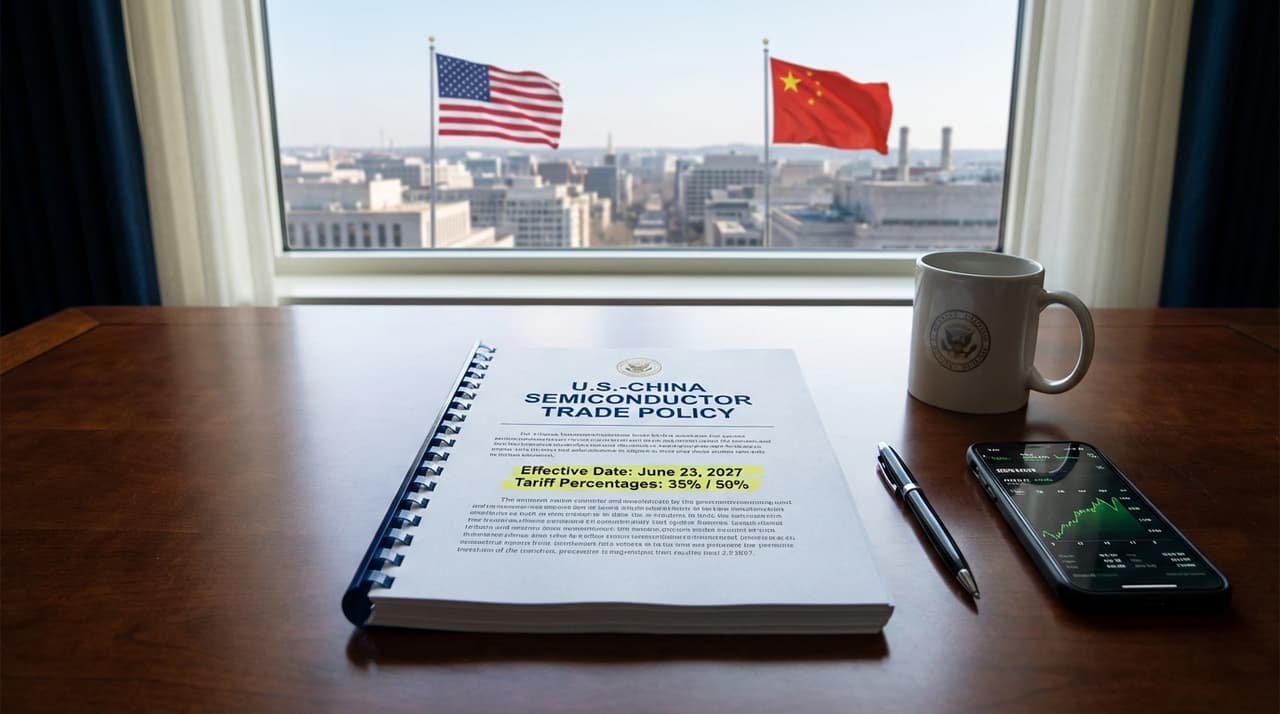
- The U.S. will impose new tariffs on Chinese semiconductor chips beginning June 23, 2027, ending a current zero-duty period.
- This move represents a significant shift in trade policy following months of U.S.-China negotiations.
- The delayed implementation allows time for continued talks, with tariffs serving as leverage for Chinese compliance on trade commitments.
A Strategic Shift in Semiconductor Trade
The United States will impose new tariffs on Chinese semiconductor chips starting June 23, 2027, according to the U.S. Trade Representative. This decision marks a departure from the current zero-duty period and reflects ongoing efforts to address trade imbalances in strategically critical technology sectors. The announcement comes after months of negotiations between the two economic powers, with the delayed implementation date providing a window for further discussions.
Efforts to restructure trade relations have hit a snag, with the tariff announcement signaling potential escalation if agreements aren't upheld. According to people familiar with the matter, the June 2027 deadline aligns with broader framework agreement timelines established during recent high-level meetings. Without continued progress on Chinese commitments regarding rare earth minerals and technology cooperation, these duties will take effect as scheduled.
Negotiation Dynamics and Market Implications
Market participants are closely watching how this development might affect global semiconductor supply chains. The temporary zero-tariff period through June 2027 appears designed to incentivize continued cooperation, with tariffs serving as leverage should negotiations falter. This approach follows the Trump administration's broader "reciprocal tariff" strategy, which adjusts duties based on perceived trade imbalances.
Industry sources indicate that semiconductor manufacturers are already evaluating contingency plans. "The delayed implementation gives companies time to adjust their supply chains," said one executive who requested anonymity due to the sensitivity of ongoing trade talks. Attempts to reach representatives from major semiconductor trade associations for additional comment were unsuccessful by publication time.
Looking Ahead
The semiconductor sector has been central to U.S.-China trade tensions because these components are critical in electronics and represent strategically important technology. The tariff decision suggests that without continued progress on Chinese commitments regarding rare earth minerals, technology cooperation, and other trade issues, duties on semiconductors will take effect as planned.
Industry stakeholders should monitor ongoing bilateral negotiations and statements from U.S. Trade Representatives for any changes to this timeline. The path forward remains uncertain, but the June 2027 deadline creates a clear timeframe for resolving outstanding trade concerns in this vital sector.