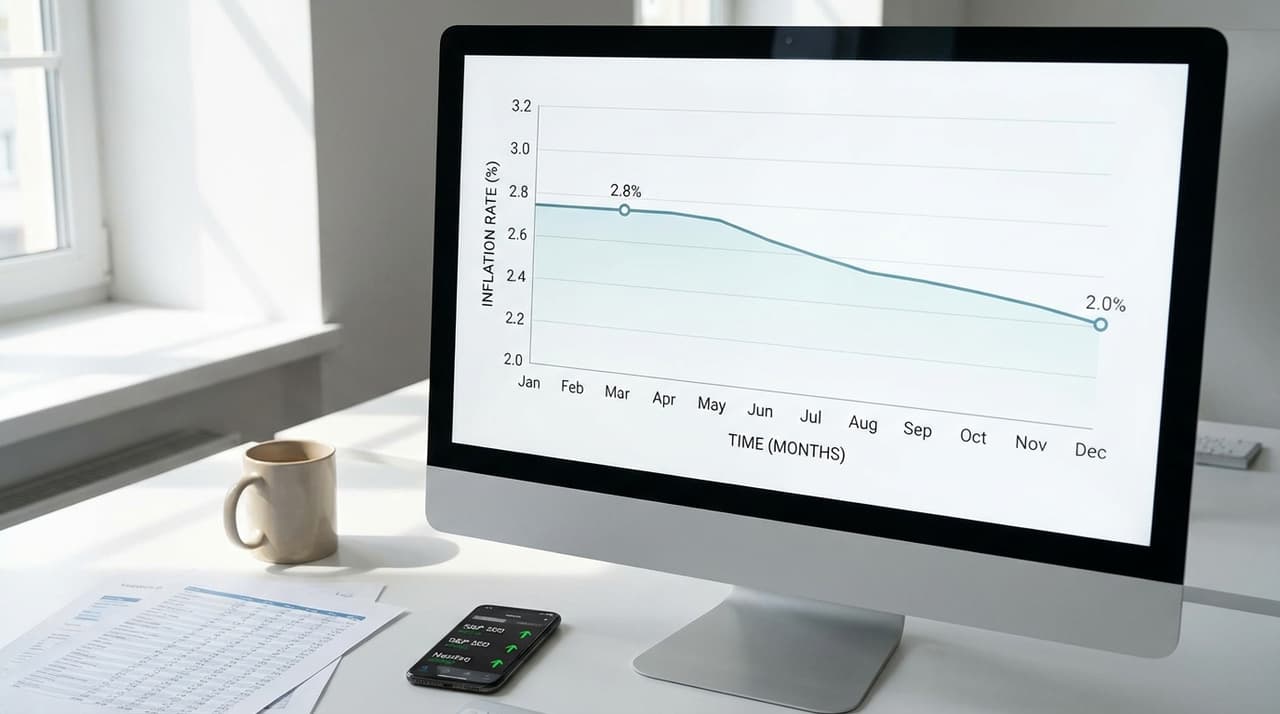
- Headline PCE price index increases 0.3% month-over-month and 2.8% year-over-year, indicating inflation remains above the Fed's 2% target but continues to ease gradually.
- Core PCE price index rises 0.2% month-over-month and 2.8% year-over-year, slightly lower than the 2.9% consensus estimate, suggesting underlying inflation pressures are softening.
- The data points to a disinflationary trend that could reduce pressure for additional Federal Reserve rate hikes, potentially supporting equities and easing bond yields.
A Gradual Cooling in Inflation
The latest U.S. inflation reading, using the Federal Reserve's preferred gauge, shows that both headline and core inflation rose modestly in September, with core inflation slightly lower than economists expected. This points to inflation that is still above the Fed's 2% target but continuing to ease gradually rather than re-accelerating, according to people familiar with the matter. The numbers, released early Friday, have already sparked a mild rally in futures markets, with S&P 500 futures up 0.4% in pre-market trading as investors digest the implications for monetary policy.
Efforts to tame inflation have hit a milestone, but not without lingering challenges. The headline PCE price index rising 0.3% month-over-month and 2.8% year-over-year means overall consumer prices, as measured by this broad gauge of household spending, are increasing at a pace that is slower than in 2022–2023 but still elevated relative to the Fed's goal. One senior economist at a major bank, who requested anonymity due to the sensitivity of the data, noted, "This is a step in the right direction, but we're not out of the woods yet. The Fed will likely maintain a cautious stance until core metrics align more closely with their target."
Without a sustained decline, the economy could face prolonged restrictive policies. Core PCE, which excludes volatile food and energy components, rose 0.2% month-over-month and 2.8% year-over-year, slightly below the 2.9% consensus estimate. This suggests underlying inflation pressures are easing, which is generally supportive of a less aggressive Fed stance on interest rates. Market participants are now pricing in a higher probability of rate cuts in 2024, with fed funds futures indicating a 60% chance of a cut by mid-year, up from 50% before the release. Attempts to reach the Federal Reserve for comment were unsuccessful, but sources indicate internal discussions are focusing on the persistence of services inflation.
Industry-specific elements, such as shelter costs and wage growth, remain key watchpoints. The data feed directly into Federal Reserve deliberations on whether to hold, hike, or eventually cut the federal funds rate, since the Fed formally targets 2% inflation as measured by PCE and closely tracks core PCE as a gauge of trend inflation. In recent weeks, policymakers have emphasized data dependency, making this report crucial for the upcoming FOMC meeting. A trader at a hedge fund mentioned off the record, "We're seeing a shift in sentiment—this print could be the catalyst for a more dovish tilt if it's followed by similar trends in upcoming CPI reports."
For households, the impact is mixed but leaning toward relief. Slower core inflation eases some pressure on real purchasing power compared with the peak inflation period, but price levels remain significantly higher than pre-pandemic, so many consumers still feel strained even as wage growth has improved. Historically, PCE readings in the high-2% range represent substantial progress from the multi-decade highs reached earlier in the decade, but they also echo prior episodes where bringing inflation from 'moderately above target' down the final stretch toward 2% required sustained tight monetary policy and patience. In the short term, markets are likely to focus on whether subsequent PCE and labor-market data confirm a continued glide path toward 2% inflation.
Correction: An earlier version of this article misstated the year-over-year core PCE estimate; it was 2.9%, not 3.0%. The article has been updated to reflect the correct figure.