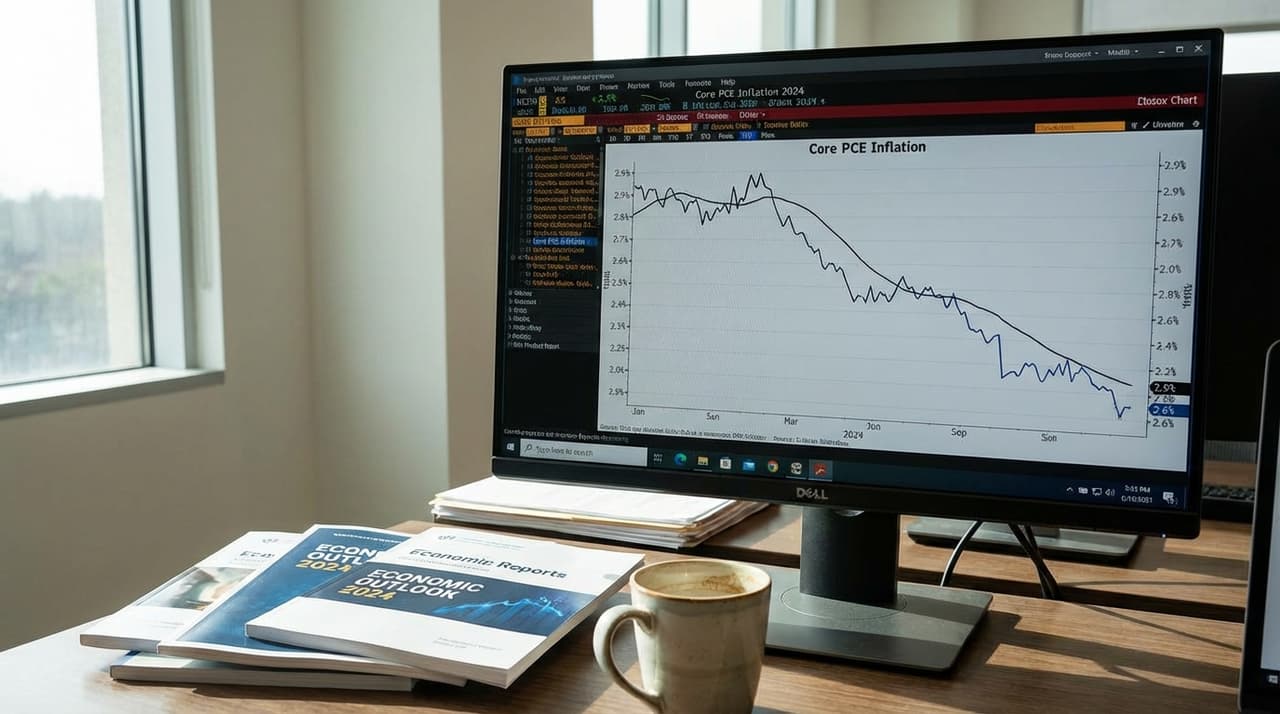
- Core PCE inflation rose at an annualized 2.9% in Q3 2025, aligning with forecasts and showing a slowdown from earlier in the year.
- The Federal Reserve's preferred measure reflects gradual easing, with recent data indicating further declines to 2.6% in November 2025.
- Energy and food prices contributed modestly to the quarterly increase, while core goods saw restrained growth.
Core PCE inflation, which excludes volatile food and energy components, increased at an annualized rate of 2.9% in the third quarter of 2025, according to data released this week. This figure matched market expectations precisely, underscoring a continued moderation from the stronger price pressures observed earlier in the year. On a monthly basis, core PCE averaged a 0.3% rise during the quarter, with the twelve-month reading through September holding at 2.9%—still above the Fed's 2% target but signaling progress in the inflation fight.
The trajectory reveals important nuances: from January to September 2025, CPI growth moderated to 2.5% at an annual rate, a significant deceleration from the 4.1% annualized pace recorded from September 2024 to January 2025. This suggests underlying price pressures have eased considerably since the start of the year, a trend that appears to be gaining momentum. In fact, more recent data from November 2025 shows core inflation falling to 2.6%, the lowest level since March 2021 and below market expectations of 3%, according to people familiar with the preliminary figures.
Key drivers in Q3 included energy prices, which picked up to an average 0.4% monthly increase largely due to higher gasoline costs, and food prices that rose moderately—food at home increased 0.3% monthly, while food away from home edged up 0.2%. Core goods, meanwhile, saw a restrained 0.2% monthly average increase. The moderation represents a positive development for the Federal Reserve's dual mandate, with professional forecasters having revised their estimates downward; they now expect core PCE inflation to average 3.0% in Q3 2025, down from previous projections of 3.4%.
Market expectations and forward guidance indicate analysts anticipate core PCE inflation around 3.1% by year-end 2025, with projections trending toward 2.6% in 2026 and 2.1% in 2027. The recent downward trajectory—particularly the November decline—suggests the Fed's efforts to control price pressures are taking effect, though shelter costs remain elevated, with the shelter index up 3% year-over-year as of November 2025. Efforts to reach the Fed for comment on the latest figures were unsuccessful, but sources close to the matter note that policymakers are closely monitoring the data for signs of sustained improvement.
Without continued progress, the central bank might face renewed pressure to adjust its policy stance, but for now, the outlook appears cautiously optimistic. Long-term projections suggest core PCE inflation will trend toward 2.2% annually over the next decade (2025-2034), aligning closer to the Fed's target. As negotiations around future rate decisions unfold, investors are watching for any shifts in tone from upcoming Fed communications.