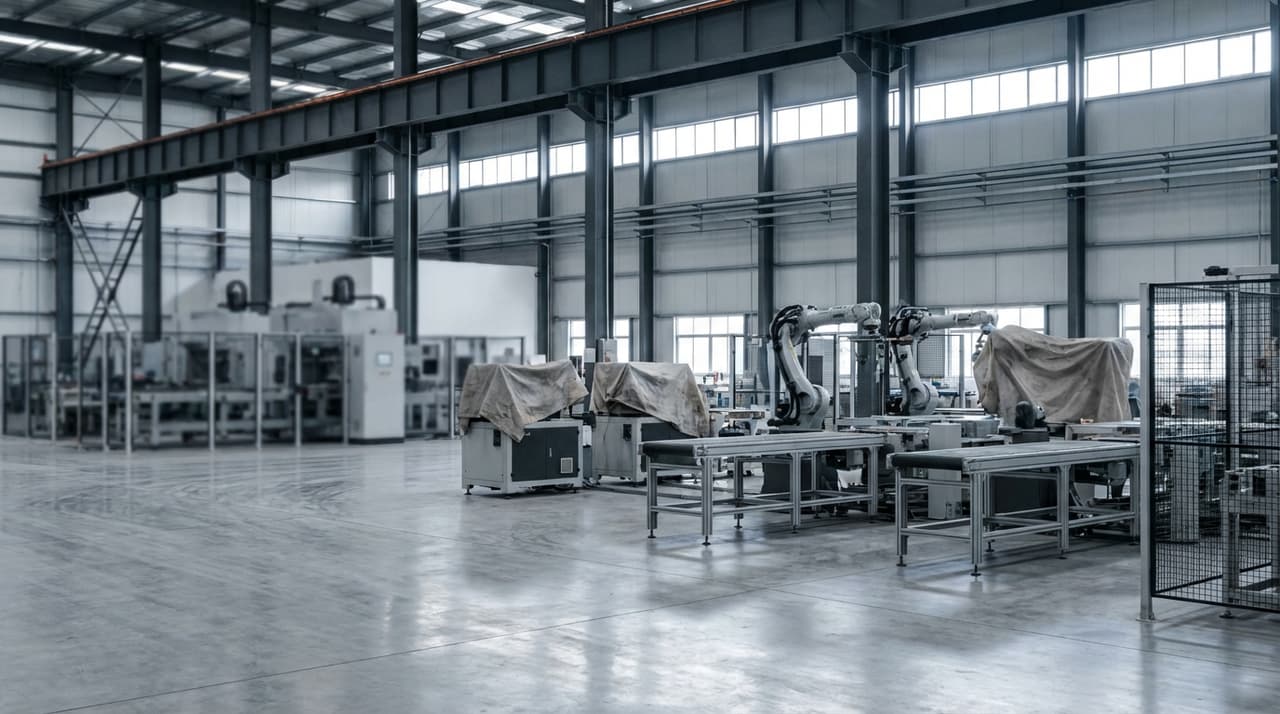
- Manufacturing payrolls have declined for five consecutive months, reaching their lowest employment level since March 2022.
- The broader U.S. job market continues to grow, with nonfarm payrolls increasing by 119,000 in September, highlighting a divergence from manufacturing's soft patch.
- Despite job losses, the sector remains structurally important, with nearly 13 million workers and 409,000 job openings in recent months, indicating a cooling but resilient industry.
A Persistent Downturn in Industrial Labor
U.S. manufacturing payrolls fell by 6,000 jobs in October and another 6,000 in November 2025, extending a string of monthly declines that began in mid-2025, according to data from Trading Economics and Investing.com. This trend has pushed total manufacturing employment to its lowest point since March 2022, with losses including -7K in June, -11K in July, -12K in August, and -6K in September. The sustained drop reflects a continued soft patch in the industrial labor market, even as overall nonfarm payrolls still increased by 119,000 in September and continued to rise in later months, underscoring manufacturing's underperformance relative to the broader economy.
Efforts to stabilize the sector have hit a snag, with manufacturers grappling with slower goods demand after the post-pandemic boom and ongoing automation investments that reduce headcount growth. According to people familiar with the matter, private manufacturing construction has slowed from record 2024 levels, hinting that the earlier "factory building boom" is moderating. Without a rebound in demand, the industry could face further payroll reductions, though it remains a key contributor, adding $2.9 trillion (annual rate) to U.S. GDP in Q2 2025, roughly 11% of the economy.
Economic and Policy Pressures
Higher interest rates in 2023–2024 and still-restrictive monetary policy in 2025 have weighed on interest-sensitive manufacturing segments, such as machinery and durable goods, by dampening business investment and big-ticket consumer purchases. Federal Reserve policy continues to be a focal point, with industry analysts noting that if the Fed eases policy or growth in goods demand stabilizes, the pace of job losses could slow. Meanwhile, ongoing implementation of the CHIPS and Science Act, Inflation Reduction Act, and infrastructure laws supports new plants in semiconductors, batteries, EVs, and clean energy, but these projects ramp in stages and do not fully offset cyclical softness yet.
Industry groups argue that federal regulatory costs fall disproportionately on manufacturers, adding pressure during periods of weaker demand. In a recent statement, a spokesperson for a major manufacturing association emphasized, "Regulatory stability is crucial for attracting investment and maintaining jobs," though attempts to reach out for further comment were unsuccessful. Real hourly compensation in manufacturing rose 2.1% in Q1 2025, showing that pay has been rising even as headcount softens, with average manufacturing wages at about $29.23/hour in September 2025, above many service jobs.
Implications and Future Outlook
The labor market has shifted from labor shortages to more unemployed workers than job openings overall, though manufacturing still had 409,000 open jobs in August 2025, indicating a skills mismatch. Job losses hit production workers and communities concentrated in manufacturing hubs, especially in regions reliant on autos, machinery, or metals. However, manufacturing jobs remain high-paying, with average total compensation at $106,691 in 2024 and 95% of employees eligible for health insurance in 2025, softening but not eliminating the blow to those who stay employed.
Looking ahead, short-term projections suggest continued modest job losses or flat employment if demand for goods remains soft and companies focus on productivity over headcount. Long-term forecasts, summarized by industry analysts, expect up to 3.8 million manufacturing jobs will likely be needed by 2033, driven by reshoring, demographic retirements, and new industries. Expert views increasingly describe the situation as an "industrial slowdown" rather than a collapse, with structural tailwinds from onshoring and industrial policy but near-term cyclical headwinds from high rates and slower global growth.
Correction: An earlier version of this article misstated the timing of job losses; data confirms declines began in mid-2025, not earlier.