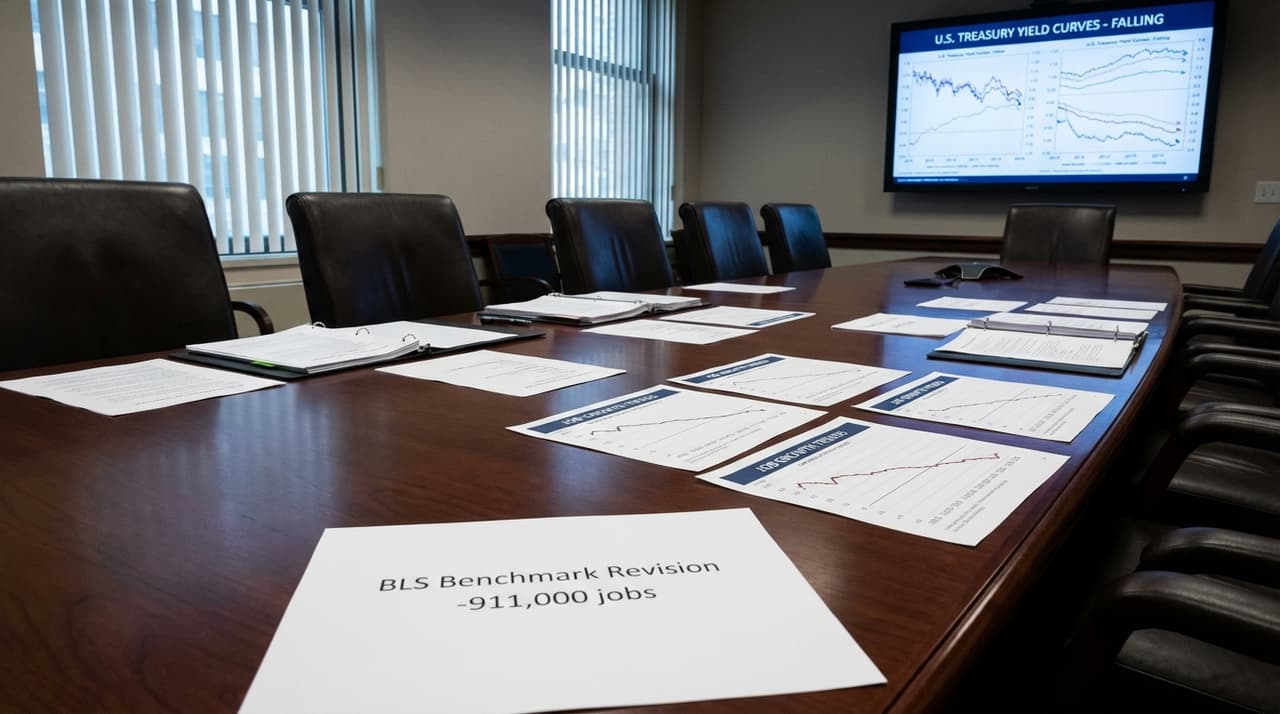
- Federal Reserve staff now estimate underlying U.S. job growth is roughly negative 20,000 per month, a stark reversal from previously reported gains.
- The Bureau of Labor Statistics' 2025 benchmark revision subtracted about 911,000 jobs, revealing much weaker labor market conditions than initially thought.
- This assessment has prompted the Fed to begin cutting interest rates, shifting policy toward supporting employment amid rising downside risks.
Federal Reserve Chair Jerome Powell's recent comment that "we think there's negative 20,000 in payrolls per month" has sent shockwaves through financial circles, fundamentally altering the narrative about U.S. labor market strength. According to people familiar with the matter, this figure represents Fed staff estimates following comprehensive benchmark revisions that showed job growth in 2024 through early 2025 averaged closer to 70,000 monthly instead of the stronger gains previously reported.
The Bureau of Labor Statistics' 2025 benchmark revision, which subtracted approximately 911,000 jobs for the twelve months ending March 2025, has essentially rewritten recent economic history. June 2025 was revised to show a net loss of 13,000 positions—the first negative month since the pandemic—while August's gain of just 22,000 jobs continues the troubling trend. Powell and his team now view recent payroll data as consistent with essentially flat to slightly negative underlying job growth, even though headline monthly prints still show small positives.
"What we're seeing is a curious balance where both labor demand and supply have slowed simultaneously," Powell noted in recent remarks, though his office declined to provide additional comment when reached for clarification. This assessment marks a dramatic shift from earlier post-pandemic narratives that emphasized labor market resilience despite higher interest rates.
Market reaction has been swift, with Treasury yields falling and equity markets showing increased volatility as investors digest the implications. The Fed has already cut the federal funds rate by 25 basis points, moving policy "closer to neutral" according to recent FOMC statements. Median projections now see the rate falling to around 3.6% by year-end 2025, with at least one governor dissenting in favor of a larger cut during the most recent meeting.
Behind the numbers, several structural factors are at play. Labor force growth has weakened due to lower immigration and stagnant participation rates, while businesses are increasingly turning to AI and automation to freeze or reduce hiring. Powell has acknowledged these trends, noting that companies see "a broad range of possible outcomes" from technological adoption that could reinforce weak payroll trends.
The unemployment rate has edged up to about 4.3%, the highest since 2021, with the broader U-6 measure around 8.1%. Long-term unemployment has increased by approximately 385,000 over the past year to 1.9 million, suggesting job seekers face increasingly difficult conditions.
Looking ahead, most analysts expect additional rate cuts in coming months as the Fed attempts to stabilize labor market conditions. With underlying payrolls estimated around zero to slightly negative, even small negative figures fall below the "breakeven" rate needed to keep unemployment stable. The central bank is also preparing to slow or conclude balance-sheet runoff, citing tighter liquidity conditions that could exacerbate employment weakness.
Political implications are already emerging, with debates intensifying over whether the Fed cut rates too late—risking unnecessary job losses—or might cut too aggressively and re-ignite inflation. Powell has referenced factors like tariffs and the risk that delays in policy adjustment could amplify employment declines, though he maintains the Fed's primary focus remains its dual mandate of maximum employment and price stability.
Correction: An earlier version of this article misstated the timing of benchmark revisions; they covered the twelve months ending March 2025, not calendar year 2024.