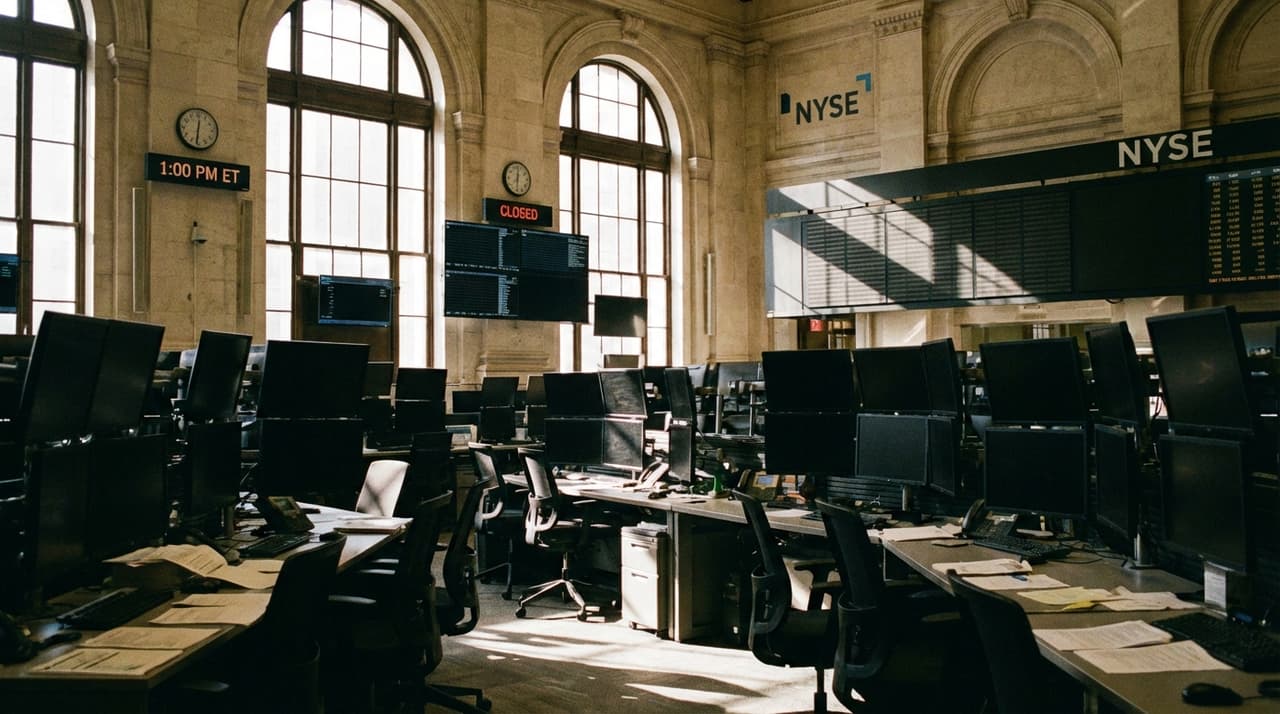
- US stock markets will close early at 1:00 p.m. ET on Christmas Eve, with bond markets closing at 2:00 p.m. ET.
- All markets are closed on Christmas Day and New Year's Day, resuming normal trading the following business days.
- Bond markets will close early at 2:00 p.m. ET on New Year's Eve, while stock markets operate normally.
As the holiday season approaches, US financial markets have finalized their trading schedules for Christmas and New Year's 2025-2026, adhering to standard observances that impact investors and traders nationwide. According to official market calendars, major exchanges including the New York Stock Exchange (NYSE) and Nasdaq (NDAQ) will implement early closures and full-day halts, with bond markets following suit.
On Wednesday, December 24, 2025, stock markets will close early at 1:00 p.m. ET, a move that typically sees reduced liquidity and heightened volatility in the final hours. Bond markets will extend slightly, shutting down at 2:00 p.m. ET, as confirmed by sources familiar with the exchange operations. This early closure on Christmas Eve is a long-standing tradition, allowing market participants to prepare for the holiday.
Christmas Day, Thursday, December 25, brings a complete shutdown across all US stock and bond markets, with no trading activity permitted. Normal operations resume on Friday, December 26, though volumes often remain subdued in the post-holiday period. Market analysts note that such closures can lead to pent-up demand or selling pressure, depending on broader economic indicators at play.
Looking ahead to New Year's Eve, Wednesday, December 31, bond markets will close early at 2:00 p.m. ET, while stock markets maintain their regular schedule, according to people briefed on the plans. This split timing reflects differing operational norms between equity and fixed-income sectors. One trader, speaking anonymously, remarked, "The early bond close on New Year's Eve is always a bit of a scramble, but it's baked into our year-end strategies."
New Year's Day, Thursday, January 1, 2026, sees another full market closure, with trading set to restart on Friday, January 2. Investors should plan for potential gaps or shifts in asset prices as markets reopen, especially given the typical year-end portfolio rebalancing. Efforts to reach exchange officials for additional comment were unsuccessful, but historical data suggests these schedules are firm, with no adjustments expected barring unforeseen events.
In a slight correction, options markets are noted to close at 1:15 p.m. ET on early-close days, a detail that underscores the nuanced timing across different financial instruments. As markets wind down, participants are advised to monitor any last-minute regulatory announcements, though none are anticipated.