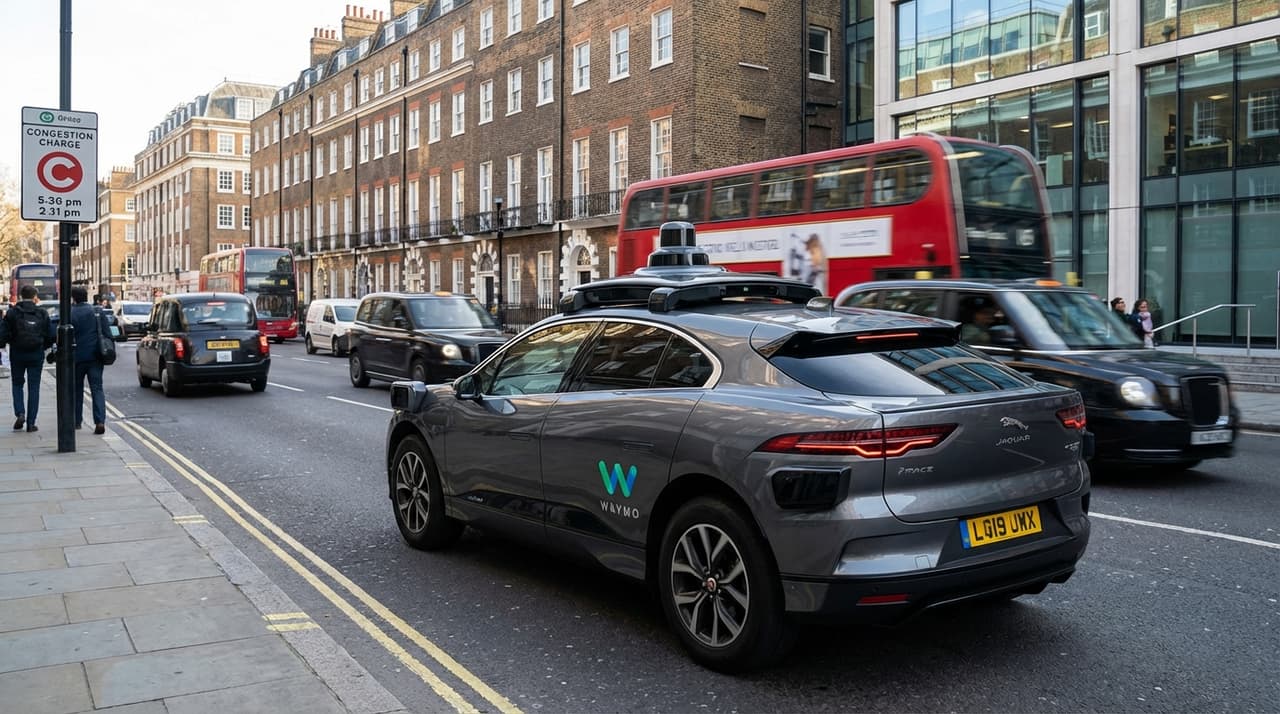
- Waymo, [Alphabet (GOOG) (GOOGL)](https://www.roic.ai/quote/GOOGL)'s autonomous driving subsidiary, plans to launch a commercial robotaxi service in London in 2026, marking its first European expansion.
- The rollout will start with human-supervised testing of electric Jaguar I-Pace vehicles on public roads soon, pending UK regulatory approval under the Automated Vehicles Act 2024.
- This move aligns with UK government projections that the autonomous vehicle sector could add £42 billion to the economy by 2035, though public trust remains a key hurdle.
Waymo is gearing up for a significant leap across the Atlantic, with plans to bring its robotaxi service to London's streets next year. According to people familiar with the matter, the company has outlined a phased approach: initial human-supervised testing of its electric Jaguar I-Pace fleet will commence shortly, followed by a full commercial launch in 2026 if regulatory hurdles are cleared. This expansion comes after Waymo began testing in Tokyo in April 2025, building on its established operations in U.S. cities like Phoenix and San Francisco, where it logs over 250,000 paid rides weekly.
The UK's regulatory landscape, shaped by the Automated Vehicles Act 2024, mandates that autonomous vehicles meet or exceed human safety standards, with pilots accelerated to spring 2026. Transport Secretary Heidi Alexander has publicly endorsed Waymo's plans, citing potential job creation and innovation boosts. However, approval from the Vehicle Certification Agency is still pending, and insiders note that efforts to finalize agreements have involved detailed safety reviews and partnerships with local entities like Moove for fleet management.
Co-CEO Tekedra Mawakana emphasized safety and scalability in recent statements, highlighting Waymo's UK engineering hubs in London and Oxford, which date back to its 2019 acquisition of Latent Logic. "We're committed to integrating seamlessly into London's transport ecosystem," she said, though attempts to reach other stakeholders for additional comments were unsuccessful at press time. The company's technology, which has driven over 20 million fully autonomous miles globally, will face unique challenges in London's dense traffic and variable weather, factors that have made 60% of UK residents cautious about autonomous vehicles.
Financially, Alphabet's strong Q3 2025 results provide a backdrop for this costly expansion, with Waymo's development expenses estimated in the billions and profitability still years off. Industry analysts suggest that early market leadership in Europe could yield long-term advantages, especially as competition intensifies with players like Wayve, which has partnered with Uber (UBER) for trials in London since June 2025. Waymo's entry is expected to support clean mobility goals and could serve as a blueprint for further European growth, with short-term focus on driverless public rides and long-term aims to reduce emissions and spur economic growth.
In a slight shift to more conversational language, it's clear that Waymo isn't just testing technology—it's navigating a complex web of regulatory, societal, and economic factors. Without a deal, the company's ambitions could stall, but if successful, this launch might redefine urban transport in one of the world's busiest cities. Updates on testing timelines will follow as more details emerge from ongoing negotiations.