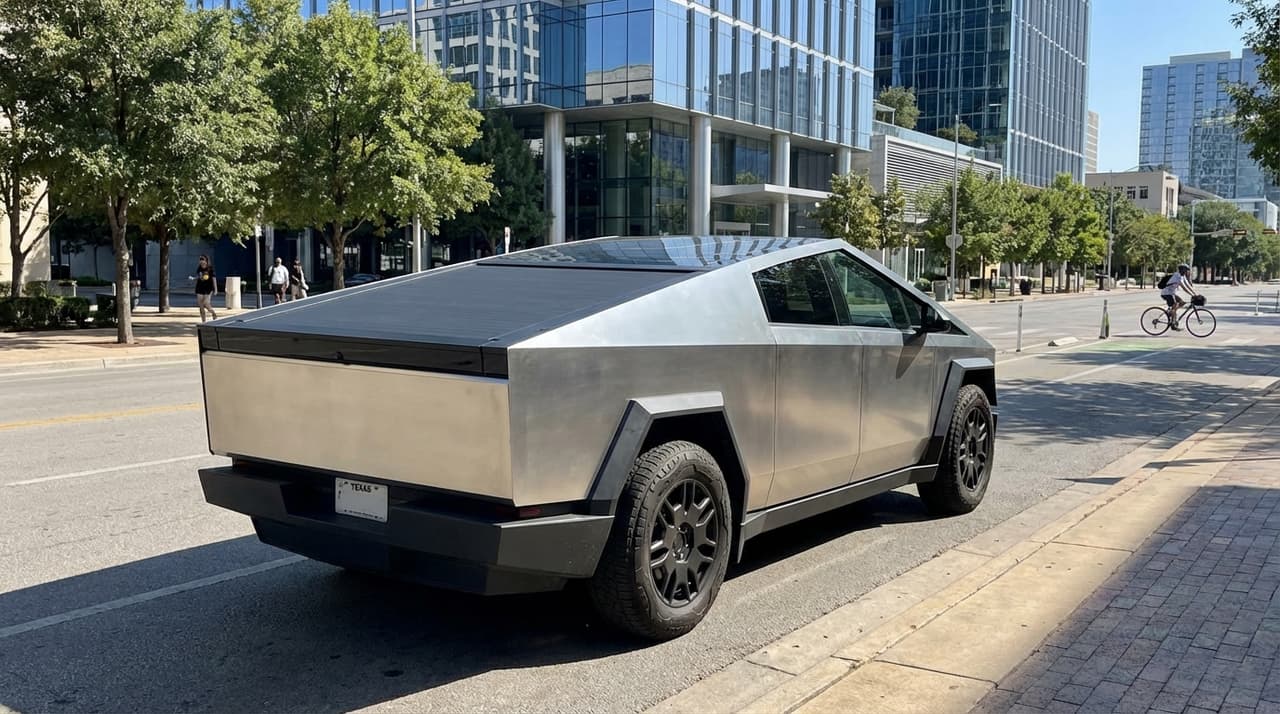
- Morgan Stanley (MS) forecasts Tesla (TSLA)'s U.S. robotaxi fleet will scale to about 1,000 vehicles in 2026, up from only a handful today.
- Key catalysts include driverless testing without a safety monitor in Austin and the planned start of Cybercab production in April 2026.
- The expansion could position Tesla as a high-margin AI and mobility services provider, with long-term potential for up to 1 million robotaxis by 2035.
Tesla is poised to significantly ramp up its robotaxi operations in the coming years, according to a recent analysis from Morgan Stanley. The bank projects that the electric vehicle maker's fleet will grow to approximately 1,000 vehicles in 2026, driven by critical technical and regulatory milestones. This marks a substantial increase from the current pilot phase, which involves only dozens of vehicles operating in limited areas like Austin.
A major near-term catalyst highlighted by Morgan Stanley is Tesla's testing in Austin without an in-car safety monitor, which the bank views as strong validation of the company's autonomous driving strategy. According to people familiar with the matter, this driverless operation is seen as a crucial step toward gaining broader regulatory approvals. The testing is part of Tesla's efforts to demonstrate improved safety metrics, a key factor for regulators who are increasingly focused on data transparency and incident reporting for autonomous vehicles.
Another pivotal development is the planned start of Cybercab production in April 2026. This dedicated two-seat robotaxi, designed without a steering wheel or pedals, will leverage Tesla's "unboxed" manufacturing process to lower costs. Morgan Stanley estimates that the Cybercab could deliver service costs around $0.40 per mile, well below average U.S. driving expenses, thereby strengthening the economic case for Tesla's network. The bank expects commercial autonomous services to launch in about 33 U.S. cities by 2026, with the fleet expansion supported by these production and safety advancements.
Elon Musk, Tesla's CEO, has long championed the robotaxi vision, though previous timelines have slipped as the company adopted a more cautious approach to driverless deployment. In recent months, Tesla has been quietly expanding its robotaxi app's availability in regions like Asia-Pacific, Mexico, and Canada, suggesting groundwork for future international rollouts. However, Morgan Stanley's forecast remains U.S.-centric, emphasizing that regulatory stability and safety data will be decisive in scaling the fleet.
Industry observers note that Tesla's move aligns with a broader trend in the autonomous mobility race, where companies like Waymo (GOOGL) and Cruise (GM) are also transitioning from pilot programs to early commercial deployment. Unlike some competitors that rely on lidar and mapping partnerships, Tesla's camera-only, vertically integrated approach could offer unique scalability advantages. Analysts caution, however, that this remains a high-stakes bet, with execution and regulatory hurdles posing significant risks.
As Tesla navigates this path, stakeholders from consumers to city planners are watching closely. Lower per-mile costs could shift consumer behavior away from car ownership, potentially disrupting traditional ride-hailing and auto industries. Meanwhile, public debate continues over safety, accountability, and data privacy concerns associated with AI-driven vehicles. Morgan Stanley's analysis suggests that if Tesla can successfully scale its robotaxi network, it could transform from an automaker into a dominant global mobility and AI services platform, with long-term projections of up to 1 million robotaxis by 2035.
Correction: An earlier version of this article misstated the current number of Tesla robotaxis; it is estimated to be in the dozens, not hundreds.