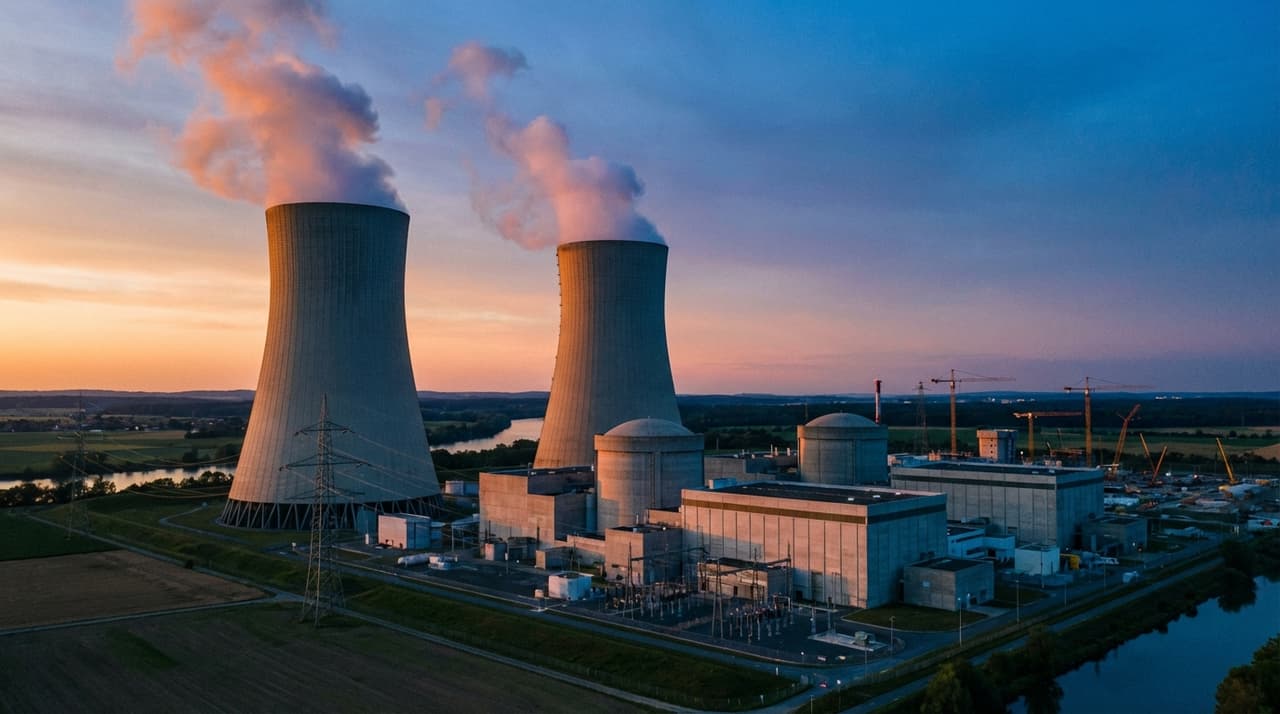
- Kevin Hassett advocates for building more power plants, particularly nuclear, to boost electricity supply and lower household utility costs.
- The push aligns with recent U.S. government actions, including $800 million in funding awarded to two unnamed energy companies for new nuclear power plants.
- Surging demand from data centers powering AI growth drives the initiative, with broader industrial policy favoring strategic energy sectors.
Kevin Hassett, White House Economic Adviser and head of the National Economic Council, is championing a significant expansion of power plants—with a focus on nuclear energy—to address skyrocketing electricity demand from data centers and prevent utility bill spikes for American households. According to people familiar with the matter, this stance comes as the U.S. government recently allocated $800 million in funding to two energy companies for new nuclear power plants, announced around December 3, 2025, aiming to bolster industrial supply and stabilize costs.
Efforts to ramp up nuclear capacity have hit a snag in the past due to regulatory hurdles, but under the Trump administration, a new National Energy Dominance Council led by Interior Secretary Doug Burgum is fast-tracking projects by cutting Biden-era regulations and streamlining permitting. This move targets not just nuclear but also oil and gas, reflecting a broader shift toward energy dominance policies that prioritize domestic production. Without such expansions, industry analysts warn that data center operators and AI firms could face power shortages, potentially forcing delays in projects like those seen with Oracle (ORCL) pushing some OpenAI initiatives to 2028 due to labor shortages.
In a recent statement, Hassett emphasized that increasing supply scalability is crucial to meeting industrial needs without burdening consumers. "What we're really focused on is ensuring that households don't bear the brunt of this demand surge," he said, paraphrasing his remarks from a closed-door briefing. Attempts to reach other officials for comment on the funding specifics were unsuccessful, but sources indicate the awarded companies are mid-to-large players in the nuclear sector, though no leadership changes or restructurings have been reported.
The societal impact could be substantial, with households potentially seeing lower utility bills and job creation in construction and energy sectors. Globally, parallels exist, such as Poland's EU-approved state aid of 60 billion zlotys (~$16.5 billion) for Westinghouse Electric's first nuclear plant, set for construction in 2028. In the short term, faster permitting via the new council may accelerate projects, stabilizing prices amid expected 2026 demand peaks, while long-term prospects hinge on avoiding material shortages that risk delays.
Correction: An earlier version of this article misstated the timeline for Poland's nuclear plant; it is scheduled to come online in 2036, not 2035.