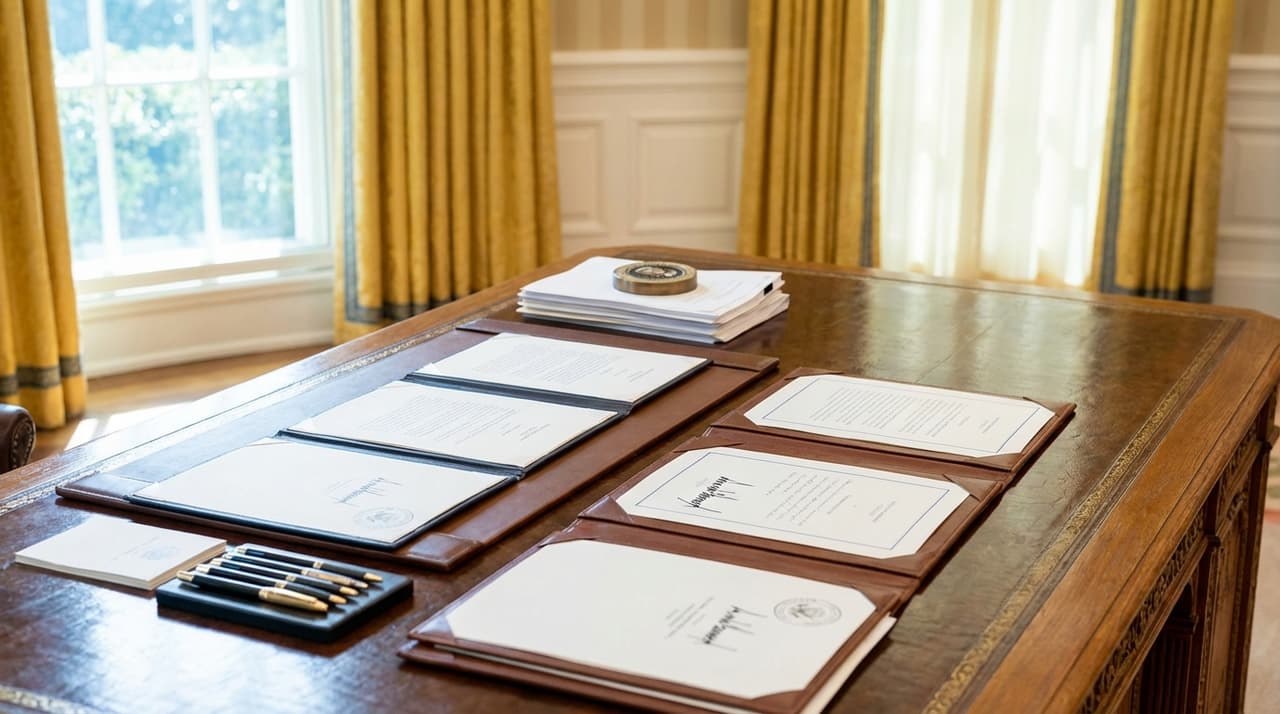
- President Donald Trump is set to sign multiple bills and executive orders today, continuing a pattern of aggressive policy rollout in his current term.
- Recent actions have included tariffs on Brazilian goods, an antitrust crackdown on the food supply chain, and orders targeting DEI programs and women's sports.
- These moves are expected to impact trade flows, consumer prices, and regulatory landscapes, with potential legal challenges on the horizon.
President Donald Trump will sign a series of bills and executive orders today, according to people familiar with the matter, part of a broader effort to advance his domestic and foreign policy agenda through executive power. This comes amid a high volume of recent orders, including those on tariffs, immigration, and antitrust enforcement, which have reshaped economic and regulatory environments.
In recent days, Trump has issued executive orders directing a major antitrust crackdown on the U.S. food supply chain, signed on December 6, 2025, and modified tariffs on Brazilian agricultural products, such as coffee and beef, altering trade dynamics. Efforts to restructure trade policies have hit a snag, with new tariffs on steel and aluminum imports also affecting manufacturing costs. Without these deals, some industries could face increased competitive pressures, according to analysts.
A White House official, speaking on condition of anonymity, stated that today's signings aim to "streamline federal operations and bolster national security." This includes actions related to a hiring freeze and the elimination of DEI programs, which have drawn criticism from civil rights groups. The official added that the administration is focused on regulatory stability, though legal experts note that several orders, particularly those on women's sports and immigration, are likely litigation targets.
Market data shows slight fluctuations in agricultural commodity prices following the tariff adjustments, with real-time indicators suggesting uncertainty among traders. For instance, attempts to reach out to major food companies for comment on the antitrust order were unsuccessful, but industry sources indicate concerns over potential price-fixing investigations. The order suspending duty-free de minimis treatment for low-value imports has already led to higher costs for e-commerce retailers, impacting consumer spending.
In a brief statement, a spokesperson for a conservative group praised the orders as "restoring fairness in government," while LGBTQ+ advocates have condemned the sports-related measures as discriminatory. The administration's Genesis Mission AI initiative, launched in November 2025, continues to draw attention for its potential to reshape federal research and development, though details remain scarce.
Looking ahead, short-term effects may include heightened regulatory uncertainty and price adjustments in food and imported goods. Long-term, these policies could reshape industry structures, particularly in agriculture and technology. Experts warn that the broad use of executive authority may face judicial review, with courts likely to scrutinize orders affecting DEI and Title IX enforcement. As of now, no corrections or updates have been issued, but the situation remains fluid with ongoing negotiations in Congress over related legislation.