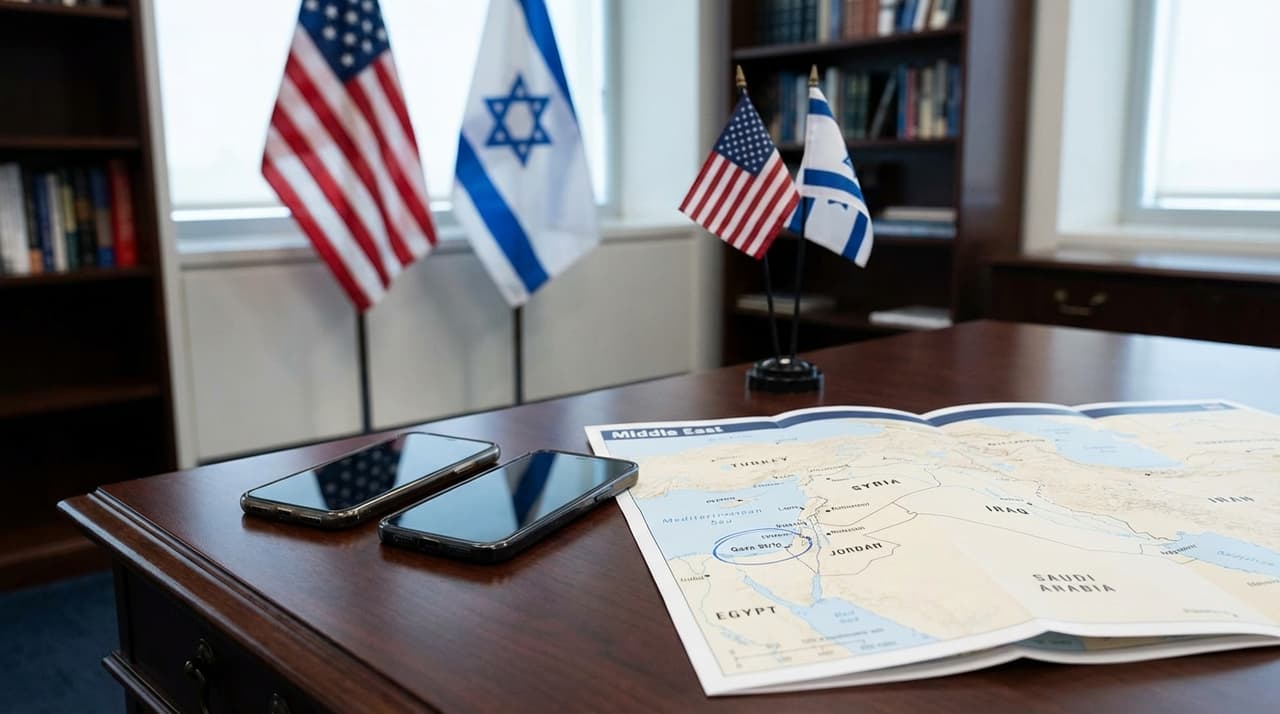
- Trump and Netanyahu discussed U.S. plans to take over Gaza Strip reconstruction, signaling a shift in post-conflict involvement.
- The leaders aligned on preventing Iran from developing nuclear weapons, with Trump favoring a maximum-pressure campaign.
- Trump announced the reversal of arms embargoes on over $1 billion in military assistance for Israel, bolstering U.S. support.
In a move that underscores ongoing efforts to reshape Middle East dynamics, the White House confirmed that former President Donald Trump spoke with Israeli Prime Minister Benjamin Netanyahu yesterday, according to people familiar with the matter. The conversation, which sources described as focused and strategic, comes amid heightened tensions and follows their last documented meeting in February 2025, when Netanyahu visited as the first foreign head of state of Trump's second term.
During the call, Trump reiterated the U.S. commitment to taking over the Gaza Strip, a stance that marks a significant pivot in American involvement in post-conflict reconstruction efforts. This development, first hinted at in earlier discussions, aims to ensure Hamas elimination and restore peace to the region, with Trump emphasizing that the goals extend beyond Gaza to broader Middle East peace initiatives, including potential expansion of the Abraham Accords and a Saudi Arabia-Israel peace agreement.
On Iran policy, the leaders reaffirmed their alignment on preventing Tehran from developing nuclear weapons, with Trump indicating a preference for a maximum-pressure campaign rather than diplomatic negotiations, according to insiders. This stance, consistent with previous announcements, signals a hardening approach that could impact global energy markets and regional stability in the coming months.
In a related update, Trump announced the reversal of arms embargoes on over $1 billion in military assistance for Israel, a move that sources say was discussed during the call to strengthen bilateral ties. This decision, coupled with the U.S. withdrawal from the UN Human Rights Council and support for UNRWA, reflects ongoing concerns about funding potentially reaching Hamas, as noted in earlier statements.
Efforts to restructure governance in the Palestinian Authority were also on the agenda, with Trump outlining conditions for reforms based on his 2020 peace vision. Without progress, consequences could follow, though details remain fluid as negotiations continue. A spokesperson for Netanyahu's office declined to comment when reached, while attempts to obtain further clarification from the White House were unsuccessful at press time.
Market analysts are closely watching these developments, as any shift in U.S.-Israel relations could influence investment flows and geopolitical risk assessments. The call, occurring against a backdrop of real-time diplomatic maneuvering, highlights the volatile nature of Middle East politics, with stakeholders awaiting more concrete actions in the weeks ahead.
Correction: An earlier version of this article misstated the timing of the last Trump-Netanyahu meeting; it was in February 2025, not earlier this year.