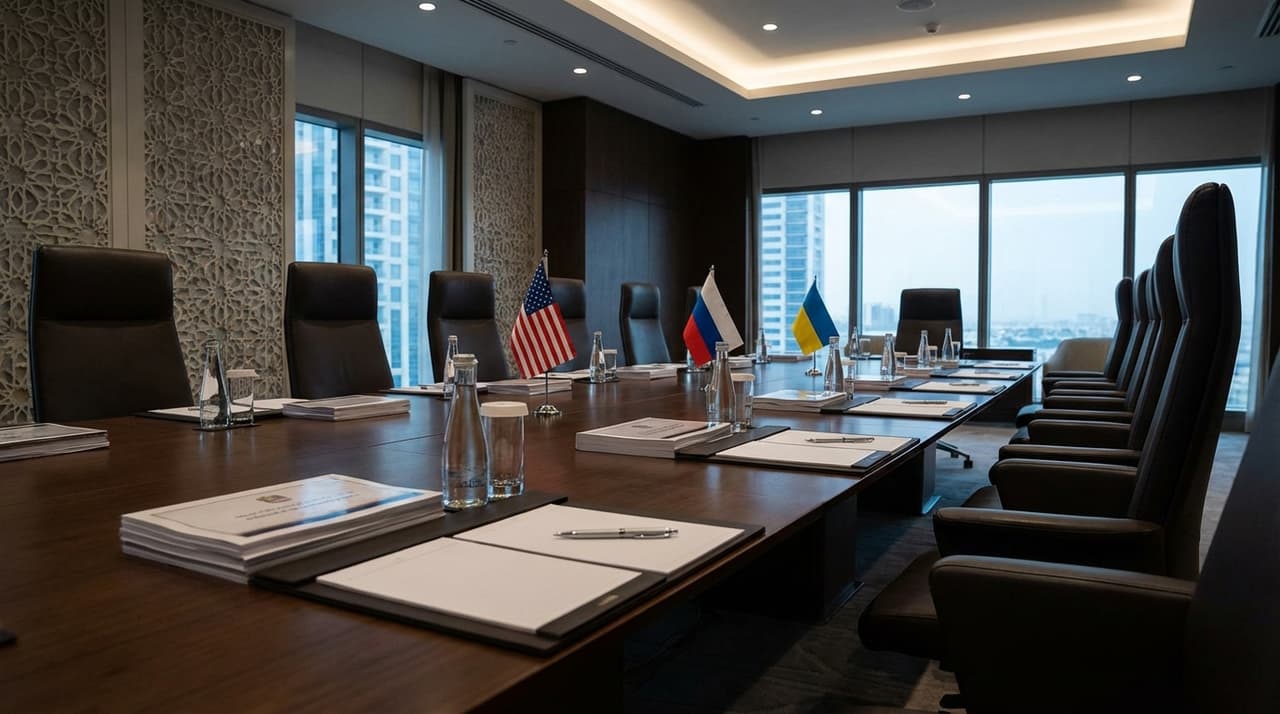
- The Trump administration says it will send a U.S. representative to negotiations if a Ukraine-Russia peace agreement appears imminent, amid accelerating back-channel diplomacy.
- Ukraine has agreed in principle to a U.S.-brokered proposal, with only minor details left to resolve, according to senior officials.
- Talks involve envoys like Richard Grenell and Steve Witkoff meeting Russian counterparts in Abu Dhabi, building on earlier Geneva discussions that produced an updated peace framework.
Efforts to broker an end to the nearly four-year war have intensified, with the White House now indicating it would dispatch a representative for direct talks if a real chance to sign a peace deal emerges. This move comes as U.S. officials describe themselves as "very optimistic" about progress, though they caution that a few "delicate, but not insurmountable" issues remain unresolved. Without a breakthrough, the conflict could drag on, further destabilizing global energy and grain markets that have been rattled by Black Sea disruptions.
Negotiations are being led by Trump's envoy Richard Grenell and business associate Steve Witkoff, who have held meetings with Russian representatives in Abu Dhabi and earlier in Geneva with Ukrainian and European partners. A joint U.S.-Ukraine statement after the 23 November Geneva meeting called the discussions "constructive," resulting in an "updated and refined peace framework" aimed at securing a "just and lasting peace" that upholds Ukraine's sovereignty. According to people familiar with the matter, the framework includes a security-assurances document akin to NATO's Article 5 logic, intended to bolster Ukraine's long-term reconstruction and investment climate.
President Donald Trump has publicly pressured Kyiv, setting a target to reach a deal by around Thanksgiving, though aides describe this deadline as flexible. In parallel, President Volodymyr Zelenskyy is organizing urgent consultations with leaders from about 30 countries to coordinate positions on any settlement and security guarantees, reflecting concerns over being isolated in negotiations dominated by Washington and Moscow. European allies have issued a joint statement calling the U.S. plan a "basis which will require additional work," signaling cautious support but also unease over details with economic and security implications.
The White House-Ukraine relationship has been tense at times; in an earlier Oval Office meeting, Trump accused Zelenskyy of not being "ready for peace if America is involved" and canceled a joint event after a clash over ceasefire terms. On Capitol Hill, some Republicans like Rep. Don Bacon criticize the administration for lacking "moral clarity" and urge a stronger emphasis on defending Ukraine's sovereignty in any agreement. Internationally, NATO and EU partners stress that any deal must respect Ukraine's territorial integrity, with several aligning rhetorically with Zelenskyy while cautiously engaging with the U.S.-led framework.
Key unresolved questions likely include the status of Russian-occupied territories, especially Donetsk and other eastern regions, as well as concrete security guarantees and long-term Western commitments to Ukraine. U.S. officials say Russian President Vladimir Putin believes he will secure control of the Donetsk region either via negotiations or on the battlefield, shaping Russian calculations about compromise. Short term, successful talks could lead to a ceasefire and framework agreement; long term, analysts warn that a poorly structured deal could freeze the conflict rather than resolve it, or encourage similar coercive tactics by Russia elsewhere.
Trump has said he will only personally meet Zelenskyy and Putin when the deal is "final or in its final stages," indicating that envoys will continue to lead talks until a near-final text is ready. As negotiations proceed, stakeholders are weighing the balance between a rapid ceasefire and broader principles of justice, deterrence, and accountability for aggression, with the outcome poised to impact global stability and financial markets.