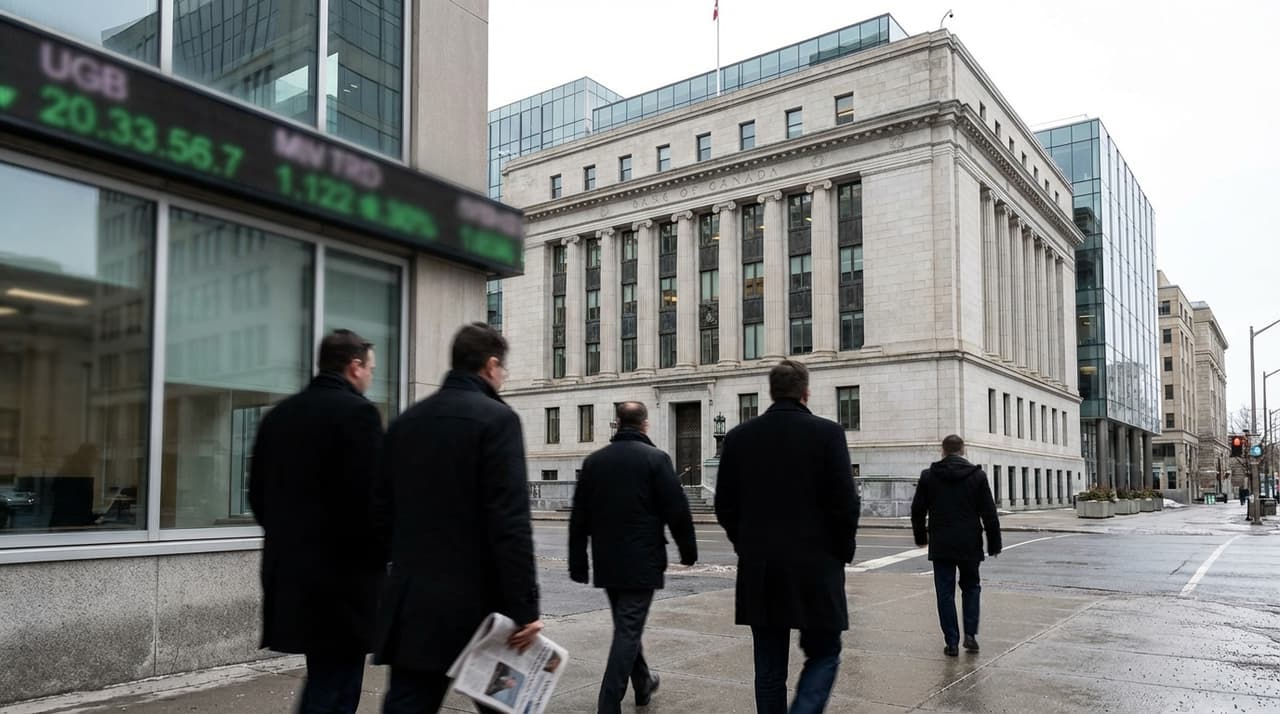
- The Bank of Canada kept its overnight rate at 2.25%, aligning with market expectations and marking a pause after nine cuts from a peak of 5.00%.
- Recent economic data, including stronger-than-expected GDP growth and a drop in unemployment to 6.5%, has reduced the urgency for further stimulus.
- Analysts now view 2.25% as near-neutral, with futures markets pricing in potential rate hikes by late 2026 if inflation pressures persist.
In a widely anticipated move, the Bank of Canada held its key policy interest rate steady at 2.25% on Wednesday, signaling that its aggressive easing cycle may have reached its conclusion. The decision, which matched forecasts from a consensus of economists, reflects a delicate balancing act as policymakers weigh resilient domestic growth against lingering inflation risks.
Governor Tiff Macklem has publicly characterized 2.25% as "about the right level" given current conditions, reinforcing the case for a hold. According to people familiar with the matter, internal discussions at the central bank focused heavily on recent data surprises, including three consecutive strong jobs reports and a surprise upside in third-quarter GDP. These indicators have tempered fears of an economic slowdown, reducing the need for additional monetary support.
Efforts to navigate a soft landing have hit a turning point, with the Bank now emphasizing a meeting-by-meeting, data-dependent stance. Without further cuts, borrowers face stabilized variable-rate costs rather than continued relief, while savers contend with lower yields but reduced volatility. Financial institutions are already adjusting mortgage products and credit offerings in response to this new environment of rate stability.
Market reaction has been muted, with money markets having priced in virtually zero odds of a December cut ahead of the announcement. Instead, attention has shifted to the timing of any future moves, with some analysts seeing scope for additional cuts in 2026 if global conditions deteriorate, while others warn of potential hikes if inflation re-accelerates. The Bank's guidance suggests it will remain on hold through much of the coming year, barring a sharp shift in economic fundamentals.
This pause mirrors actions by other major central banks, such as the U.S. Federal Reserve and ECB, which have also shifted from aggressive easing to a focus on signaling stability. In Canada, the hold follows a 25 basis-point cut on October 29, 2025, which brought the rate down from 2.50% and was characterized as nearing the bottom of the neutral range. As one economist noted, "The opposing economic forces make a hold the only move that makes sense right now."
Looking ahead, uncertainty into 2026 remains high, with the Bank stressing its commitment to the 2% inflation target within a 1-3% control range. Attempts to reach out to the Bank for additional comment were unsuccessful, but public statements indicate a cautious optimism that current policy settings will support continued economic and financial welfare.