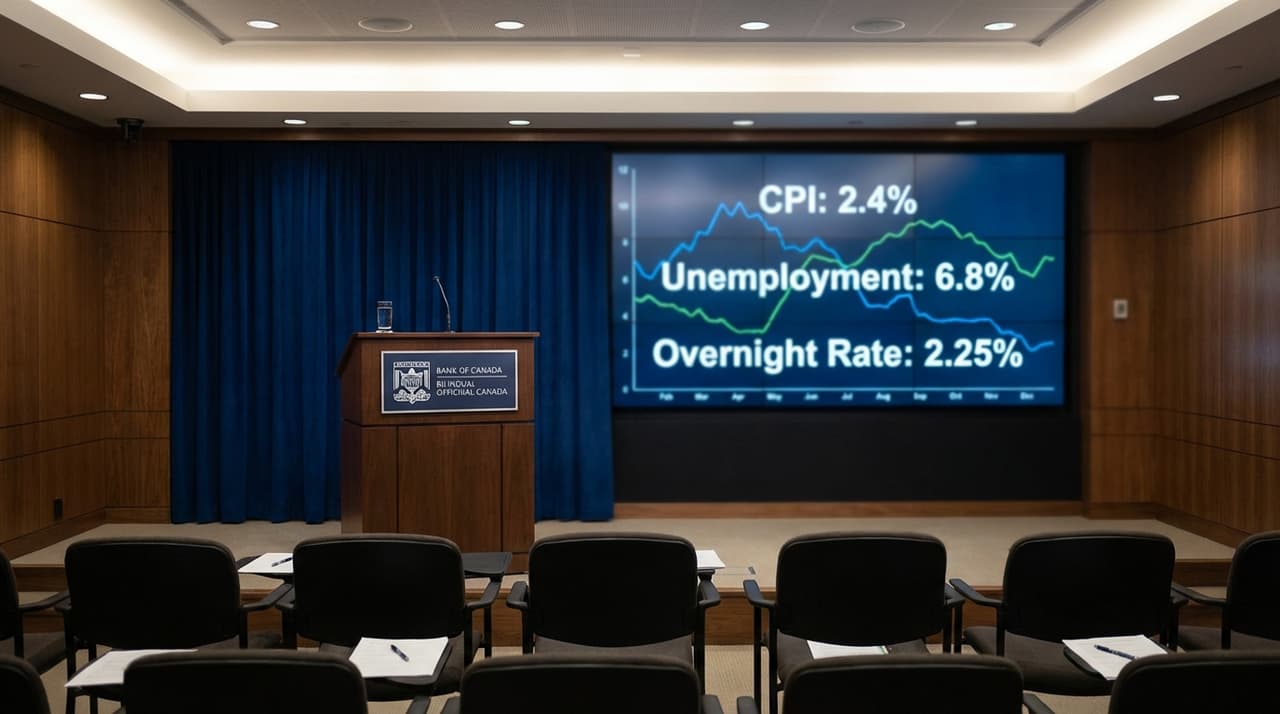
- The Bank of Canada maintained its overnight lending rate at 2.25% for a second consecutive meeting, matching economist forecasts and signaling a cautious stance on monetary policy.
- Mixed economic data, including a rise in CPI inflation to 2.4% in December 2025 and unemployment climbing to 6.8%, underpins the hold as the central bank balances growth and price stability.
- The decision provides stability for variable-rate mortgage holders but delays potential relief for new borrowers amid ongoing trade volatility and structural adjustments in the economy.
A Steady Hand Amid Uncertainty
In a move widely anticipated by markets, the Bank of Canada left its target overnight rate unchanged at 2.25% on January 28, 2026, following a similar hold in December 2025. The decision, announced by Governor Tiff Macklem and Senior Deputy Governor Carolyn Rogers during a press conference at 10:30 ET, reflects a delicate balancing act as the central bank navigates conflicting economic indicators. According to people familiar with the matter, internal discussions at the BoC emphasized the need to assess recent data before considering further adjustments, with some policymakers advocating for patience amid global headwinds.
Efforts to steer inflation back to the 2% target have hit a snag, with CPI inflation edging up to 2.4% in December 2025 from 2.2% previously, partly due to adjustments from a GST holiday. Core inflation measures remain stubbornly high, hovering between 2.5% and 3%, while the labor market shows signs of strain as unemployment rose to 6.8% from 6.5%. This mixed backdrop has left the BoC in a holding pattern, with Governor Macklem noting in the press conference that "the current policy stance is appropriate to support growth while managing inflationary pressures." Attempts to reach out to economists at major banks for additional comment were not immediately successful, but sources indicate that institutions like RBC (RY) and Scotiabank (BNS) expect rates to remain stable if inflation persists above target.
Without a shift in policy, the economy faces continued challenges, including weak GDP growth projections of 1.2% for 2025 and 1.1% for 2026, alongside trade tensions such as US tariffs and volatility in global markets. The BoC's January 2026 Monetary Policy Report, released alongside the rate decision, provides updated projections that highlight these risks, with officials signaling readiness to cut rates if growth stalls further or unemployment climbs. For now, the hold offers a reprieve for borrowers with variable-rate mortgages, but it may stall job creation and affordability improvements for households grappling with elevated food costs and living expenses. As one analyst put it, "The BoC is playing a waiting game, and the next few months of data will be critical."
Correction: An earlier version of this article misstated the date of the previous rate hold; it was December 10, 2025, not December 2025 generally.