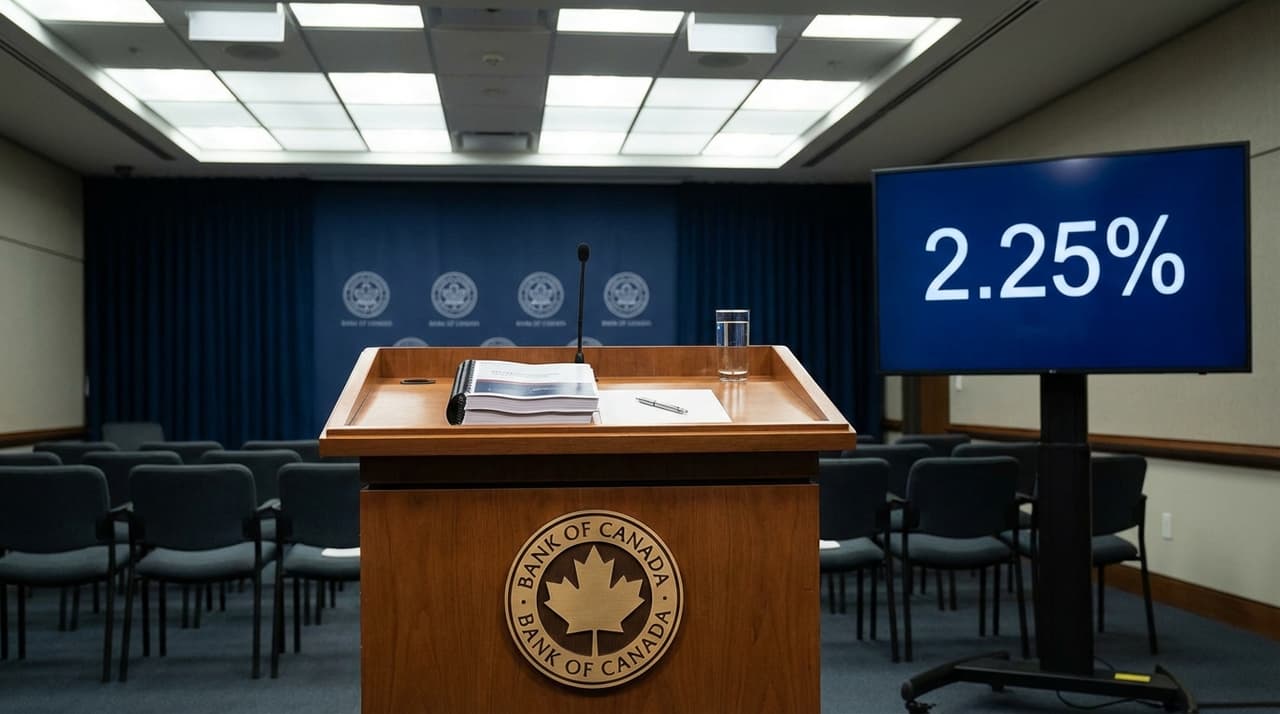
- The Bank of Canada maintained its overnight policy rate at 2.25%, citing modest economic growth and elevated uncertainty from U.S. trade policies.
- The central bank projects GDP growth of 1.2% in 2026 and 1.1% in 2027, with inflation expected to remain near its 2% target.
- This decision marks a pause in the cutting cycle, following four rate cuts in 2025, and could impact mortgage holders and borrowers as the job market shows signs of softening.
In a move widely anticipated by economists, the Bank of Canada held its overnight rate steady at 2.25% on January 28, 2026, signaling a cautious stance amid mixed economic signals and persistent trade-related headwinds. The announcement, accompanied by the release of updated forecasts in the Monetary Policy Report, underscores the central bank's balancing act between supporting structural adjustment and keeping inflation in check.
Officials pointed to modest near-term growth projections and heightened uncertainty stemming from U.S. trade policies as key factors in their decision. According to people familiar with the matter, the Bank is closely monitoring the scheduled review of the Canada-U.S.-Mexico trade agreement later in 2026, alongside broader tariff-driven pressures and geopolitical risks that could dampen economic momentum. The current policy rate is viewed as appropriate for maintaining inflation close to the 2% target, but the Bank emphasized it remains "prepared to respond" if conditions change materially.
Economic data paints a nuanced picture. While third-quarter GDP expanded at a robust 2.6%, the economy contracted by 0.3% in October 2025, reflecting ongoing volatility. Consumer inflation edged up to 2.4% in December 2025 from 2.2% in November, though officials noted this increase was partly driven by accounting effects from Ottawa's GST holiday in December 2024. More concerning, the unemployment rate rose to 6.8% in December, up from 6.5% in November, signaling potential softening in the labor market. A Bank of Canada business outlook survey showed subdued sentiment, albeit recovered from lows seen in mid-2025, according to sources.
Following the announcement, Bank of Canada Governor Tiff Macklem and Senior Deputy Governor Carolyn Rogers held a press conference to elaborate on the decision. Macklem reiterated that the rate is judged appropriate for now but stressed vigilance in light of trade uncertainties and labor market trends. "We're seeing some mixed signals, and the job market deterioration could prompt adjustments if it continues," one analyst paraphrased from the briefing. Efforts to reach additional officials for comment were unsuccessful by press time.
This decision represents a pause in the cutting cycle, after the Bank reduced rates four times in 2025, with the last cut in October bringing the rate down from 4.25%. December's hold and this latest announcement mark two consecutive steady rates, but some economists suggest that further job market weakness might necessitate additional cuts later in the year. For Canadians, the impact is direct: variable-rate mortgage holders may see payments unchanged, while new borrowers will face rates set by commercial lenders based on the 2.25% benchmark.
As the Bank navigates these challenges, its forward guidance hinges on evolving data, particularly around trade negotiations and employment figures. Without clearer signs of stability, the path forward remains uncertain, with potential implications for both monetary policy and broader economic resilience.