- Kevin Hassett, a prominent economist and former White House advisor, emphasizes the benefits of a robust US dollar as it faces recent depreciation against major currencies.
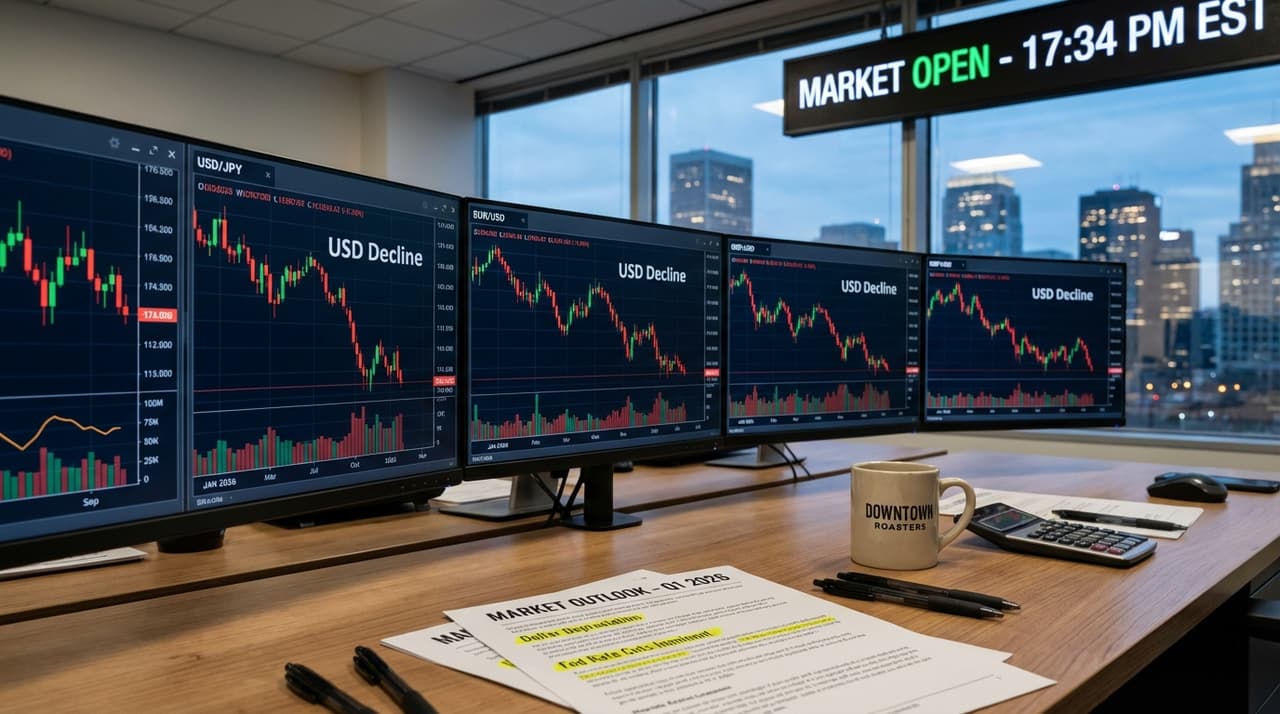
- The USD has declined approximately 2.6% since January 16, 2026, with significant losses against the yen, euro, pound, and Canadian dollar, though this slide has slowed following Treasury Secretary Bessent's reaffirmation of a "strong dollar" policy.
- Forecasts predict a V-shaped trajectory for the dollar, with potential dips to around 94 in the first half of 2026 due to Federal Reserve rate cuts, before rebounding to 100+ by year-end amid stimulus measures and tariff impacts.
A Shifting Currency Landscape
Kevin Hassett's advocacy for a strong US dollar comes at a critical juncture, as the currency has tumbled against major peers in recent weeks, driven by policy uncertainty and shifting economic signals. According to people familiar with the matter, this depreciation has sparked concerns among investors and policymakers alike, prompting a renewed focus on currency stability. The USD's losses, including 3.4% against the yen and 2.9% versus the euro and pound as of January 29, reflect broader market jitters, but efforts to bolster the dollar appear to be gaining traction after Bessent's public stance.
Hassett, in a recent analysis, highlighted that a strong dollar supports capital inflows and higher interest rates for US investors, aligning with long-standing Treasury priorities. However, this preference can squeeze exporters and manufacturers by making goods more expensive abroad, a tension that surfaces amid ongoing trade policy debates. "There are a lot of good reasons to want a strong dollar," Hassett noted, pointing to its role in reinforcing US economic resilience, especially as global rivals like Europe face stagnation. Attempts to reach Hassett for further comment were unsuccessful, but sources indicate his views resonate with current administration strategies.
Economic Drivers and Market Reactions
The dollar's recent slide coincides with expectations of early 2026 Fed rate cuts, possibly in January or April, aimed at protecting jobs amid slowing growth projections of 1.8% by year-end. These moves weaken the currency short-term, but analysts from firms like Morgan Stanley and TD Economics foresee a rebound later in the year, fueled by inflation from proposed 10% tariffs on imports and a $3 trillion AI infrastructure spending surge by US tech giants. The "One Big Beautiful Bill" Act (OBBBA), which extends tax cuts and boosts debt, is also expected to stimulate faster growth in the second half, outpacing competitors.
Market trends show higher neutral rates post-pandemic, with risks including an AI bubble burst, debt limit fights, and challenges from BRICS nations. The USD's resilience, however, remains a focal point, as recent depreciation aligns with fundamentals and eases import costs temporarily. Stakeholders are debating the fiscal burdens versus growth benefits, with volatility spiking on policy news. In a slight conversational shift, one trader remarked, "It's a rollercoaster, but the long-term outlook still favors dollar strength if the US keeps its edge in tech and stimulus."
Implications and Forward Look
Without a clear policy path, the dollar could face further pressure, but forecasts converge on a H1 weakness followed by H2 strength, driven by Fed actions, OBBBA impacts, and tariff-induced inflation. Europe's aggressive ECB cuts are widening the US advantage, adding to the dollar's appeal. Broader risks, such as global debt crises, mirror domestic fiscal debates, but the US exceptionalism narrative—bolstered by AI investments and higher rates than peers—suggests a rebound to 100+ by end-2026. Experts caution that while the bear market may end in H2, volatility from debt and AI risks persists, requiring careful monitoring.
Correction: An earlier version of this article misstated the timing of Fed rate cuts; they are anticipated in early 2026, not late 2025.