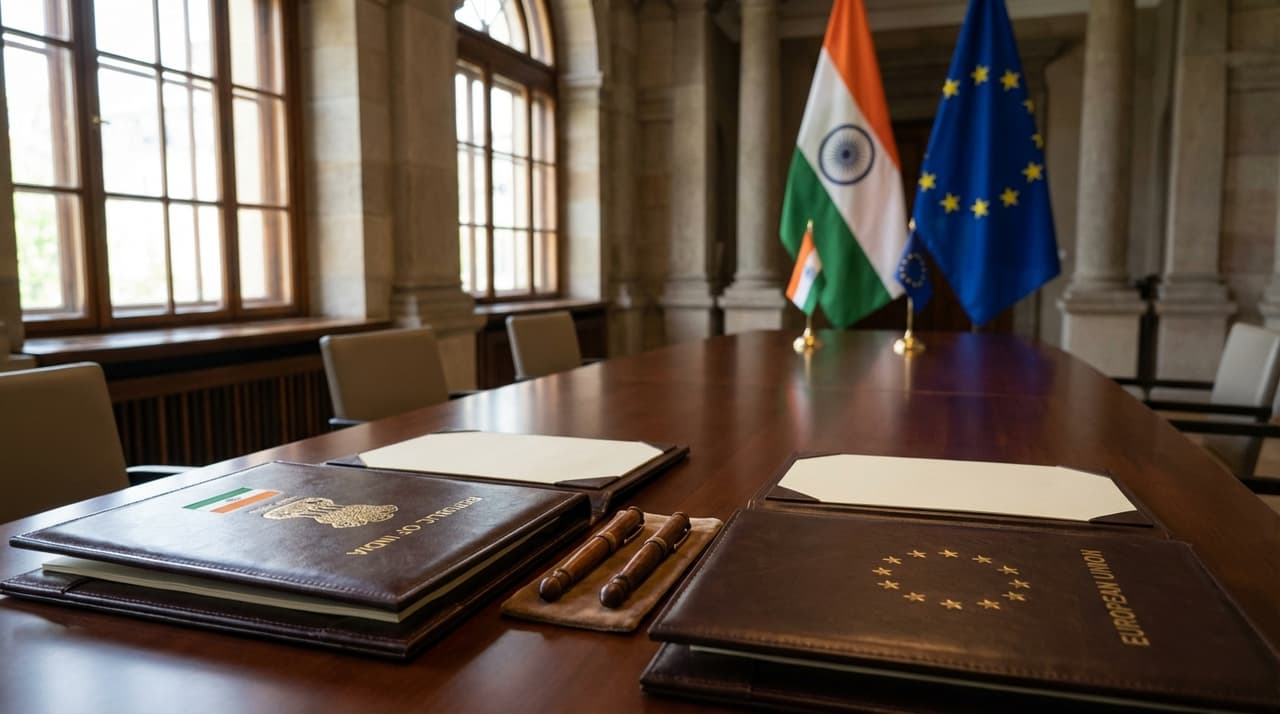
- Scott Bessent, former U.S. Treasury Secretary under President Trump, calls Europeans "disappointing" for signing the India-EU free trade agreement despite U.S. tariffs on India over Russian oil purchases.
- The FTA, announced on January 27, 2026, aims for tariff reductions on 97-99% of goods, with key sectors including EU concessions on Indian textiles and India's offers on EU autos and clean energy tech.
- Bessent highlights a perceived imbalance, noting U.S. 25% tariffs on Indian goods (doubled to 50% in some cases) for refining Russian crude that Europe then buys as refined products, indirectly funding Europe's war efforts against Russia.
A Deal Amid Tensions
Scott Bessent, who served as U.S. Treasury Secretary under President Trump, sharply criticized the newly announced India-EU free trade agreement (FTA), labeling Europeans as "disappointing" for proceeding with the pact. His remarks, made in response to questions about the deal, underscore growing friction within the U.S.-EU alliance over trade and energy policies tied to the Russia-Ukraine conflict. The FTA, dubbed the "mother of all trade deals" by Indian Commerce Minister Piyush Goyal and EU Commission President Ursula von der Leyen, was unveiled during EU leaders' visit to India for Republic Day celebrations, with negotiations concluding after years of stalled talks.
Bessent pointed to what he sees as hypocrisy, arguing that the U.S. has imposed tariffs on India—25% on goods, doubled to 50% in some cases—for refining Russian crude oil, which Europe then purchases as refined products. "This indirectly funds Europe's war efforts against Russia," he said, according to people familiar with his comments. He hinted at possible U.S. tariff relief if India further reduces its Russian oil imports, which fell to a two-year low in December 2025, increasing reliance on OPEC. Efforts to reach Bessent for additional comment were unsuccessful, but his stance echoes prior critiques made at Davos, where he called such arrangements "stupidity."
The FTA covers goods, services, and cooperation, targeting tariff reductions on 97-99% of goods, excluding sensitive agriculture and dairy sectors. Key provisions include EU concessions on Indian textiles, leather, chemicals, gems, and autos, while India offers access for EU autos, wines and spirits, aircraft, spacecraft, medical equipment, and clean energy technology. Legal ratification may delay implementation until early 2027, but the deal is projected to double EU exports to India by 2032 and build resilient supply chains amid global dependencies. Without such agreements, analysts suggest India and Europe risk falling behind in economic integration, though Bessent's criticism signals potential strains in transatlantic relations.
Industry sources note that the announcement coincides with broader trends of diversification from U.S. and Russian ties amid energy sanctions. India's Russian oil imports have declined, aligning with U.S. goals, but Bessent's remarks highlight ongoing tensions over burden-sharing in the Ukraine conflict. He claimed that Trump, if re-elected, would end the war, adding a political dimension to the economic discussions. The deal's societal impact includes benefits for Indian consumers through cheaper EU imports and support for EU firms' supply chains and jobs, with no major public backlash reported yet.
In related developments, India and the U.S. are engaged in talks on tariff relief, paralleling EU threats of trade escalation. Similar U.S. ire has been directed at other nations, such as China, for bypassing Russia sanctions through third-country refining. As ratification hurdles loom, the short-term outlook includes potential U.S. tariff adjustments, while long-term implications point to deeper India-EU economic integration and reduced reliance on the U.S., according to experts monitoring the situation.