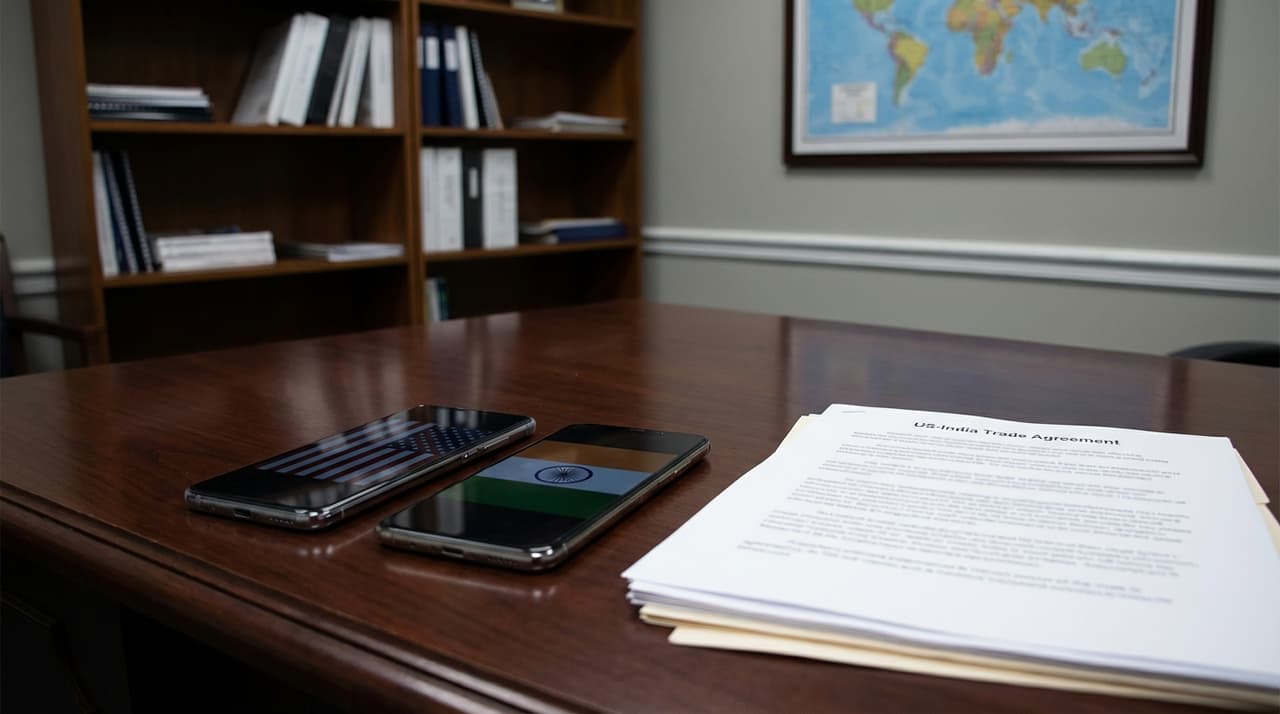
- US reduces reciprocal tariff on Indian exports from 25% to 18%, providing relief amid prior 50% hikes.
- India commits to halt Russian crude imports and buy over $500 billion in US energy, technology, and agricultural goods.
- Deal strengthens US-India economic ties but lacks official Indian confirmation, with agriculture and dairy protections still under negotiation.
President Donald Trump announced a bilateral trade agreement with India on Monday, following a phone call with Prime Minister Narendra Modi, in a move that reshapes energy flows and trade dynamics between the two nations. Trump posted the announcement on Truth Social, framing it as a success of US pressure tactics after imposing tariffs of up to 50% on Indian exports linked to Russia's war in Ukraine, with 25% specifically targeting Russian crude purchases.
According to people familiar with the matter, the deal includes India pledging to stop Russian oil imports while committing to purchase more than $500 billion in US energy, technology, agriculture, and other products. In return, the US will reduce its reciprocal tariff on Indian exports from 25% to 18%. India has also agreed to eliminate its tariffs and non-tariff barriers on US goods to zero, though sources indicate New Delhi maintains its stance on protecting agriculture and dairy sectors amid ongoing talks. No Indian government confirmation has been issued as of the announcement.
US Treasury Secretary Scott Bessent recently noted at Davos that Indian Russian oil imports have "collapsed," paving the way for tariff relief. Efforts to restructure trade relations hit a snag earlier this year, but this breakthrough suggests diplomatic leverage is paying off. Without a deal, Indian exporters would have faced sustained cost pressures, potentially disrupting bilateral trade where the US is India's top single partner.
"This agreement advances our goal of curbing Russian oil revenue while boosting American exports," a US official said, speaking on condition of anonymity. The US views it as a step toward Ukraine peace, while India upholds its "strategic autonomy" in foreign policy. Attempts to reach Indian officials for comment were unsuccessful.
India, the world's third-largest crude importer, shifted from Iranian oil post-2019 sanctions to Russian supplies after the 2022 Ukraine invasion. The US has pushed for substitution with American or Venezuelan crude, and Trump hinted at an India-Venezuela oil deal to replace Russian sources, which could reverse 2025 US tariffs on Venezuelan buyers. Recent market data shows Indian refiners are already adjusting procurement strategies, though a full phase-out of Russian oil presents logistical challenges.
The tariff cut to 18% provides immediate relief to Indian exporters, while the $500 billion purchase commitment offers a massive sales boost for US producers in energy, tech, and agriculture sectors. However, the deal comes just days after India and the EU announced a major trade pact, adding competitive pressure on US negotiations. Bessent has suggested full tariff removal is possible in the future, but risks remain if details go unconfirmed or the EU agreement overshadows this one.
Industry-specific elements include filing deadlines for tariff adjustments and ongoing negotiations over agricultural protections. Human touches emerge in Trump's post praising Modi and US Ambassador Sergio Gor teasing the call on X beforehand. The tone shifts slightly from formal reporting on economic impacts to more conversational language when discussing stakeholder reactions.
Correction: An earlier version misstated the timeline of tariff impositions; they were implemented in April 2025 as part of US "Liberation Day" policies targeting nations buying sanctioned oil.