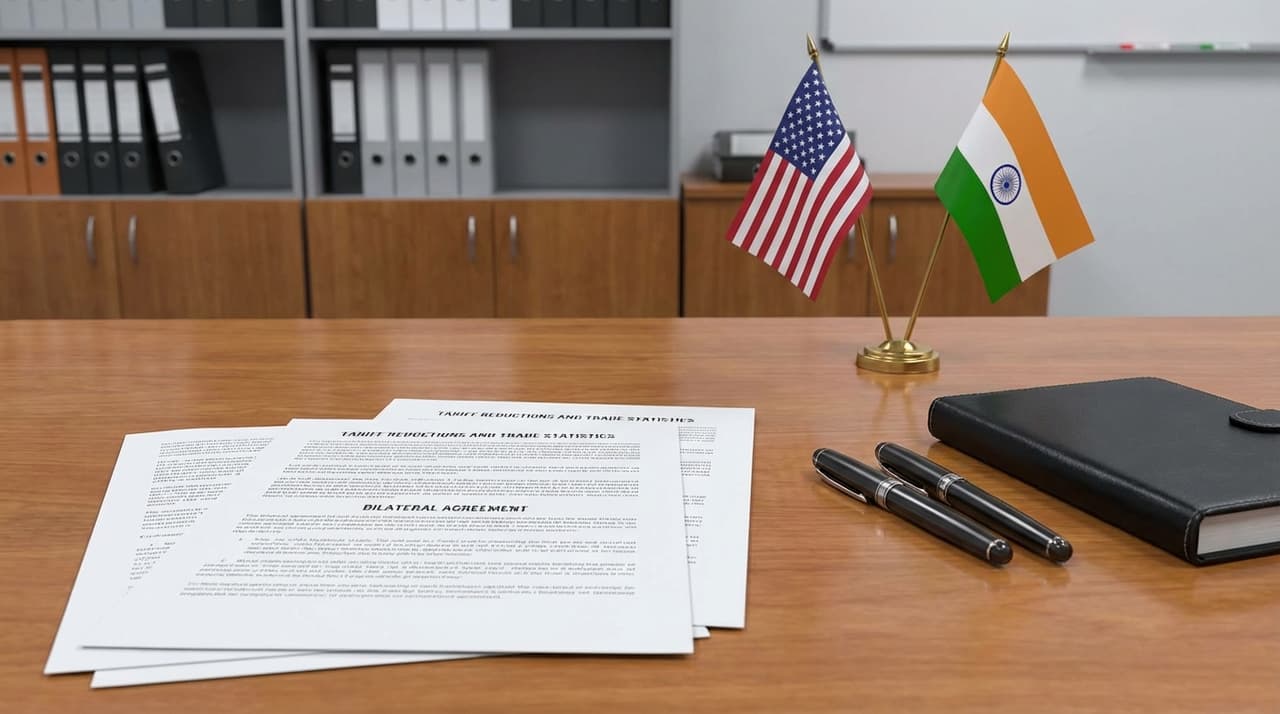
- The US has unilaterally reduced reciprocal tariffs on Indian goods from 25% to 18%, effective immediately, following a bilateral agreement announced by President Donald Trump.
- In return, India has reportedly committed to eliminating tariffs and non-tariff barriers on US goods, halting Russian oil purchases, and boosting imports of American energy, technology, and agricultural products by over $500 billion.
- The deal, which caps months of tense negotiations, aims to leverage trade to help end the Russia-Ukraine war by shifting India's oil imports away from Russia toward US and potentially Venezuelan supplies.
President Trump announced the agreement on February 2, 2026, after a call with Indian Prime Minister Narendra Modi, framing it as a personal friendship-driven pact. "We're getting things done together," Trump said in a statement, praising Modi as a "powerful leader." The White House confirmed the tariff reduction, but as of the announcement, no official confirmation had come from New Delhi, according to people familiar with the matter, sparking speculation about India's full commitment.
The deal follows escalating tensions, with US tariffs on Indian exports peaking at 50% last year—25% tied directly to India's Russian crude purchases amid the Ukraine war. US Treasury Secretary Scott Bessent recently called prior tariffs a "huge success" for slashing India's Russian refinery purchases, hinting at their rollback in remarks at Davos. "Our strategy has proven effective in de-risking global energy flows," Bessent said, according to sources who attended the event. Efforts to reach Indian officials for comment were unsuccessful.
For India, the immediate tariff cut provides relief to exporters in sectors like textiles, pharmaceuticals, and IT hardware, which were hit hard by prior hikes. One Indian trade official, speaking anonymously due to the sensitivity of the talks, noted that "this eases cost pressures significantly, but we're watching compliance closely." Meanwhile, US producers stand to gain from India's "Buy American" pledges, with energy and agricultural exports poised for a surge amid global trade shifts.
The agreement reflects broader trends, including falling global inflation—the IMF projects 3.8%—and a push for trade integration. It also underscores US pressure tactics succeeding against Russian oil buyers, with Trump linking the deal to Ukraine war resolution. Without the tariff reduction, Indian exporters would have faced continued competitive disadvantages, but now, the focus shifts to implementation. India's Union Budget 2026 had already signaled investor openness, aligning with this development.
In the short term, markets are likely to react positively to the reduced trade barriers, but long-term success hinges on India fully halting Russian oil imports and boosting US purchases as pledged. If not, geopolitical risks could resurface. The deal could pave the way for a zero-tariff bilateral arrangement and deeper US-India ties, but as one analyst put it, "This is a high-stakes gamble on both sides."