- U.S. Treasury Secretary Scott Bessent is spearheading a G7-led effort to address vulnerabilities in rare earth supply chains, following China's strict export controls.
- The Pentagon has committed over $4.5 billion in recent months to secure critical minerals, including loans and offtake agreements for domestic production.
- A bipartisan bill proposes a $2.5 billion federal agency to boost rare earth output, as allies coordinate to diversify sources amid ongoing trade tensions.
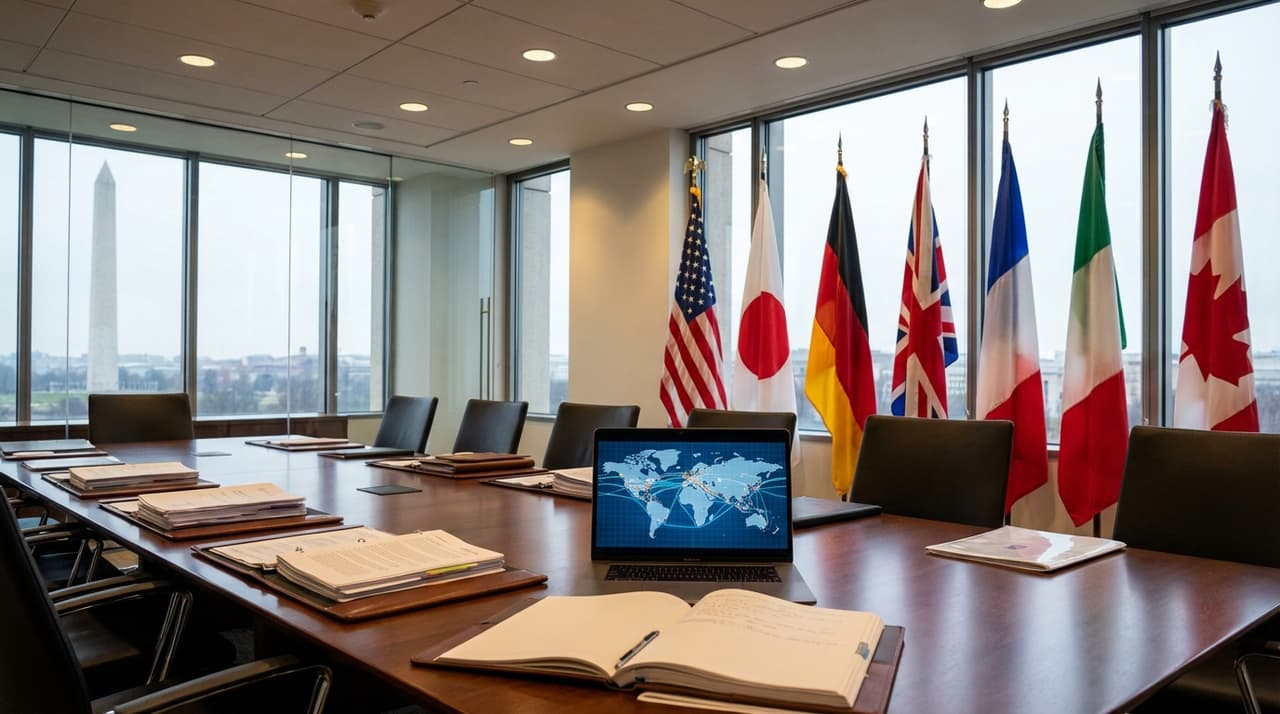
U.S. Treasury Secretary Scott Bessent hosted G7 finance ministers and other allies in Washington on Monday, January 19, 2026, to tackle what he described as an urgent need to "get out from China's grasp on rare earths." The meeting, which included representatives from Australia, India, South Korea, and the EU, focused on developing coordinated responses to China's export restrictions, according to people familiar with the discussions. Bessent emphasized the goal of "prudent derisking over decoupling," highlighting the strategic imperative to reduce reliance on China, which controls roughly 70% of rare earth mining and over 90% of processing and magnet manufacturing.
China's recent Announcement No. 61 of 2025, effective December 1, 2025, imposes the strictest controls to date, largely denying export licenses to companies affiliated with foreign militaries and subjecting advanced semiconductor technologies to case-by-case reviews. This move has escalated trade leverage in negotiations with the U.S., following a truce agreed upon by Trump and Xi Jinping in October 2025 that Beijing is now accused of backtracking on. Without alternative sources, industries from electric vehicles to defense contractors face supply uncertainty, with one analyst noting, "China retains significant leverage until allied production scales up, which could take years."
In response, the Pentagon has deployed significant capital, committing over $4.5 billion in the past five months alone to close six critical minerals deals. This includes a $150 million loan to expand MP Materials (MP)' Mountain Pass facility in California and a 10-year offtake agreement for its planned magnet manufacturing output. Efforts to restructure supply chains have hit a snag, however, as international coordination faces hurdles in aligning policy differences among allies. At the G7 meeting, proposals included setting price floors to make non-Chinese projects viable and exploring new partnerships, but sources indicate that reaching consensus on long-term investment commitments remains challenging.
A bipartisan group of lawmakers introduced legislation on Thursday to create a $2.5 billion federal agency aimed at spurring domestic and allied rare earth production, with senators like Shaheen and Young backing the bill. Meanwhile, Japan has reportedly protested China's curbs, which now extend to civilian-use products, underscoring the global ripple effects. Bessent's office did not immediately respond to requests for comment on the timeline for implementing these initiatives, but insiders suggest that without a deal to accelerate production, the U.S. could face continued vulnerabilities in defense supply chains, where rare earths are crucial for jet fighters and missiles.
Correction: An earlier version misstated the total Pentagon investment over the past year; it is nearly $5 billion, not $4.5 billion.