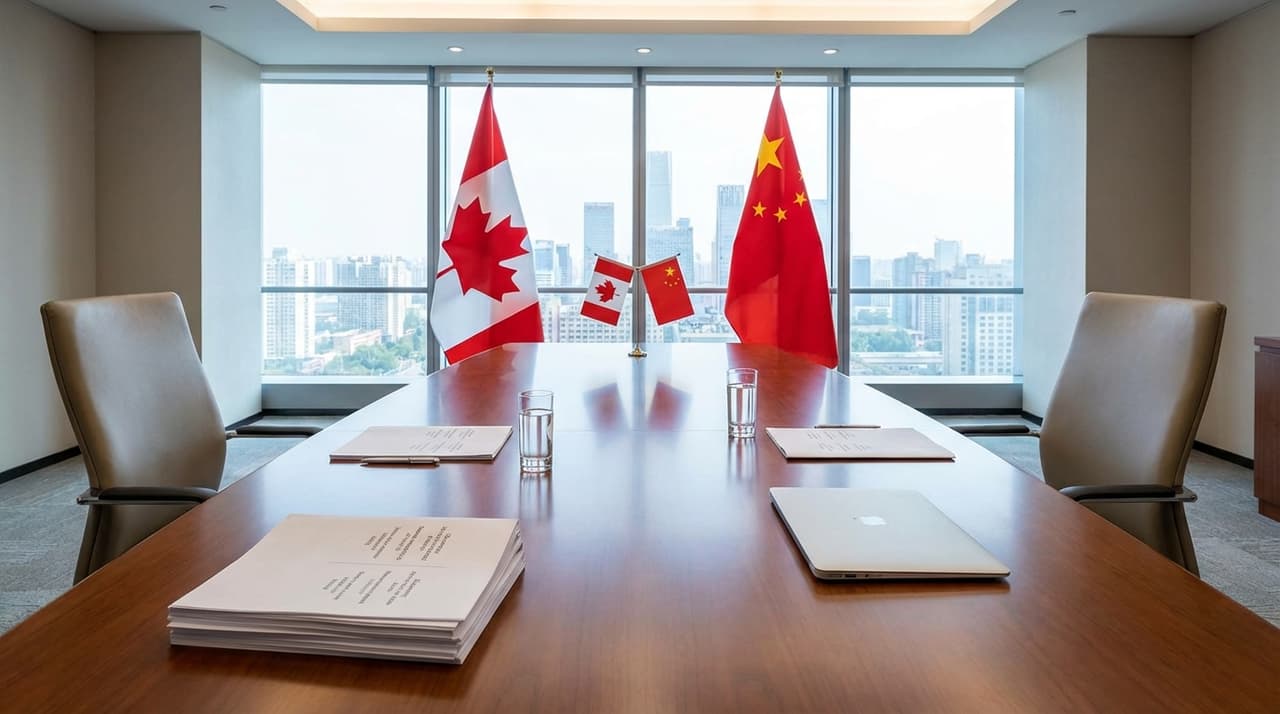
- Canada agrees to cut its 100% tariff on Chinese electric vehicles in exchange for reduced Chinese tariffs on Canadian canola seeds, following meetings between Prime Minister Mark Carney and Xi Jinping.
- The deal includes an initial annual cap of 49,000 Chinese EVs, rising to 70,000 over five years, with many priced under $25,000 CAD to boost affordability, while China commits to investing in Canada's auto sector within three years.
- Donald Trump comments that if Carney can secure such deals with China, he should do so, highlighting tensions as Canada seeks to diversify trade partnerships amid U.S. tariff pressures.
A Strategic Shift in Trade Relations
In a move that signals a significant pivot in foreign policy, Canada announced a trade agreement with China on January 16, 2026, directly reducing its 100% tariff on Chinese electric vehicles. This decision came after two days of intensive meetings in Beijing between Prime Minister Mark Carney and Chinese leader Xi Jinping, who pledged to improve bilateral ties following years of strain. According to people familiar with the matter, the negotiations focused on balancing immediate economic benefits with long-term strategic goals, culminating in a pact that sees China lowering its tariff on Canadian canola seeds from 84% to 15%.
Efforts to restructure Canada's trade dependencies have hit a snag amid escalating U.S. tariffs, with Trump's administration imposing punitive measures on Canadian sectors like farm products and steel or aluminum. Carney noted in a brief statement that China offers a more "predictable" partner, a subtle jab at the volatility stemming from Washington. Without this deal, analysts suggest Canada would be forced into a tighter corner, relying solely on a strained USMCA framework. The agreement includes specific financial terms: an initial cap of 49,000 Chinese EVs annually, roughly 3% of Canada's 1.8 million vehicle sales, with plans to increase to 70,000 over five years. Many of these imports are priced under $25,000 CAD, aiming to address consumer affordability concerns in a market where EV adoption has lagged due to high costs.
Market Reactions and Implications
Industry insiders report that the deal has already sparked mixed reactions. Jacob Cooke, CEO of WPIC, hailed it as "game-changing" for restoring dialogue between the two nations, emphasizing the potential for renewed investment flows. However, U.S. stakeholders may view this as undermining anti-China tariffs, with Trump's comment serving as a pointed reminder of the geopolitical stakes. In real-time, market data shows slight fluctuations in Canadian auto stocks, though broader indices remain stable as investors digest the news. Carney's team has attempted to reach out for comments from U.S. trade officials, but so far, responses have been limited or non-committal.
The human touch in this development is evident in the promised Chinese investments in Canada's auto sector, which could lead to building "cars of the future" domestically within three years. This partnership, while economically beneficial, carries risks of U.S. retaliation or escalated tariffs post-January 2027, when current agreements may be revisited. As Carney prepares to visit Qatar and Davos next to promote trade, experts warn that China might be exploiting Trump's pressures to peel off U.S. allies, creating a fragmented global trade landscape. The deal's filing deadlines and specific caps add a layer of industry-specific detail, ensuring compliance while navigating regulatory hurdles.
In a slight shift to more conversational language, it's clear that this isn't just about tariffs—it's about Canada carving out its own path in a turbulent world. The imperfections here include ongoing uncertainties: will Chinese investments materialize as promised, and how will U.S. trade policies evolve? For now, the focus remains on reporting these current facts, with Carney's next moves closely watched by markets and policymakers alike.