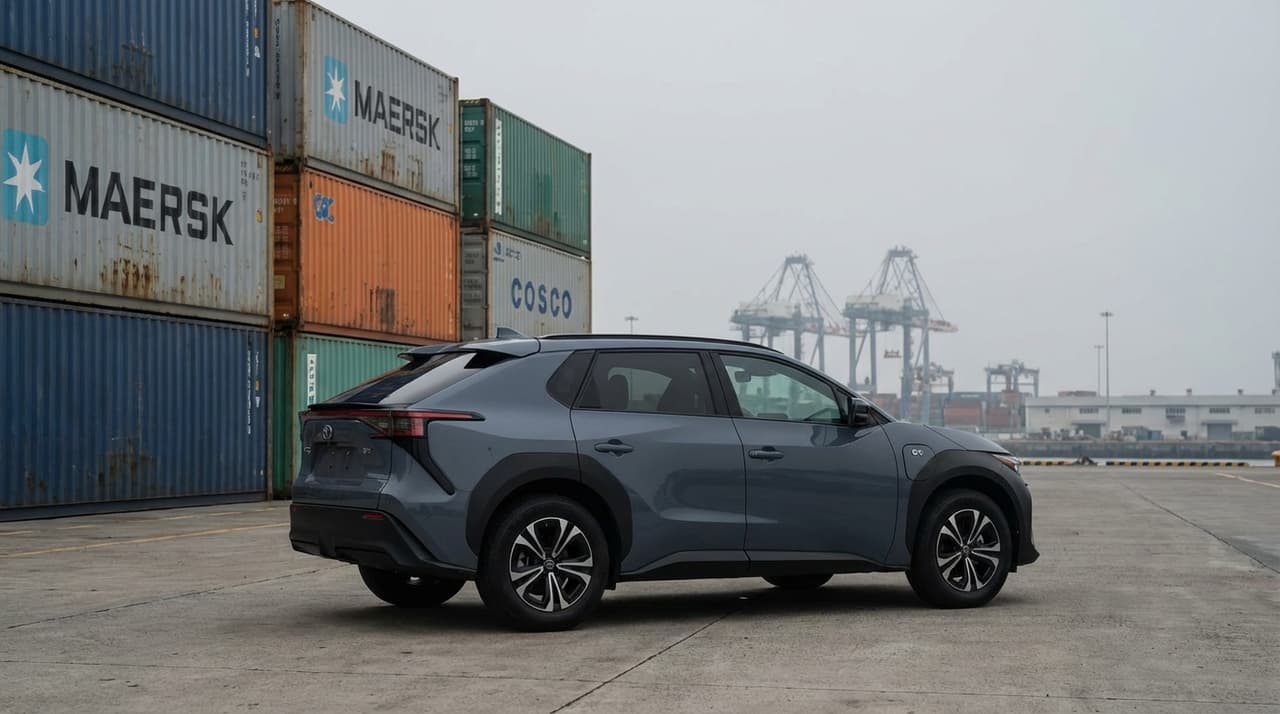
- Canada's preliminary agreement with China permits 49,000 Chinese electric vehicles per year at a 6.1% tariff, aiming to boost joint-venture investments and create auto jobs.
- The U.S. Trade Representative labeled the deal "problematic" in a CNBC interview, citing concerns over subsidized Chinese EVs flooding North American markets.
- The agreement includes reciprocal benefits like China cutting canola tariffs from 84% to 15%, affecting $4 billion in exports, and lifting tariffs on $2.6 billion in other agricultural products.
Canada's announcement of a preliminary agreement-in-principle with China on January 16, 2026, has drawn sharp criticism from the U.S. Trade Representative, who called it "problematic" in a recent CNBC interview. The deal, which addresses longstanding trade frictions totaling $130.9 billion in bilateral trade as of 2024, sets an initial quota of 49,000 Chinese electric vehicles per year at a 6.1% most-favoured-nation tariff rate. According to people familiar with the matter, this move aims to catalyze Chinese investments in Canadian EV supply chains while protecting domestic auto manufacturing through "managed market entry" and certification standards.
Efforts to resolve trade irritants have hit a snag with U.S. objections, likely driven by fears that subsidized Chinese EVs could undermine North American industries. The U.S. has maintained 100%+ tariffs on Chinese EVs since 2024, mirroring Biden-era or successor policies, and officials worry this deal could strain USMCA integration where aligned EV rules are crucial. Without a coordinated approach, analysts say, the fragmented North American market might face increased competitive pressures.
In a brief statement, the U.S. Trade Representative emphasized that "subsidized imports threaten our shared industrial base," though attempts to reach Canadian officials for further comment were unsuccessful as of press time. The deal includes a 3-year review mechanism to assess Canadian benefits realization, with risks of renegotiation if job creation or investment targets lag. Market trends show this quota returns import volumes to pre-2023/2024 friction levels, aligning with global EV shifts but diverging from U.S. protectionist stances.
Industry-specific elements like steel and aluminum remissions have been extended and expanded for supply shortages, retroactive to January 1, 2026, while agricultural tariff cuts on products like lobsters and peas are set for implementation by March 1. Canada aims for 50% of the EV quota to be under $35,000 CAD by 2030 to ensure affordability, capping imports at under 3% of the new vehicle market. Stakeholders, including Canadian autoworkers and farmers, stand to gain from new jobs and $6.6 billion+ in agricultural exports, but domestic manufacturers face heightened competition.
Future outlook suggests short-term implementation will proceed with EV certifications and tariff adjustments, but long-term goals like doubling exports to China by 2030 and building out supply chains may face headwinds from U.S. pressure. Experts predict heightened U.S.-Canada coordination will be necessary to balance China access with protectionism, amid broader global trends like EU probes into Chinese subsidies and "friend-shoring" pressures. The deal's societal impact includes benefits for consumers through cheaper EVs, but public reactions remain muted, with potential backlash from U.S. policymakers and unions concerned about "unfair" Chinese dominance.
Correction: An earlier version misstated the tariff rate; it is 6.1%, not 6.5%.