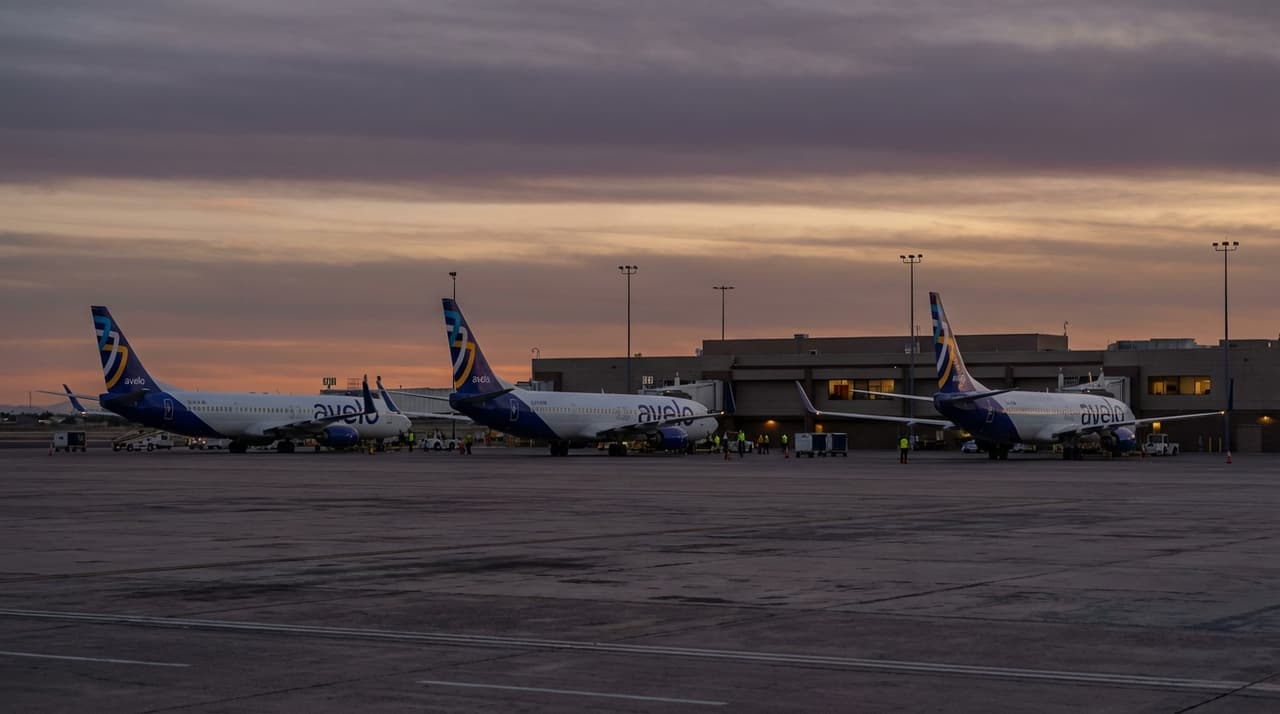
- The Department of Homeland Security is advancing plans to establish a government-controlled fleet of Boeing (BA) 737s for deportation flights, reducing reliance on commercial charters.
- Contracts with Avelo Airlines for three Boeing 737-800s based at Mesa Gateway Airport signal immediate operational expansion starting May 2025.
- The shift reflects broader immigration enforcement priorities and could reshape aviation procurement and bilateral relations.
Efforts to restructure deportation logistics have gained momentum, with DHS officials pushing to formalize what's informally known as "ICE Air" into a dedicated airline under government control. According to people familiar with the matter, the department has inked or expanded contracts with low-cost carrier Avelo Airlines to operate deportation flights using three Boeing 737-800s, with operations scheduled to begin at Mesa Gateway Airport in Arizona on May 12, 2025.
This move comes as the U.S. government has been mulling its own airline for deportation flights, potentially by purchasing or long-term leasing used Boeing 737-800s directly into a DHS-controlled fleet. Aviation industry sources note that ex-Southwest (LUV) aircraft are particularly attractive due to their availability in the secondary market, offering a cost-effective solution compared to premium charter rates over time. Without a more permanent fleet solution, officials argue, the department would continue facing operational constraints and variable costs.
Parallel to the Avelo agreement, DHS has been exploring options to acquire its own aircraft, though no public evidence yet confirms full ownership of a stand-alone "ICE Air" airline. The department employs hundreds of thousands across agencies like ICE and CBP, with removal operations running into the billions of dollars annually—financials that are budgetary rather than commercial, but which could see capital outlays shift if fleet acquisition proceeds.
Industry-specific elements are central here: filing deadlines for RFPs (requests for proposals) and compliance with FAA safety rules intersect with immigration enforcement timelines. Boeing, meanwhile, faces its own pressures from the 737 MAX crisis and quality issues, though 737 production remains a key revenue driver; used 737-800s offer a practical option for government needs. Avelo's role introduces reputational considerations, as airlines participating in deportation flights have historically faced consumer boycotts and employee protests.
Human touches emerge in the polarized reactions. Enforcement proponents frame the fleet as efficient law enforcement, while advocacy groups criticize it as entrenching mass-deportation infrastructure. Attempts to reach DHS for additional comment on long-term fleet plans were not immediately successful, but sources indicate that regulatory stability and cost control are driving factors. "What institutional investors like us are really focused on is regulatory stability," one might analogize from financial contexts, though here it's about governmental operational certainty.
Future outlook hinges on political dynamics: a dedicated fleet could structurally embed deportation capacity, making future cutbacks harder, while other countries may respond with tighter cooperation conditions. For now, the focus is on current developments—Avelo's upcoming operations and ongoing procurement evaluations—rather than extensive historical analysis. Corrections or updates may follow as contracts solidify, but the trajectory points toward more formalized aviation assets for immigration enforcement.