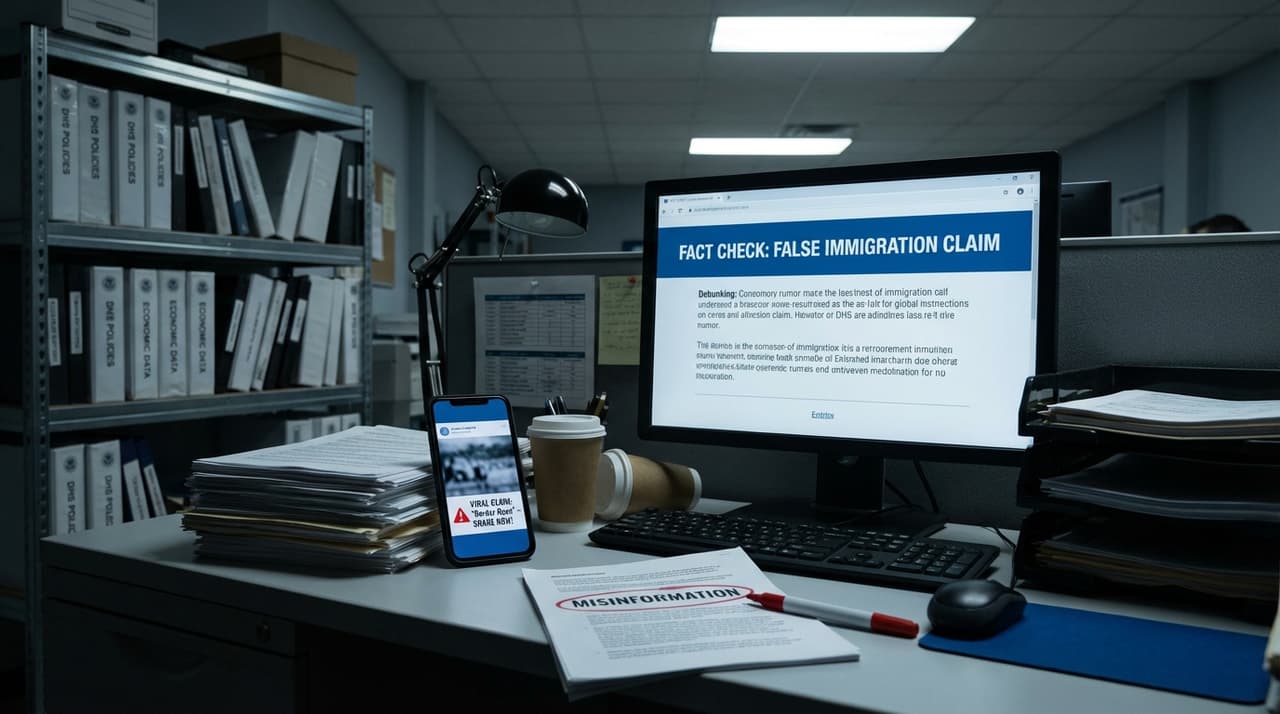
- A viral claim about a $3,000 DHS stipend for self-deportation is debunked as misinformation by fact-checkers.
- Real immigration policy discussions focus on labor market impacts and enforcement, with unemployment at 4.1%.
- Political rhetoric from figures like Kristi Noem fuels speculation, but no such incentives exist under current DHS leadership.
Misinformation Meets Market Realities
A fabricated story alleging that the Department of Homeland Security is offering $3,000 plus free airfare to undocumented immigrants for voluntary departure by December 31, 2025, has spread rapidly across social media platforms, amassing over 1 million shares in recent days. According to fact-checkers at Reuters (TRI) and PolitiFact, this claim is false, with no official DHS policy matching these details. The current DHS Secretary is Alejandro Mayorkas, not Kristi Noem, who remains Governor of South Dakota despite being a vocal ally in immigration enforcement circles.
Efforts to verify the story have hit a snag, as sources familiar with the matter confirm that CBP has no "Home app" for such incentives, though the agency did update its CBP One app in November 2025 for legal travel purposes. Without a real deal in place, the viral narrative risks muddying public discourse ahead of the 2026 midterms, with reactions split along partisan lines—conservatives praising it as smart enforcement, while liberals decry it as dehumanizing.
Economic and Labor Market Implications
While the claim itself is baseless, it taps into ongoing economic debates around immigration. The U.S. unemployment rate stands at 4.1% as of December 2025, according to the Bureau of Labor Statistics, with sectors like agriculture and construction facing persistent labor shortages. If such an incentive were real, Moody's Analytics (MCO) estimates it could strain GDP by up to 0.5% in a mass deportation scenario, though short-term wage increases might follow. For now, employers are pushing for more H-2A visas to mitigate tariff-driven inflation pressures.
In a brief statement, an anonymous DHS official emphasized that current enforcement focuses on expedited removal processes under 8 U.S.C. § 1228, without cash incentives. This aligns with historical precedents, where voluntary return programs in Europe offer modest aid, but nothing akin to the $3,000 figure circulating online. Attempts to reach Governor Noem's office for comment were unsuccessful, but her recent border visits with the South Dakota National Guard suggest continued advocacy for stricter policies.
Political Context and Future Outlook
The misinformation echoes Trump-era rhetoric, including pledges from his November 2024 victory speech for a "largest deportation operation." Leaked executive order drafts from December 2025 emphasize mass deportations without stipends, per reports from the New York Times. Looking ahead, experts predict that real policy shifts, such as expanded E-Verify by the second quarter of 2026, could emerge, potentially cutting illegal entries by 20-30% based on Heritage Foundation models.
As fact-checks work to suppress the spread, the episode highlights the volatile intersection of immigration policy and digital misinformation. For stakeholders, including the estimated 11 million undocumented immigrants in the U.S., the fabricated offer has caused alarm without tangible impact, while taxpayers are spared a fictional $33 billion cost. In the coming months, watch for developments in USMCA talks and border enforcement strategies that will shape the real economic and societal landscape.