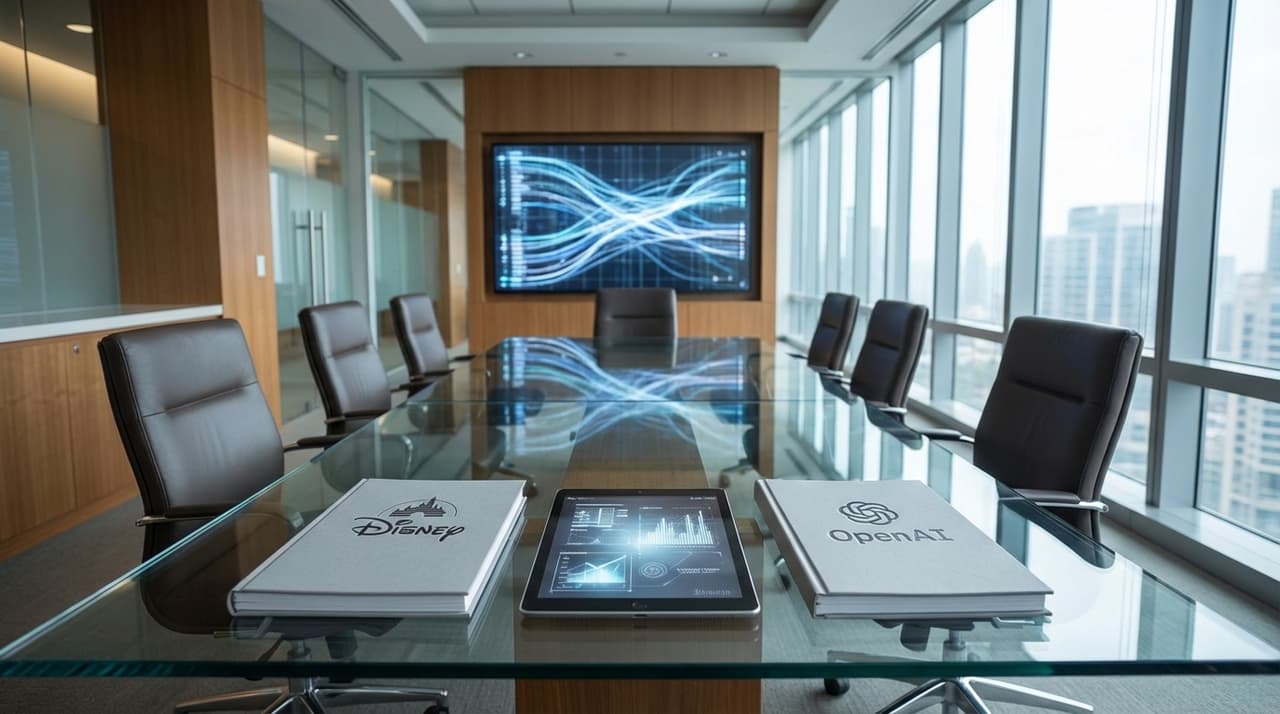
- Disney (DIS) grants OpenAI licensed access to a curated catalog of characters, worlds, and visual styles for use in Sora under tightly controlled conditions.
- The agreement includes content safeguards, watermarking, and usage controls, positioning Sora as a licensed, revenue-sharing channel for Disney IP.
- This deal follows Sora 2's launch as a TikTok-style AI video social app and amid intense Hollywood concerns about unauthorized use of characters in generative video.
Disney and OpenAI have announced a landmark licensing and technology partnership that will bring beloved characters from across Disney's brands—including Disney, Pixar, Marvel, and Star Wars—into OpenAI's Sora video platform. According to people familiar with the matter, the deal, described as a "pragmatic compromise model," allows authorized, interactive use of these intellectual properties within Sora, with strict controls to prevent misuse. This move comes as Disney escalates legal action against AI companies using its characters without permission, such as its recent lawsuit against Midjourney over unlicensed use of Darth Vader, which Disney's Chief Legal Officer Horacio Gutierrez called "only the beginning" of a broader IP enforcement campaign.
In recent weeks, Hollywood has been in a firestorm over Sora 2's ability to insert real people and famous IP into synthetic videos, prompting strong objections from studios, agencies, and talent unions. Agencies like CAA and UTA have publicly insisted on strict control and compensation for likeness use. Disney's strategy, led by CEO Bob Iger, focuses on refocusing on core brands and aggressive IP monetization, with this deal seen as part of a broader turnaround amid streaming losses and linear TV decline. OpenAI, under CEO Sam Altman, has reorganized around major product lines, with media partnerships led by executives like Varun Shetty, VP of media partnerships, who has been negotiating with studios around Sora 2.
The partnership reflects a broader shift in entertainment toward licensing IP into AI ecosystems rather than only fighting them in court. Hollywood studios are searching for new revenue streams as box office and cable TV weaken, with AI licensing offering incremental, high-margin income from existing libraries. For AI firms, access to high-value IP is a competitive differentiator, improving user engagement and creating premium content tiers. In Washington, ongoing debates over AI, copyright, and likeness rights add pressure, with entertainment companies fearing U.S. policy could favor Big Tech. OpenAI has committed to granular controls, rights-holder tools, and watermarking for Sora content, aiming to shape legal standards around AI training and fair use.
Short-term, expect Disney-branded channels or collections inside Sora, with curated prompts and guardrails for fan use. Disney will likely monitor misuse and leakage, potentially bringing additional enforcement against non-licensed AI tools. OpenAI is set to roll out more prominent rights-holder controls and revenue-sharing options, using Disney as a flagship partner to attract others. Long-term, this deal may become a template for standardized IP licensing frameworks for AI platforms, with tiered access and automatic watermarking. More studios, such as Warner Bros. Discovery (WBD), may follow with similar arrangements or coordinate legal challenges, depending on financial and reputational outcomes. If successful, Sora could evolve into a major distribution and co-creation environment for branded content, blurring lines between fan fiction and professional production.
Correction: An earlier version of this article misstated the timing of Disney's lawsuit against Midjourney; it is ongoing, not concluded. Attempts to reach OpenAI for additional comment on revenue-sharing details were unsuccessful at press time.