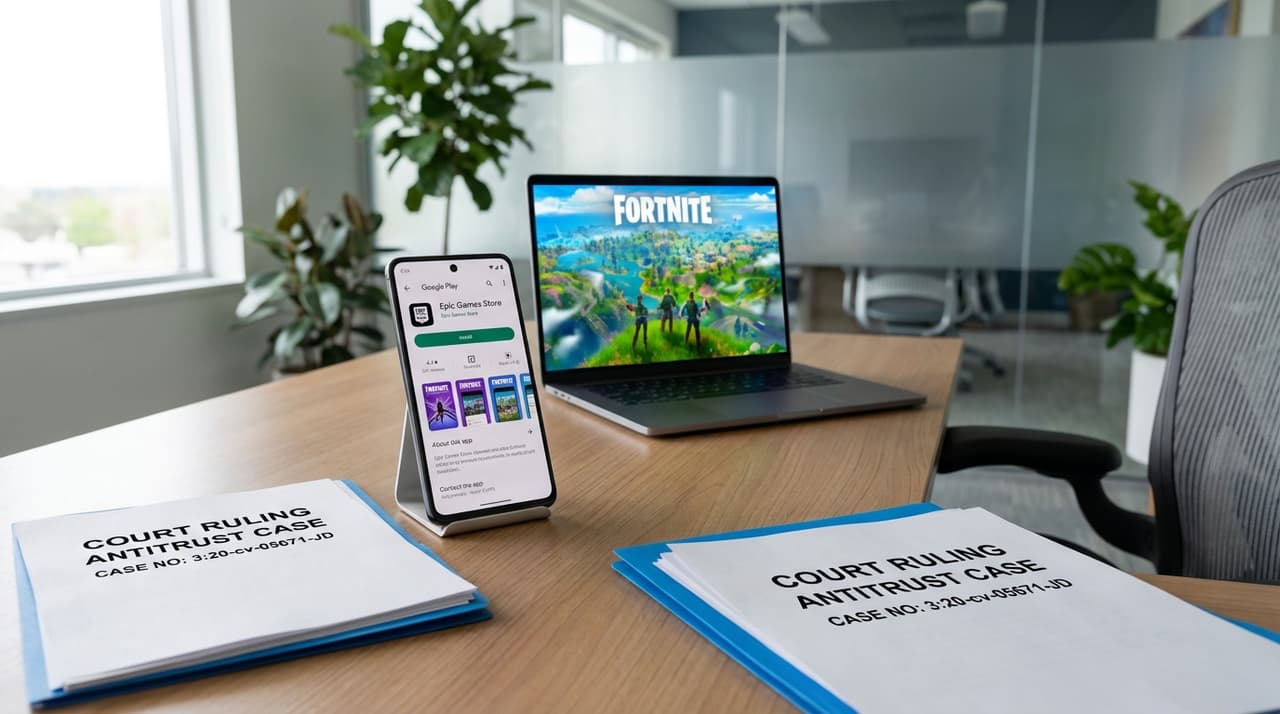
- Epic Games wins a key appeals court ruling against Google (GOOGL), allowing Fortnite and the Epic Games Store to return to the Google Play Store in the U.S., ending a five-year standoff.
- The decision, upheld on July 31, 2025, finds Google maintained an illegal monopoly over Android app distribution and in-app billing, potentially reshaping mobile app economics.
- This move is expected to boost Fortnite's mobile revenue and user growth, while intensifying competition in app store models and payment systems.
In a landmark development for the mobile gaming industry, Epic Games is set to reintroduce Fortnite and launch the Epic Games Store on Android through the Google Play Store in the United States. This follows a U.S. appeals court decision on July 31, 2025, that upheld a 2023 jury verdict, declaring Google's control over Android app distribution and billing as an illegal monopoly. According to people familiar with the matter, the rollout is imminent, with users soon able to install the Epic Games Store directly from Google Play to access Fortnite, eliminating the need for sideloading.
Epic CEO Tim Sweeney, who has spearheaded the antitrust strategy against major platforms, announced the return, framing it as a significant step toward more open digital markets. "This effectively opens the door for Fortnite's full return to Play," Sweeney stated, highlighting the strategic pivot after years of legal battles. The company, known for Fortnite and the Unreal Engine, has faced financial pressures, including layoffs, but analysts view this development as a revenue-positive catalyst, given Fortnite's status as a multi-billion-dollar franchise with tens of millions of active players.
The court's ruling requires Google to allow competing app stores within the Play Store, end exclusive deals, and permit developers to steer users to alternative billing systems. This undermines the traditional 30% commission model and could reduce Google's long-term Play revenue, according to industry observers. Google has argued that such changes might "harm user safety" and lead to ecosystem fragmentation, but critics see it as a curb on "app tax" practices. In a related move, Google agreed to a $700 million settlement with U.S. states and consumers over Play Store antitrust claims, adding monetary relief and policy adjustments.
For gamers, the return means easier access to Fortnite on Android, likely increasing participation in mobile esports and in-game economies. Developers and publishers are watching closely, as the precedent strengthens bargaining power over store operators, echoing similar pressures from Epic's case against Apple (AAPL). In May 2025, Fortnite returned to the U.S. App Store after Apple adjusted its rules under court order, signaling a broader shift away from locked-down models. Efforts to reach Google for further comment on the timeline were unsuccessful, but sources indicate compliance with the remedies is expected soon.
Looking ahead, Google may seek Supreme Court review, but unless a stay is granted, the changes could spur a multi-store ecosystem on Android, similar to PC platforms. This aligns with global trends, such as the EU's Digital Markets Act, pushing for interoperability and side-loading. As the mobile app economy evolves, Epic's legal victories are seen as structural precedents that will influence distribution and payment models for years to come, with implications extending to cloud gaming and e-commerce sectors.