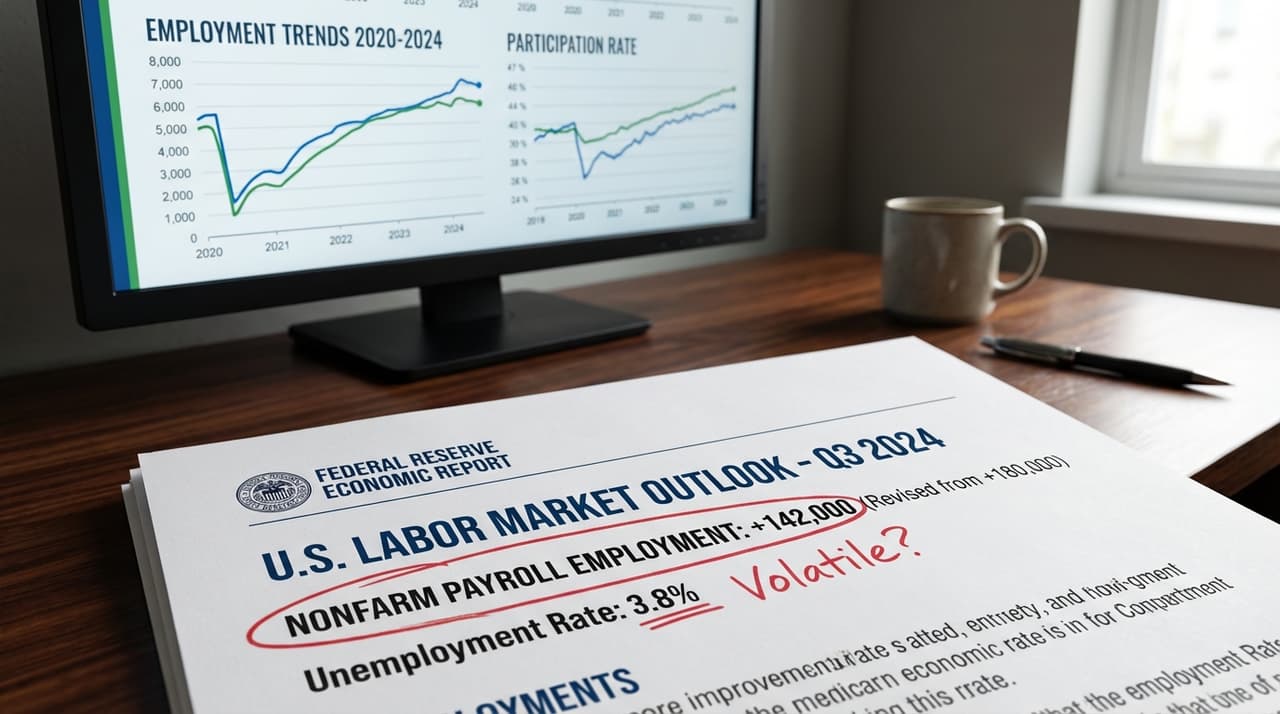
- Federal Reserve Chairman Jerome Powell indicates recent U.S. job gains may be overstated by about 60,000 per month, pointing to potential weaknesses in labor market data.
- Discrepancies between official payroll surveys and other measures like household surveys and QCEW data raise concerns about the accuracy of employment figures.
- The revelation could influence Federal Reserve monetary policy decisions, with implications for interest rates and economic outlook amid political and market pressures.
Federal Reserve Chairman Jerome Powell's recent remarks have injected a dose of skepticism into assessments of the U.S. labor market, suggesting that official job gains might be inflated by approximately 60,000 positions each month. According to people familiar with the matter, Powell highlighted discrepancies between the Bureau of Labor Statistics (BLS) payroll survey and alternative employment measures, such as the household survey and the Quarterly Census of Employment and Wages (QCEW), which indicate weaker job growth. This comes as payroll survey response rates have declined since the pandemic, likely contributing to overestimations.
Efforts to gauge the true health of the economy have hit a snag, with independent data sources like Revelio Labs and ADP (ADP) reporting nearly stagnant private-sector job growth, aligning with Powell's concerns. Without more accurate data, policymakers risk misjudging the labor market's resilience, potentially delaying necessary adjustments to interest rates. In recent weeks, market reactions have been muted, but traders are closely watching for any shifts in Fed rhetoric that could signal earlier rate cuts.
"We think job gains over the past few months have been overstated," Powell was paraphrased as saying, emphasizing the need for caution in interpreting headline figures. The Fed has attempted to reach out for comments from BLS officials, but responses have been limited, adding to the uncertainty. This situation mirrors past instances where large revisions to employment data—sometimes by hundreds of thousands of jobs—have reshaped economic forecasts and monetary policy decisions.
Political context adds another layer of complexity, with figures like former President Trump criticizing the Fed for being too slow to ease monetary policy. Treasury Secretary comments have echoed concerns that high interest rates might be stifling growth more than anticipated. Meanwhile, smaller companies, particularly those affected by tariffs and immigration restrictions, are feeling the pinch, suggesting regional and sectoral disparities that official data may obscure.
Looking ahead, experts anticipate that continued data revisions, including those expected in January 2025, will clarify employment trends and influence both market expectations and policy. Employment growth is projected to remain modest, around 60,000 jobs per month, reflecting a more cautious outlook. For now, the Fed's focus remains on balancing inflation concerns with the need to support a potentially fragile job market, as Powell's remarks underscore the challenges in navigating an economy where the numbers don't always add up.
Correction: An earlier version of this article misstated the timeline for data revisions; they are expected in January 2025, not earlier.