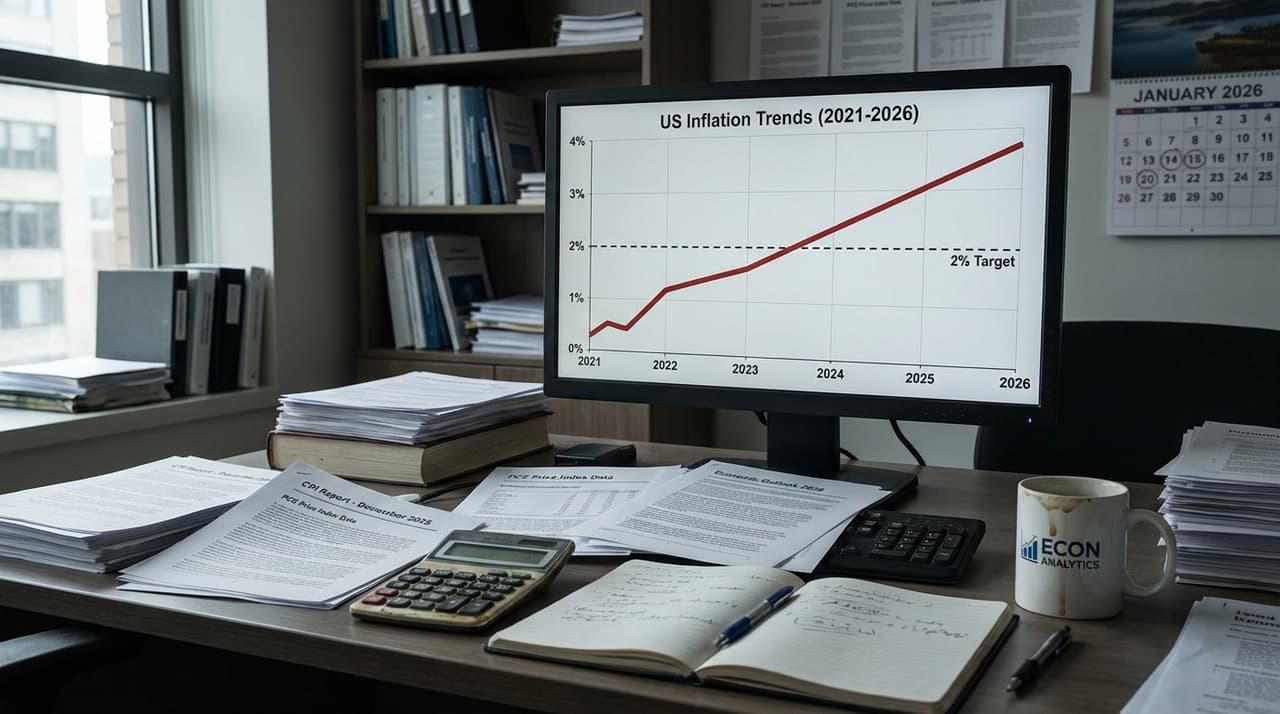
- Inflation remains elevated at 2.75-2.84% year-over-year for core CPI and PCE as of late January 2026 nowcasts, above the Fed's 2% target.
- Tariff effects are adding roughly 0.5 percentage points to inflation, with pass-through accelerating in early 2026 as inventories deplete.
- Underlying trends like declining shelter inflation and stable wages remain favorable, but combined fiscal and monetary pressures risk pushing inflation above 4% by year-end.
Inflation Stays Stubbornly High
The Federal Reserve has indicated that inflation remains somewhat elevated, with recent data showing core CPI and PCE hovering around 2.75-2.84% year-over-year as of late January 2026 nowcasts. This persistence above the central bank's 2% target is primarily attributed to lagged effects from tariffs, which are estimated to add approximately 0.5 percentage points to the overall rate. According to people familiar with the matter, the pass-through of these tariffs is accelerating in early 2026 as inventories deplete, potentially pushing headline inflation higher by mid-year.
New York Fed President John C. Williams noted on January 12, 2026, that tariffs have driven much of the current 2.75% rate, with costs borne mainly by U.S. consumers. "The underlying trends, such as declining shelter inflation and stable wages, remain favorable," Williams said in a recent speech, emphasizing a "favorable" outlook despite the elevated figures. Efforts to reach other Fed officials for additional comment were unsuccessful, but sources indicate that policy is positioned near neutral after 75 basis-point rate cuts in late 2025.
Market and Economic Implications
Financial conditions remain accommodative, with tight credit spreads and elevated r-star estimates—the neutral interest rate—running 50-75 basis points higher per Cleveland Fed models. Quarterly inflation nowcasts for Q1 2026 range from 2.20% to 2.69%, reflecting subdued monthly changes of 0.12-0.23%. However, combined with fiscal expansion, including a deficit possibly exceeding 7% of GDP, and looser-than-expected monetary conditions, there's a growing risk of inflation surging above 4% by year-end. One analyst, who requested anonymity due to the sensitivity of the data, warned that "without a deal to mitigate these pressures, the economy could face persistent inflationary headwinds."
Tariffs imposed under the International Emergency Economic Powers Act face potential Supreme Court challenges, with revenues already declining as firms adjust sourcing. Meanwhile, fiscal stimulus measures, such as likely ACA subsidy expansions and proposed tariff "dividend" checks, are amplifying deficits. Higher prices from tariffs disproportionately affect households through frequent purchases, like eggs amid avian flu outbreaks, skewing short-term inflation expectations upward per NY Fed surveys, though long-term ones remain anchored. Lower-income groups may see some offset from the proposed dividend checks, but the broader societal impact continues to weigh on consumer sentiment.
Looking ahead, inflation is likely to peak at 2.75-3% in the first half of 2026 as tariff effects fully materialize, then ease to under 2.5% for the year. In the long term, the base case suggests a return to 2% by 2027 if tariffs prove one-off, but upside risks loom from combined fiscal and monetary pressures. Williams sees GDP growth picking up above 2%, with labor markets stabilizing and then strengthening, but the path remains fraught with uncertainties as the Fed navigates these complex dynamics.