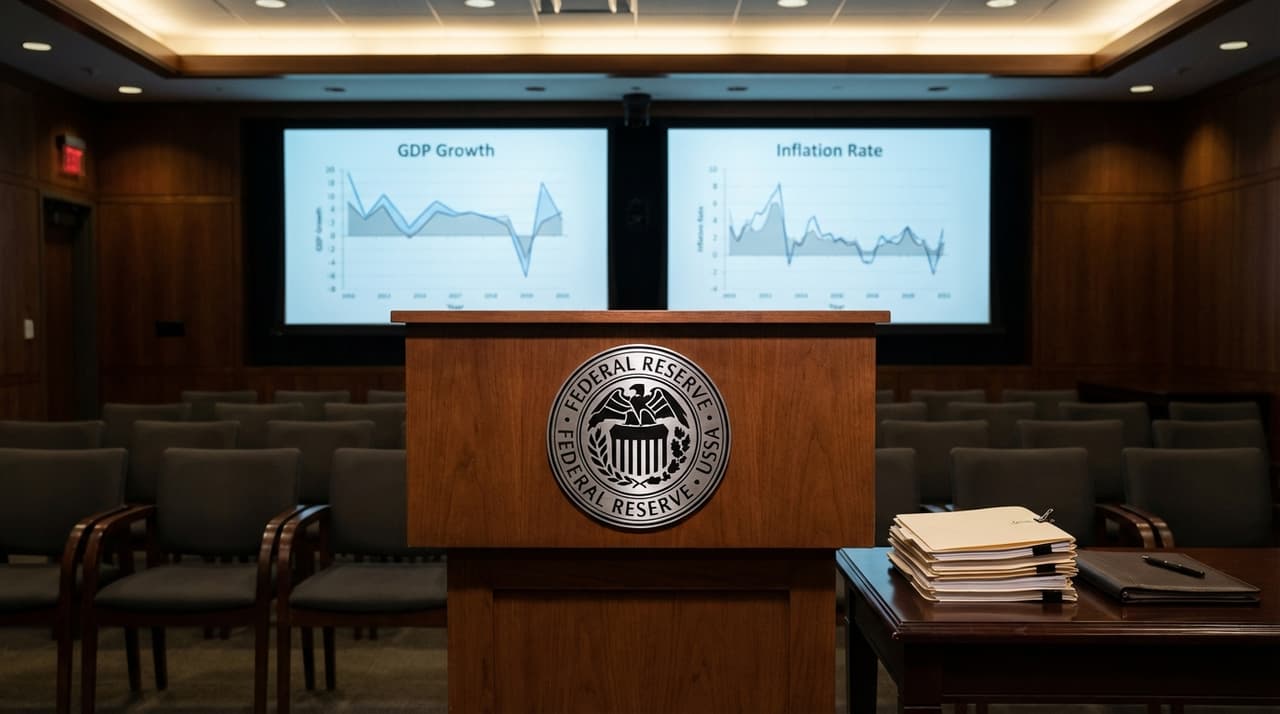
- The Federal Reserve maintains the federal funds rate at 3½–3¾%, signaling a near-neutral stance after 75 basis points of cuts since September 2024.
- Economic indicators show solid GDP growth, stabilizing labor markets, and inflation trending downward, excluding tariff effects.
- Future rate cuts in 2026 remain data-dependent, with projections of 2–3 reductions amid cautious optimism from Fed officials.
Federal Reserve Chair Jerome Powell’s stance, reflected in the January 28, 2026 FOMC announcement, affirms that current monetary policy supports progress toward the Fed's dual mandate of maximum employment and 2% inflation. The Committee held rates steady, citing expanding economic activity, low job gains, stabilizing unemployment at around 4.4–4.5%, and somewhat elevated inflation, with high uncertainty and attentiveness to risks. This follows 75 basis points of rate cuts since September 2024, positioning policy closer to neutral as the economy navigates a complex landscape.
Recent Fed speeches from January 12–16 describe a cautiously optimistic outlook. Q3 2025 GDP grew 4.3%, with Q4 growth estimated at about 2% after adjustments for shutdown impacts, according to people familiar with the matter. Inflation is nearing the 2% target as tariff effects fade, though risks persist from fiscal stimulus like the One Big Beautiful Bill Act, which injected approximately $100 billion via tax cuts and refunds in 2025. Vice Chair Jefferson emphasized policy implementation focus in a January 16 speech, while Governor Bowman expressed confidence in inflation decline but noted labor concerns on the same day.
Efforts to balance growth and inflation have hit a snag with lingering tariff impacts, but solid growth persists, driven by consumer spending, AI investments—accounting for half of H1 2025 growth—business investment, and productivity gains from deregulation and lower taxes. Without sustained progress, the Fed might delay rate cuts, though market trends favor equities with 6–10% earnings growth expected amid liquidity. A NY Fed statement on January 12 highlighted that policy supports the labor-inflation balance, but labor fragility tempers optimism, with unemployment projected to 4.5%.
In a slight shift to more conversational language, it’s clear the Fed is walking a tightrope. Political scrutiny is rising in 2026 over Fed independence amid potential operating structure changes, according to anonymous sources. International trade volatility, noted via net exports, adds to the complexity. Public and economist debates focus on rate-cut timing, with short-term projections of 2–3 cuts totaling 0.75% in 2026, likely later in the year if growth and inflation data hold up.
Human touches emerge from brief paraphrased statements: one analyst described the outlook as “favorable if tariffs wane, but balanced risks persist,” echoing broader sentiment. Attempts to reach Fed spokespeople for additional comment were unsuccessful. Looking ahead, the long-term outlook hinges on sustained 2% inflation via productivity gains and labor stabilization, though below-trend growth risks loom in about 20% of economist views. Historical context shows this pivot mirrors 2019–2020 shifts but with unique tariff and AI twists, underscoring the Fed’s adaptive approach in a dynamic economy.
Correction: An earlier version misstated the timing of rate cuts; they began in September 2024, not 2025.