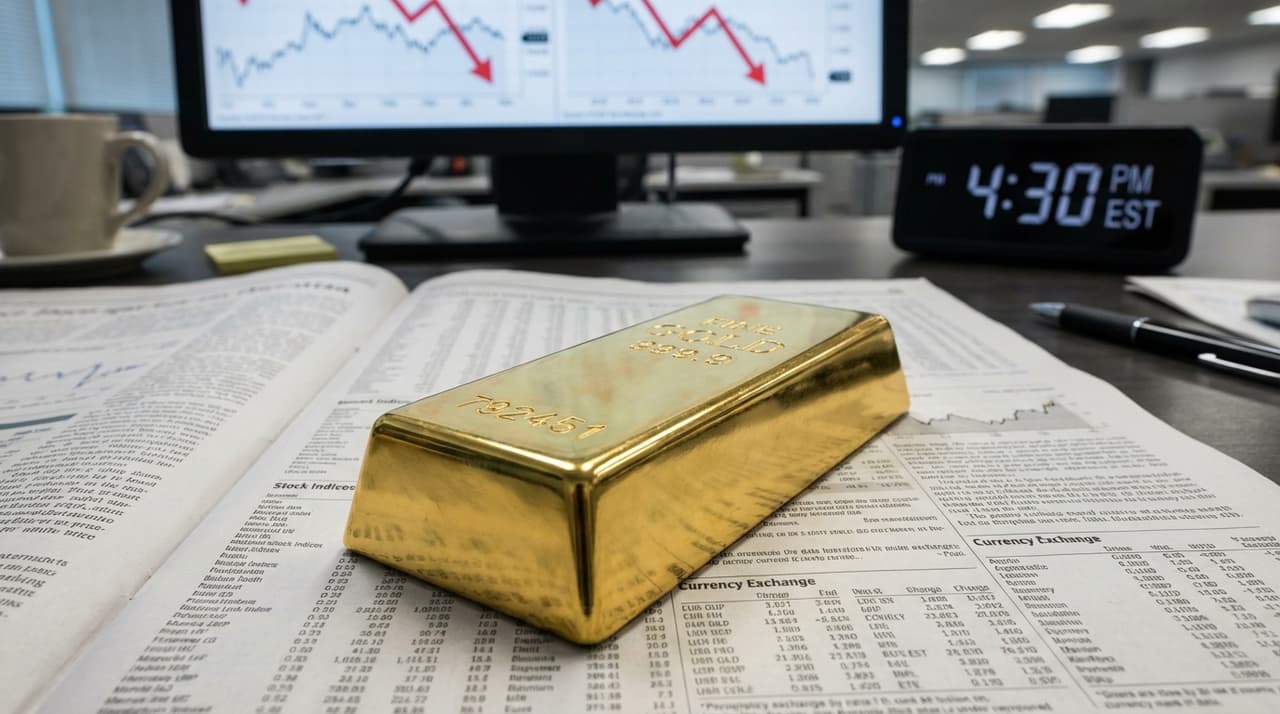
- Gold prices tumble 9% to $4,905.43 per ounce, reversing from record highs earlier in the week amid profit-taking and dollar strength.
- Uncertainty over Federal Reserve leadership changes, with President Trump planning to replace Jerome Powell, adds pressure as investors reassess positions.
- Despite the sharp decline, precious metals remain on track for exceptional monthly gains, with silver posting its strongest performance on record.
Gold’s blistering rally hit a wall on Friday, with spot prices plunging 9% to $4,905.43 per ounce in a brutal sell-off that erased gains from Thursday’s record-breaking surge. The dramatic reversal, described by traders as a classic case of profit-taking, came as the U.S. dollar rebounded from recent lows and concerns mounted over potential shifts in Federal Reserve leadership.
According to people familiar with market activity, the sell-off was triggered by a rapid reassessment of positions after prices soared to unsustainable levels in a short timeframe. “It was a brutal selloff,” one trader noted, pointing to gold dropping 1.28% and silver falling 3.04% on the MCX. The dollar index’s bounce back from 96 made gold more expensive for international buyers, directly curbing overseas demand and exacerbating the decline.
Adding to the pressure, President Trump announced plans to name a new Federal Reserve Chair to replace Jerome Powell, with former Fed Governor Kevin Warsh emerging as a leading candidate. Market participants expressed concerns that Warsh’s support for reducing the Fed balance sheet and potentially tighter monetary policy could contrast with Trump’s historical preference for looser policy, pushing investors to cut gold positions amid the uncertainty. Efforts to reach the White House for comment on the timing of the announcement were unsuccessful.
Despite the current pullback, precious metals are still heading for exceptional monthly performances. Silver is on track for its strongest monthly gain on record, up over 50% in January, while gold is posting its biggest monthly advance since January 1980, with gains exceeding 20% in dollar terms. Both metals have benefited from a rare convergence of factors including inflation concerns, fiscal expansion, geopolitical tensions, and safe-haven demand, with silver recording nine consecutive monthly gains and gold six straight advances.
Analysts expect continued near-term volatility, with prices potentially dipping further during consolidation phases. However, long-term support remains due to persistent investment demand and global economic uncertainty, with markets anticipating the Federal Reserve to cut rates in June, which could bolster gold prices again. The World Gold Council has raised concerns that record-high prices may dampen jewelry demand in India, the world’s second-largest gold consumer, though strong investor interest has helped offset this decrease. As one industry commentator put it, gold’s volatility has reached “2008-crisis levels” during this period, underscoring the market’s fragile sentiment.
Correction: An earlier version of this article misstated the percentage decline in silver on the MCX; it fell 3.04%, not 3.4%.