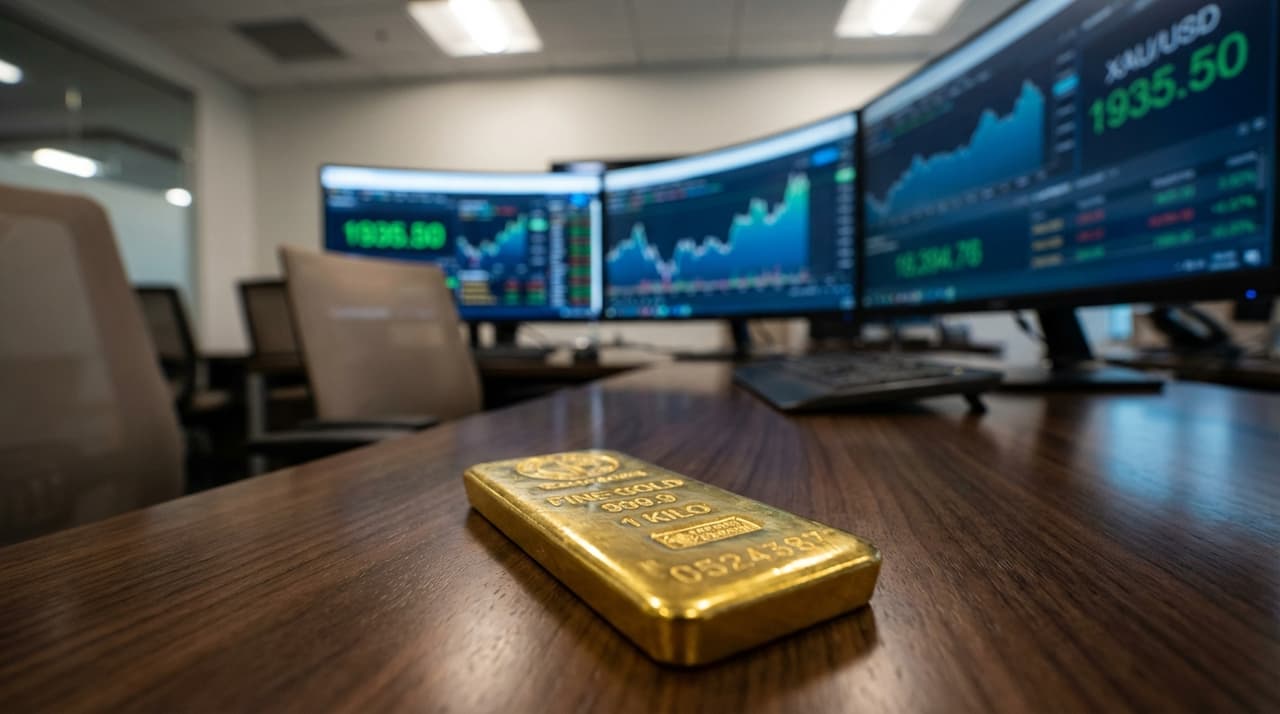
- Spot gold falls over 1% after hitting a record $4,639.42 earlier in the session, driven by profit-taking amid mixed signals on U.S. inflation and interest rates.
- The pullback comes despite ongoing geopolitical risks and softer U.S. inflation data that had boosted rate cut bets, highlighting the metal's volatile near-term outlook.
- Long-term bullish sentiment remains intact, with experts forecasting potential gains to $4,800-$5,400/oz by late 2026, supported by central bank buying and a weaker dollar.
Gold's blistering rally hit a speed bump on Thursday, with spot prices tumbling over 1% to $4,562.69 per ounce as traders locked in profits after the precious metal soared to a fresh record of $4,639.42 earlier in the session. The retreat underscores the delicate balance between bullish fundamentals and near-term technical pressures, with U.S. futures holding firmer at $4,639.50 amid mixed economic signals.
According to people familiar with the matter, the sell-off was triggered by a wave of profit-taking following the rapid ascent, which had been fueled by softer U.S. inflation data that bolstered expectations for Federal Reserve rate cuts. "We're seeing a classic case of traders taking money off the table after such a sharp move," one market participant said, speaking on condition of anonymity. Efforts to reach several major bullion banks for comment were unsuccessful by press time.
Despite the pullback, the broader narrative remains supportive. Gold has surged over 60% in 2025 alone, notching more than 50 all-time highs as central bank purchases, geopolitical tensions, and a weakening dollar created a perfect storm. Prices on January 14 stood at $4,635 per ounce, up $21 daily, part of a relentless rally that has defied traditional headwinds. Analysts at firms like ANZ and Standard Chartered point to robust emerging market central bank demand—forecast at 585 tonnes per quarter—and sustained ETF inflows as key pillars.
In the background, the global economic landscape continues to favor gold as a hedge. With global debt ballooning to $340 trillion, roughly three to four times global GDP, and persistent inflation above targets in many economies, the metal's appeal as a safe haven is hardly waning. Fed easing, which lowers the opportunity cost of holding non-yielding assets, coupled with a softer dollar, provides dual tailwinds. However, the Trump administration's policies could introduce volatility; accelerated U.S. growth might strengthen the dollar and pressure gold, though fiscal stress from Supreme Court tariff limits could boost debt issuance and term premiums, ironically favoring the metal.
Looking ahead, the short-term outlook appears rangebound, with some analysts eyeing a test of $4,350 per ounce over the next three months if uncertainty persists. Yet, the long-term bull case remains compelling. Experts from J.P. Morgan (JPM) to the World Gold Council overweight gold, projecting a climb to $4,800-$5,400 per ounce by late 2026 or 2027, driven by structural demand and dollar weakness. A bear scenario, with a 20% probability, would see prices retreat to $3,500-$4,000 on a dollar rebound or AI-driven productivity gains, but that seems a distant concern for now.
As the dust settles, market watchers are keenly awaiting Fed Chair Powell's term end in May 2026, which risks volatility with a potentially dovish successor. In the meantime, gold's dance between record highs and profit-taking reflects its enduring role in a world of economic crosscurrents and geopolitical unease.