- Former Trump economic adviser Kevin Hassett endorses Federal Reserve's dovish pivot, calling current rate reductions appropriate.
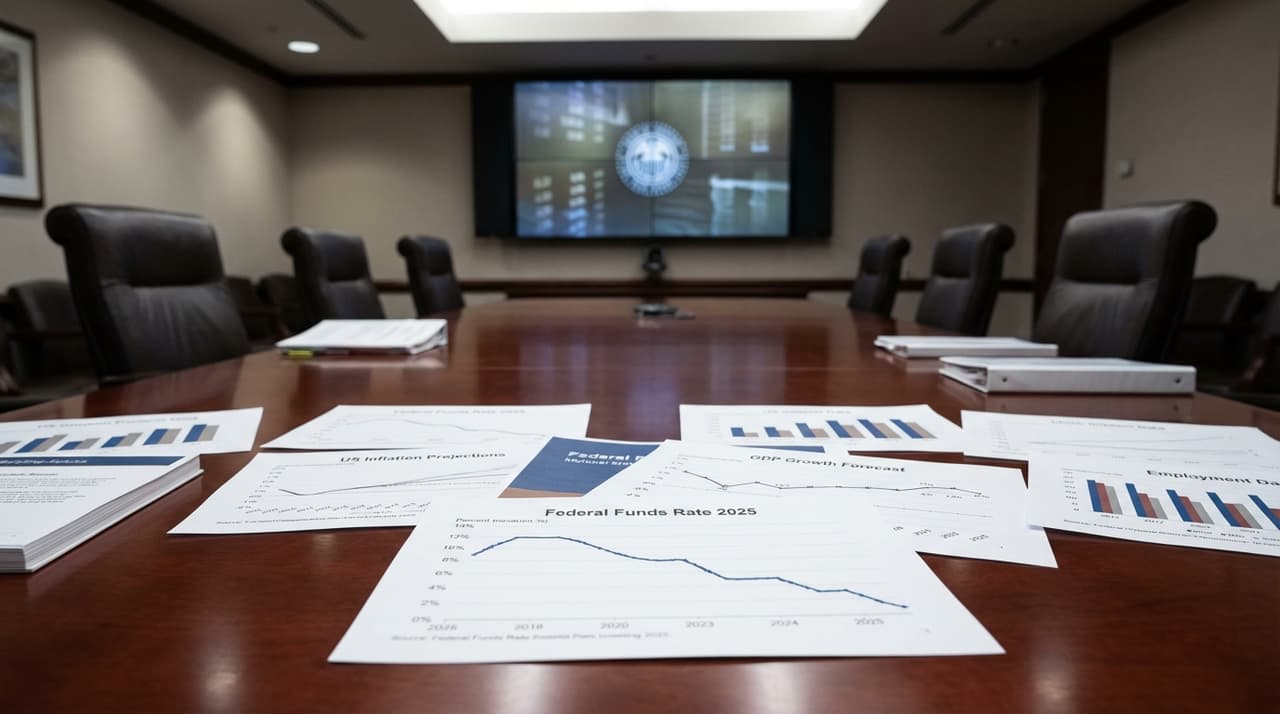
- Fed has cut rates three consecutive times in late 2025, bringing federal funds target to 3.5%–3.75% amid cooling growth and moderating inflation.
- Internal Fed divisions emerge as three FOMC members dissent against December cut, highlighting ongoing debate about pace of monetary easing.
A Dovish Turn Gains Prominent Support
Kevin Hassett, who chaired the White House Council of Economic Advisers under President Trump, has thrown his weight behind the Federal Reserve's recent shift toward monetary easing, stating it's "appropriate to lower interest rates right now." His comments come as the central bank has already reduced the federal funds target range by 25 basis points at each of its September, October, and December 2025 meetings, bringing the benchmark to 3.5%–3.75%—the lowest level since 2022.
Hassett's endorsement effectively validates the Fed's dovish turn and suggests that, from his perspective, more or continued easing is justified given current economic conditions. According to people familiar with his thinking, Hassett believes the cooling economy and labor market warrant preemptive action, even as inflation remains slightly above the Fed's 2% target. The former adviser's statement adds to a growing chorus of voices pushing for easier policy as unemployment edges higher and election-season pressures mount.
Cooling Indicators and Internal Divisions
The Fed's projections now show slightly stronger GDP growth for 2025–2026 alongside lower projected inflation, while the unemployment rate is expected to hover around the mid‑4% range. This indicates a softening but not collapsing labor market, with unemployment currently around 4.5–4.6%, up from prior lows. PCE inflation is projected to fall toward the 2–3% range, closer to the Fed's goal, giving policymakers more room to cut without reigniting severe price pressures.
Yet not everyone at the Fed is on board with the current pace. In a notable development, three FOMC members voted against the December 2025 rate cut—the first such split since 2019—underscoring internal disagreement about how quickly to ease. "There's genuine concern about cutting too fast," one source close to the discussions said, speaking on condition of anonymity. "Some worry we risk reigniting inflation or fueling asset bubbles if we move too aggressively."
Transmission and Real-World Impact
Lower policy rates are already feeding into the financial system, with declines in deposit and CD rates across banks. FDIC national rate caps for products like 6‑ and 12‑month CDs reflect this broader transmission, affecting both savers and borrowers. For households, reduced costs on variable‑rate debt—including credit cards and some mortgages—make refinancing more attractive, while businesses benefit from cheaper borrowing that supports capital investment and hiring.
However, the shift presents challenges for retirees dependent on interest income, who face lower yields on savings accounts and CDs as banks adjust to the easing cycle. Efforts to reach several regional bank executives for comment on their rate strategies were unsuccessful, though industry analysts note that most institutions are proceeding cautiously with deposit-rate adjustments.
Looking Ahead with Caution
Markets expect the Fed to remain data-dependent in the coming months, with further modest cuts possible if unemployment rises or inflation undershoots projections. Financial conditions are likely to ease gradually, supporting risk assets and credit markets but keeping scrutiny on any renewed inflation pressures. The central bank faces the delicate task of achieving a "soft landing"—slower growth and normalized inflation without a major recession—while navigating political pressures and internal dissent.
Hassett's intervention adds to an active debate between those worried about cutting too fast and those who fear keeping policy too tight as economic indicators cool. As one veteran Fed watcher put it, "This is where the rubber meets the road. Get it right, and you cushion the slowdown. Get it wrong, and you either reheat inflation or tip into recession."