- Trump, via Kevin Hassett, argues for deeper and faster rate cuts than the Federal Reserve currently projects.
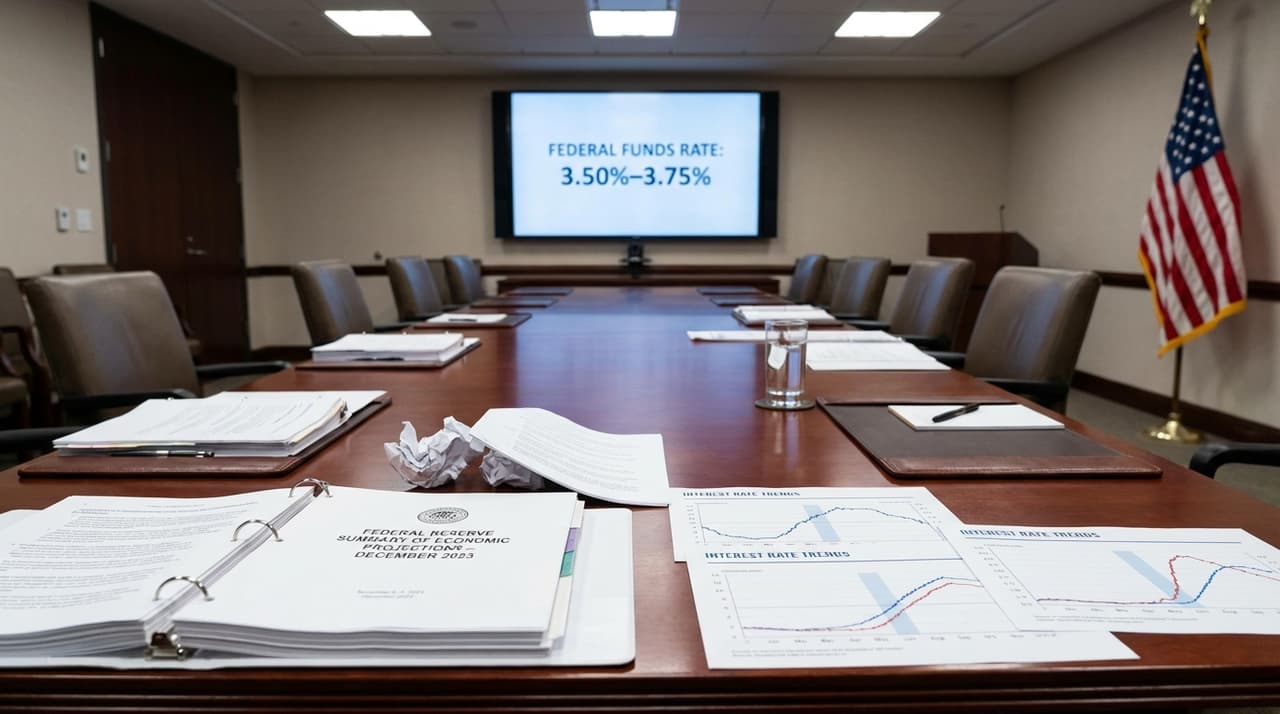
- The Fed has cut rates three consecutive times in 2025, lowering the federal funds rate to 3.50%–3.75%, but signaled caution with a hawkish tone in December.
- Political tensions rise as Trump's term nears its end, with implications for borrowers, savers, and market stability.
A Clash Over Monetary Policy
Kevin Hassett’s recent comment that “Trump thinks interest rates could be lower” underscores the former president’s ongoing political pressure on the Federal Reserve for more aggressive easing. This comes at a pivotal moment: the Fed has already cut the federal funds rate three meetings in a row—in September, October, and December 2025—bringing it to 3.50%–3.75%, the lowest level since 2022. Yet, the December FOMC meeting, which produced a 25 basis-point cut, was marked by a surprisingly hawkish tone, with officials stressing uncertainty about “the extent and timing” of any additional moves.
According to people familiar with the matter, the internal dynamics at the Fed are increasingly strained. The December decision saw three dissenting votes, the largest split since 2019, highlighting a deep divide over the appropriate pace of easing. Against this backdrop, Hassett’s remark, made in a private setting, reflects Trump’s view that rates should be cut further and faster than the Fed’s current projections, which imply only one additional cut in 2026.
Economic and Market Implications
The rate cuts have unfolded amid a cooling U.S. economy, with growth slowing and a sluggish labor market, though inflation remains slightly above the Fed’s 2% target. Lower policy rates are already feeding into reduced borrowing costs: mortgage rates and other consumer lending rates are easing from prior peaks, improving affordability for some borrowers. Markets reacted positively to the December cut, with U.S. stocks rallying—the S&P 500 neared record levels and the Dow jumped almost 500 points on the day—even as investors digested the Fed’s cautious outlook.
However, the societal impact is mixed. Borrowers, especially households with mortgages, auto loans, and credit-card debt, benefit from gradually lower rates, which can reduce monthly payments or enhance refinancing options. In contrast, savers and retirees face lower yields on deposits and fixed-income products, squeezing income from savings. There’s a growing public and expert debate over the risks: cutting too much, too fast could reignite inflation or fuel asset bubbles, while cutting too slowly might deepen labor-market weakness.
Political Stakes and Future Outlook
Trump has a long history of publicly criticizing the Fed and arguing for lower rates, framing it as necessary for growth and markets. This pattern of pressure is intensifying as Fed Chair Jerome Powell’s term ends in May 2026, and Trump is expected to name a successor in January, raising the stakes over the direction of monetary policy. Policy debates are increasingly focused on whether the Fed should prioritize growth and employment—supporting deeper cuts—versus price stability and financial risk control, which argues for a pause.
Looking ahead, the Fed’s Summary of Economic Projections suggests only modest further easing in 2026, with the funds rate path trending gradually lower but remaining positive in real terms. Many analysts expect short-term volatility in markets as investors weigh Trump’s pressure for more cuts against the Fed’s emphasis on inflation control and data dependence. Longer term, the key risks are clear: if the Fed bows to political pressure and cuts too aggressively, it could undermine its credibility and inflation-fighting reputation; if it resists and holds rates higher, growth and employment could weaken further, raising unemployment and political backlash.
Efforts to reach Hassett for additional comment were unsuccessful, but sources close to the administration indicate that Trump’s stance remains firm. As one insider put it, “He believes the Fed is moving too cautiously in a slowing economy.” This tension mirrors global trends, where similar clashes between governments and central banks over how fast to cut have emerged, with political leaders in several economies leaning on monetary authorities for faster easing to support growth and markets.