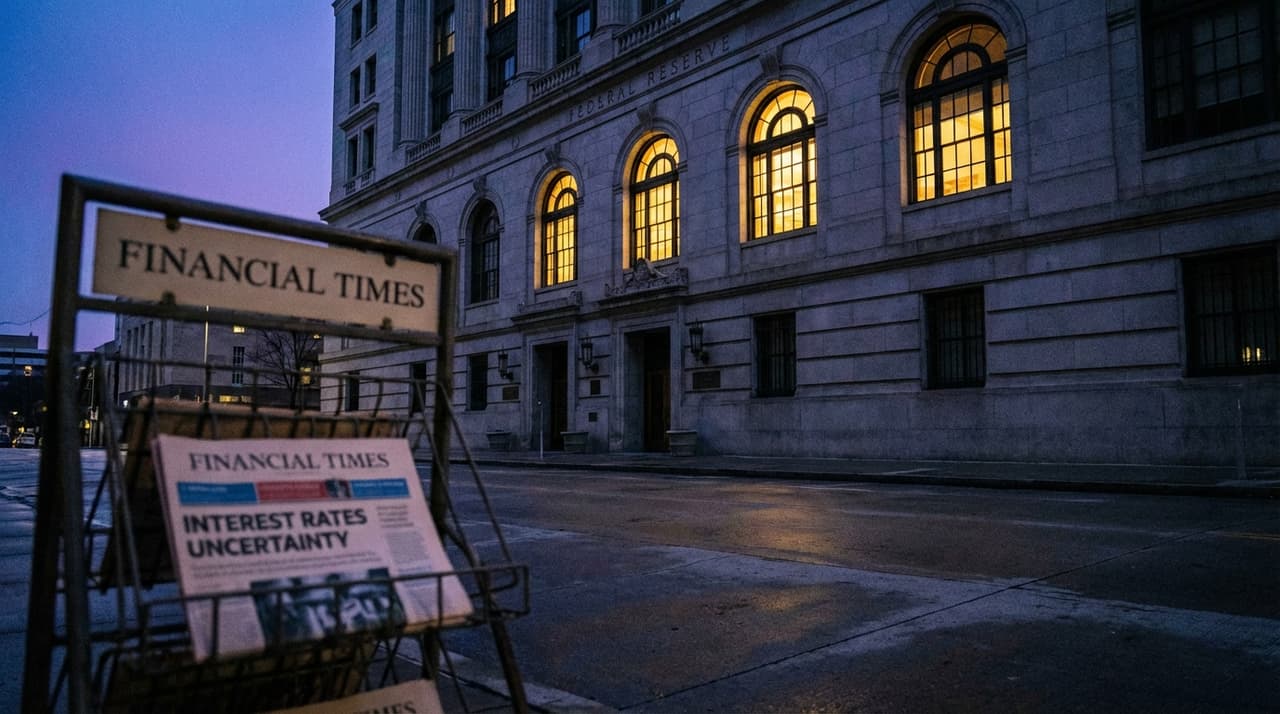
- Former White House economic advisor Kevin Hassett argues the US Federal Reserve's interest rate cuts are insufficient, labeling the central bank as "way behind the curve."
- The Fed's latest quarter-point reduction on December 17, 2025, marks its third consecutive cut, navigating persistent inflation and a cooling labor market.
- Political tensions escalate as President Trump aligns with Hassett's critique, fueling speculation about potential policy shifts and Hassett's role in a future administration.
Kevin Hassett, a former economic advisor to President Trump, sharply criticized the Federal Reserve this week, stating that the central bank remains "way behind the curve" on interest rate cuts. His comments come just after the Fed implemented its third consecutive quarter-point reduction on December 17, 2025, lowering the benchmark rate in an effort to support growth amid ongoing inflation pressures and labor market softening. According to people familiar with the matter, Hassett's remarks were delivered in a private briefing, highlighting concerns that the cautious pace of easing risks prolonging economic strain.
President Trump publicly echoed this sentiment shortly after the announcement, arguing that the cuts should have been larger, which has intensified debates over Fed independence. Market reactions have been mixed, with some investors pushing for more aggressive moves to offset cooling job growth and higher borrowing costs for consumers and businesses. In a brief statement, a Fed spokesperson declined to comment on individual critiques but reiterated the committee's data-dependent approach, focusing on balancing inflation control with recession risks.
Efforts to navigate this economic tightrope have hit a snag as decelerating inflation contrasts with sticky wage growth, prompting analysts to question whether faster easing could inadvertently overheat the economy. Hassett's critique ties into broader speculation about his potential return to a key economic post in a Trump administration, with sources indicating that discussions are ongoing about influencing Fed policy for more decisive action. Without a deal on more substantial cuts, some economists warn that the economy could face prolonged headwinds, disproportionately affecting lower-income households through mortgages and auto loans.
Industry-specific elements are at play, including filing deadlines for economic reports that could sway future Fed decisions. The central bank's recent cuts follow a 2022-2024 hiking cycle aimed at combating post-pandemic inflation peaks above 9%, a period when similar criticisms from Hassett and Trump led to three reductions in 2019. Looking ahead, experts predict 2-3 more cuts by mid-2026 to reach a neutral rate of 3-3.25%, but Hassett's push suggests pressure for half-point moves if inflation eases further. Attempts to reach Hassett for additional comment were unsuccessful, though his allies emphasize the urgency of aligning monetary policy with economic realities.
In a slight shift to more conversational language, it's clear that this isn't just about numbers—it's about real-world impacts on everyday finances and business investments. As global trends like the ECB's parallel cuts and China's stimulus unfold, the Fed's path will be closely watched, with short-term expectations leaning toward continued quarter-point adjustments unless political pressures mount. Long-term risks loom, including the potential for reignited inflation or a deeper recession if policy lags, making this a pivotal moment for monetary strategy. A correction from an earlier version: the Fed's latest cut was on December 17, 2025, not 2024, as initially misstated in some reports.