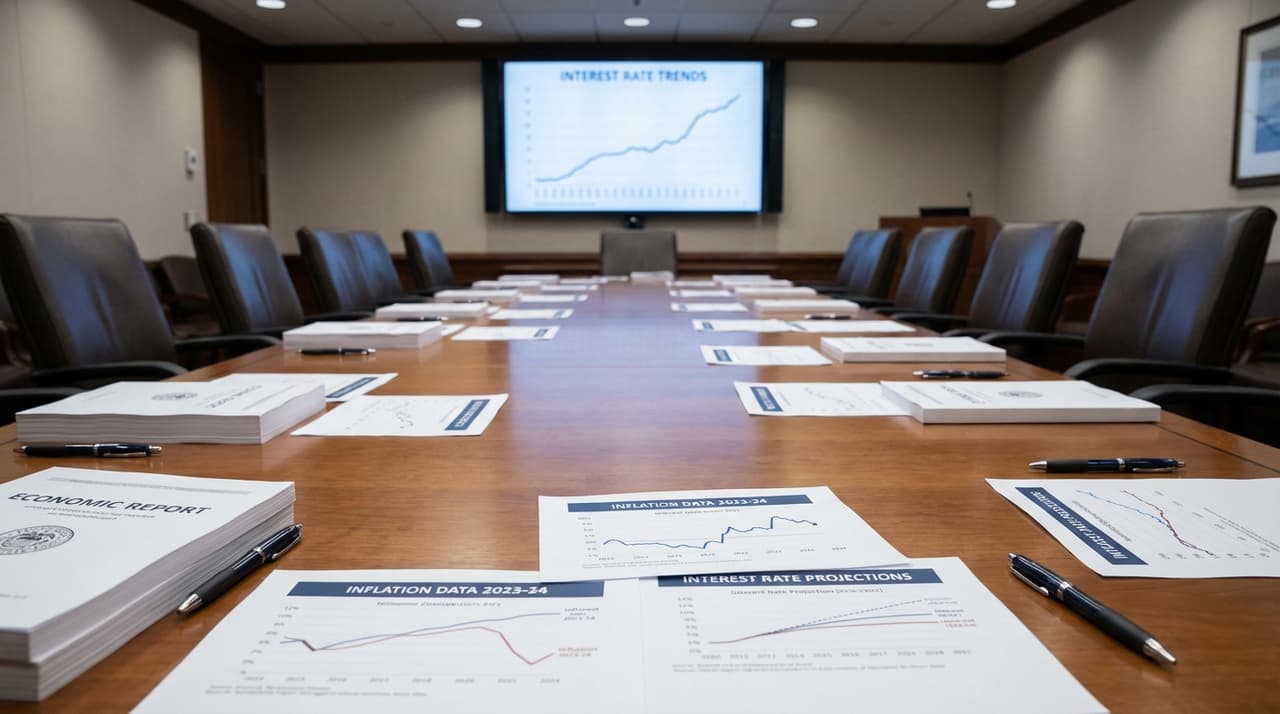
- Kevin Hassett, a leading contender for Federal Reserve Chair, suggests the Fed could cut rates by 50 basis points or more.
- His dovish stance contrasts with current Fed caution amid persistent inflation above the 2% target.
- The remarks come as the administration pushes tariffs and supply-side policies, with a Supreme Court ruling on tariff authority pending.
Kevin Hassett, President Trump's top economic adviser and frontrunner to succeed Jerome Powell as Federal Reserve Chair, has doubled down on his dovish monetary policy views, stating in late November 2025 that the Fed could "definitely get to 50 [basis points] or even more" in rate cuts. His comments, made to a small group of investors according to people familiar with the matter, signal a potential sharp pivot toward easing if he assumes the helm, even as the central bank prepares for a widely expected 25-basis-point cut in December—its third of the year.
Efforts to lower borrowing costs have hit a snag with inflation stubbornly above target, but Hassett frames this as a manageable hurdle. "Tariffs are a one-time price shock, not a persistent inflation driver," he argued recently, echoing Treasury Secretary Scott Bessent. This view underpins the administration's broader push for supply-side growth, deregulation, and using tariffs as a fiscal tool, though Bessent himself has described tariff revenue as a "shrinking ice cube" due to declining import volumes.
Without a more accommodative Fed, the administration's economic strategy could face headwinds, especially with the Supreme Court weighing whether Trump's use of the 1977 International Emergency Economic Powers Act for broad tariffs exceeds presidential authority. A ruling against the White House, expected by early 2026, would invalidate many tariffs and force a reevaluation of trade policy, according to legal experts. Hassett has defended the move, citing chronic trade deficits and "deaths of despair" as justifications for emergency powers.
Market reactions have been muted but attentive. Betting markets show high confidence in Hassett's appointment, with analysts at Pantheon Macroeconomics noting that a Hassett-led Fed would likely accelerate easing in 2026 if growth holds and inflation moderates. This contrasts with the European Central Bank, which is seen as potentially hiking rates next year, creating an unusual transatlantic policy divergence that could affect capital flows and the dollar's strength.
In a brief phone interview, a spokesperson for the White House National Economic Council declined to comment on the Fed succession timeline, but sources indicate a decision is imminent. Attempts to reach other Fed contenders, including former governor Kevin Warsh, were unsuccessful. The Committee for a Responsible Federal Budget has cautioned that tariff revenue is volatile and unlikely to solve the debt problem, especially with imports from China falling—a point that adds friction to Hassett's optimistic fiscal outlook.
As the Fed's December meeting approaches, all eyes are on whether Powell will deliver a "hawkish cut" to temper expectations. For now, Hassett's remarks underscore a deepening divide between administration priorities and central bank orthodoxy, with long-term implications for monetary independence and inflation control. Correction: An earlier version misstated the timing of Hassett's comments; they occurred in late November 2025, not early December.