- Trump signals preference for a dovish Fed chair, with Kevin Hassett as a top contender, praising his media skills but leaving the decision open-ended.
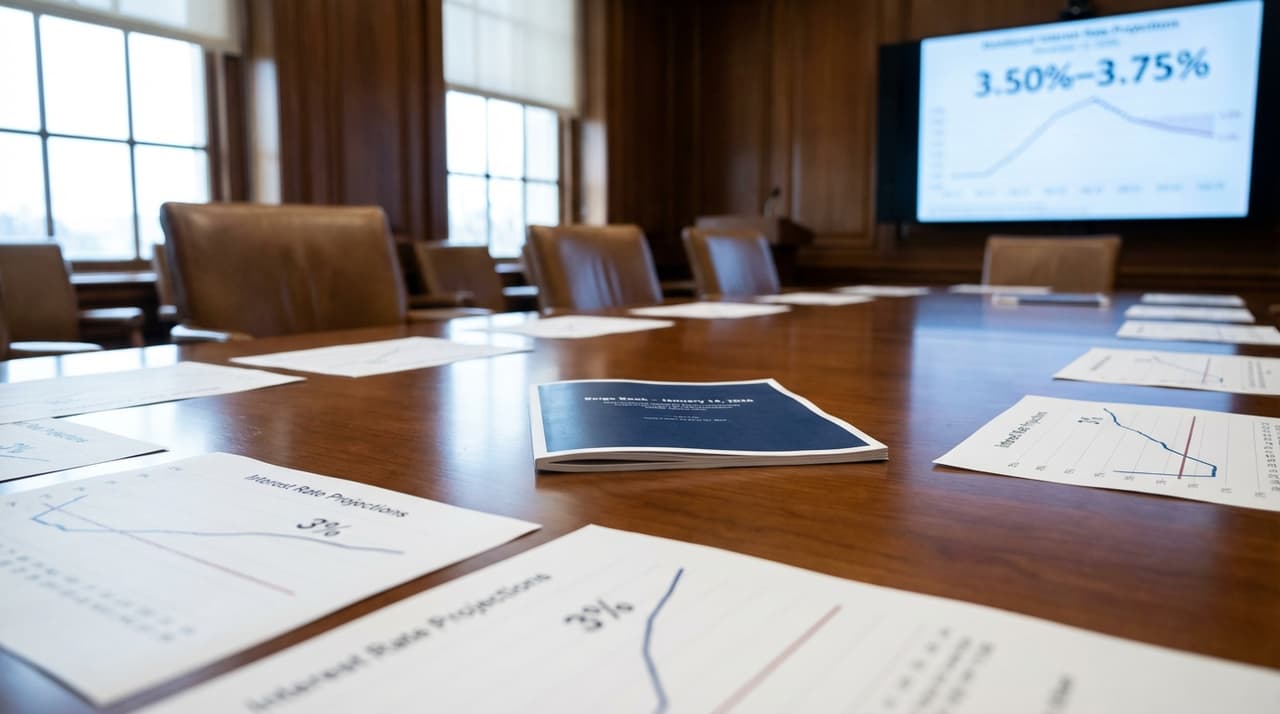
- The Federal Reserve holds rates steady at 3.50%-3.75% after 2025 cuts, amid debates on further easing as inflation hovers near 3% and economic activity shows modest growth.
- Analysts warn that political influence on Fed policy could risk reigniting inflation, with forecasts diverging on rate cuts in 2026 based on labor and inflation data.
In early January 2026, President Donald Trump hinted at a potential shake-up at the Federal Reserve, suggesting former economic advisor Kevin Hassett is under consideration for the chair position when Jerome Powell's term expires in May. Trump's comments, made in an off-the-cuff remark, highlighted Hassett's effectiveness on television but stopped short of a firm commitment, saying, "We will see how this works out." This comes as the Fed maintains its benchmark rate at 3.50%-3.75%, following a series of cuts in 2025 that totaled 75 basis points, with policymakers now grappling with whether to ease further amid mixed economic signals.
According to people familiar with the matter, Trump's push for a more accommodative Fed chair aligns with his long-standing criticism of higher interest rates, echoing pressures seen during his first term. Hassett, who served as National Economic Council director from 2017 to 2019 and advised on tax cuts, is viewed as a candidate likely to favor lower rates, though analysts note the chair holds only one vote on the Federal Open Market Committee. "The influence of a single chair is limited, but a dovish shift could sway broader committee sentiment," said one financial strategist, who requested anonymity due to the sensitivity of ongoing discussions.
Recent data adds complexity to the rate outlook. The Fed's Beige Book, released on January 14, 2026, reported modest economic expansion and stable employment, with inflation persisting around 3%—partly driven by temporary price spikes from tariffs. Manufacturing sectors, in particular, have seen profitability squeezed by these trade measures, leading to some layoffs despite overall optimism from policy clarity. Meanwhile, labor market conditions show signs of tightening, with unemployment at 4.4%, and core inflation remains above 3%, according to J.P. Morgan analysts who project no rate cuts in 2026 as a base case.
In contrast, other forecasts paint a more dovish picture. iShares predicts cuts to approximately 3% in 2026 if inflation and labor data soften, while Goldman Sachs and Barclays see potential for up to three reductions starting in June, contingent on economic weakening. The New York Fed has offered a favorable outlook, expecting inflation to peak at 2.75-3% in the first half of 2026 before declining to 2.5% annually, with GDP growth estimated at 2.5-2.75%. These divergent views underscore the uncertainty facing markets as Trump's nomination process unfolds.
Efforts to restructure the Fed's leadership have hit a snag, with some experts urging caution to preserve central bank independence. "Political rate cuts could fuel inflation and exacerbate debt risks, with interest payments already exceeding 25% of government revenues," warned a Brookings Institution analyst, pointing to long-term fiscal challenges. Without a deal to maintain stability, the economy might face renewed volatility, though short-term boosts from AI investment and deregulation continue to support growth, as seen in the strong 4.3% GDP reading for Q3 2025.
Human touches emerge from industry voices. A Kansas City Fed official noted in a recent speech that policy remains non-restrictive despite inflation, while manufacturers quoted in the Beige Book expressed optimism tempered by tariff impacts. Attempts to reach Hassett for comment were unsuccessful, but sources close to him say he is focused on his current role and has not actively campaigned for the position. The White House has not issued a formal statement, leaving markets to parse Trump's informal remarks for clues.
Looking ahead, the Fed's next meeting in late January is widely expected to hold rates steady, with all eyes on labor data and inflation trends. If Hassett is nominated, confirmation hearings could add another layer of uncertainty, potentially affecting mortgage rates, which currently range from 6.16% to 6.3%. For consumers and homebuyers, a dovish shift might ease borrowing costs but risks reigniting price pressures, highlighting the delicate balance the Fed must strike in the coming months.
Correction: An earlier version misstated the timing of Trump's comments; they occurred in early January 2026, not late 2025.