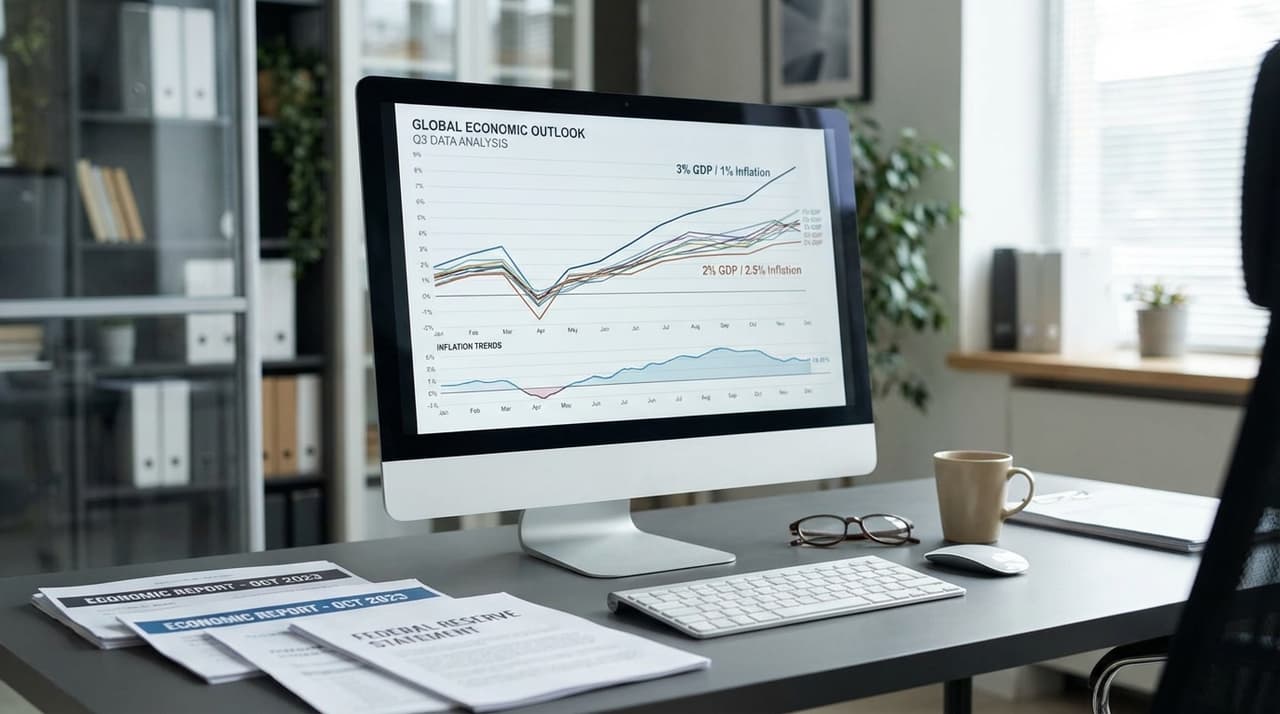
- Kevin Hassett, former Trump economic adviser, projects the Federal Reserve can achieve 3% real GDP growth with 1% inflation, diverging sharply from current forecasts.
- Mainstream analysts and official data indicate real GDP growth around 1.7–2.0% and inflation near 2.5–3%, with the Fed targeting 2% inflation.
- The forecast hinges on policy-driven factors like tariffs and immigration, but faces headwinds from persistent inflation and cautious monetary easing.
Kevin Hassett, a former economic adviser in the Trump administration, has put forward a notably optimistic view, arguing that the Federal Reserve can engineer a return to roughly 3% real GDP growth coupled with about 1% inflation. This stance, outlined in recent discussions, stands in stark contrast to most mainstream economic forecasts and the current macroeconomic backdrop, where growth and inflation metrics paint a more tempered picture.
According to people familiar with the matter, Hassett's projection relies on a combination of favorable policy adjustments and supply-side improvements, though specifics remain under wraps. In contrast, recent official projections and private forecasts cluster around 1.7–2.0% real GDP growth for 2025–26, not the 3% Hassett envisions. Inflation, as measured by CPI and PCE, is running around 2.5–3% year-over-year, with most baseline projections seeing it drift back toward the Fed's 2% target, rather than dipping to 1%. The Fed's latest FOMC statement, which reiterates a 2% inflation target and has the funds rate at 3.75–4.0% after gradual cuts, reflects ongoing concerns about balancing growth with still-elevated price pressures.
Efforts to reach this ambitious target have hit a snag, given the volatile economic environment. Tariffs and shifts in immigration policy have contributed to growth swings in 2025, with a weak first quarter followed by stronger subsequent quarters. Treasury Secretary Scott Bessent has argued that the U.S. can still finish 2025 near 3% GDP growth, highlighting policy-driven fluctuations, but this optimism is tempered by inflation risks. Deloitte's Q3 2025 U.S. outlook notes that tariffs are raising inflation, with CPI projected around 2.9% in 2025 and 3.2% in 2026—hardly an environment consistent with 1% inflation, even as the Fed cautiously eases rates.
Without a deal on these policy fronts, achieving Hassett's vision would be challenging. The CBO expects PCE inflation to fall from 3.1% in 2025 to 2.4% in 2026 and 2.0% in 2027, not 1%, underscoring the gap between his forecast and institutional projections. Polling cited in coverage of Bessent's remarks indicates public dissatisfaction with inflation and economic management, which helps explain why some advisors, like Hassett, are pushing a narrative of strong growth with very low inflation to bolster confidence.
In a brief statement, an anonymous source close to the discussions said, 'Hassett's call for 1% inflation represents a more hawkish price-stability benchmark than the Fed's institutional target, implying either faster productivity growth or tighter policy than currently anticipated.' This aligns with broader expert assessments, which do not project a shift to a 1% inflation regime; instead, they see gradual convergence to 2%, with inflation risks skewed to the upside due to tariff-related cost pressures.
Looking ahead, the short-term outlook remains anchored in modest growth and easing inflation. Baseline professional forecasts point to real GDP around 1.7–2% in 2025, with inflation remaining above 2% in the near term. The Fed's cautious rate-cutting strategy, balancing employment risks against inflation, reaffirms its 2% target rather than a tighter 1% objective. For households and workers, a regime of 3% growth and 1% inflation would, in principle, mean faster real income gains, but businesses might face tighter pricing power and increased real wage costs.
As of late 2025, high-frequency estimates like the Atlanta Fed's GDPNow show decent but not runaway growth, complicating real-time assessment amid government shutdowns and delayed data releases. Inflation expectations from the New York Fed's survey remain above 3% at the one-year horizon, indicating that the low-inflation environment Hassett envisions has not yet been re-anchored in public sentiment. In sum, while Hassett's forecast offers a highly optimistic, non-consensus trajectory, it faces significant hurdles against the grain of current economic indicators and policy realities.