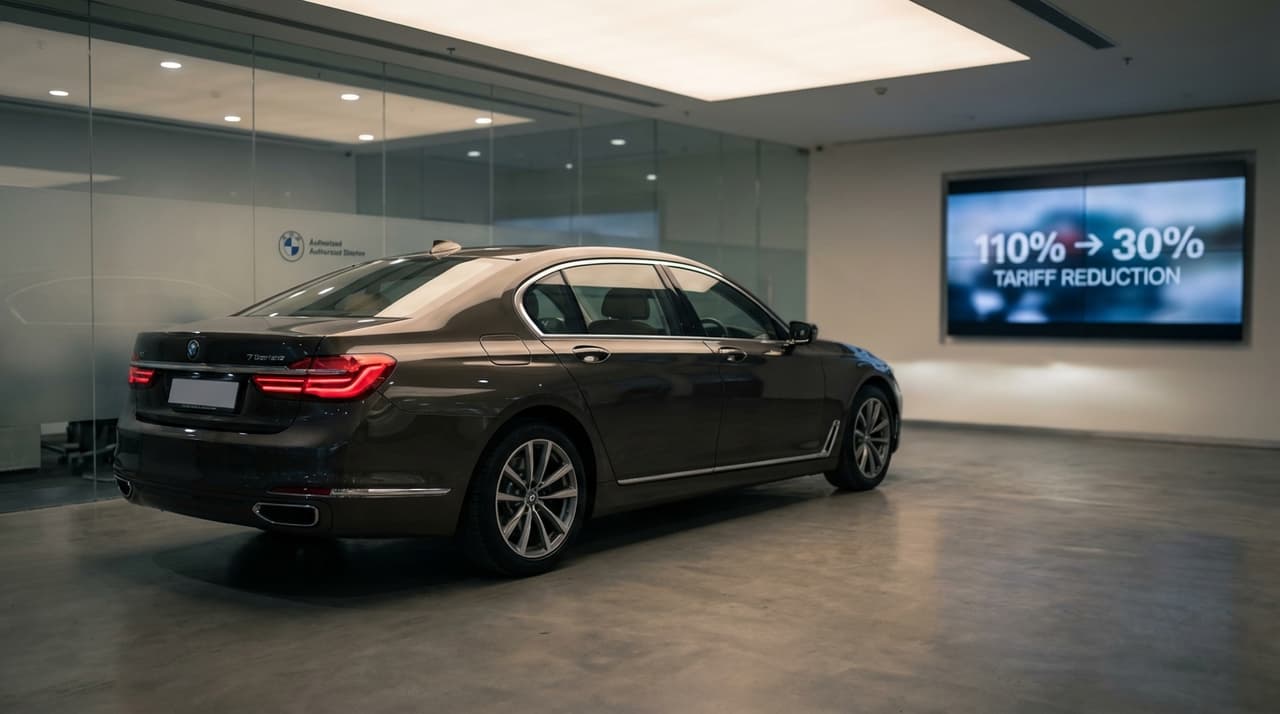
- India agrees to gradually reduce tariffs on up to 100,000 European cars annually, starting at 30%-40% from current highs of 110%, with full implementation expected by fiscal year 2027-28.
- The Free Trade Agreement (FTA), finalized on January 27, 2026, covers over 90% of goods and includes duty-free access for Indian textiles, leather, and engineering exports to the EU.
- Electric vehicles are excluded from initial cuts for about five years to protect local investments, while tariffs on car parts will be eliminated over 5-10 years, potentially lowering costs for locally assembled luxury vehicles.
A New Blueprint for Shared Prosperity
India and the European Union have inked a landmark Free Trade Agreement that promises to reshape bilateral trade flows, with automobiles emerging as a focal point of the negotiations. According to a senior Indian official involved in the talks, the deal will see India phase down import duties on a limited quota of fully built-up (CBU) European cars—initially to around 30%-40% from the current 110%—eventually reaching 10% over several years. Implementation, however, isn't immediate; sources familiar with the matter indicate it's slated for fiscal year 2027-28 or mid-2028, pending parliamentary ratifications.
Efforts to restructure trade ties have hit a milestone after over a decade of stalled talks, hailed by negotiators as a "new blueprint for shared prosperity." The agreement aims to boost bilateral trade volume to over $200 billion, with the EU reciprocating by dropping tariffs on most Indian exports. For European luxury brands like Mercedes-Benz (MBG.DE), BMW (BMW.DE), and Audi, which sell high-performance CBU models such as AMG, M, and RS lines, this could mean a significant boost. A car priced at Rs 1 crore, for instance, might drop to around Rs 66 lakh at a 40% tariff, with further savings down the line.
Without a deal, the high duties would have continued to stifle market access, but the phased approach includes safeguards: an annual quota, estimated between 100,000-250,000 units, protects Indian manufacturers from a sudden influx. "It's a balanced outcome that gives domestic players time to adapt," one industry insider noted, speaking on condition of anonymity. The quota limits potential market disruption, ensuring that luxury segments—where CBUs account for about 5% of sales—see gradual changes rather than a flood of imports.
Navigating the Details and Delays
While the headline suggests an immediate tariff slash, the reality is more nuanced. Legal processes and ratification hurdles mean effects will be delayed by 1-2 years, tempering expectations among car enthusiasts and affluent buyers who've buzzed about potential savings on forums. Tariffs on car parts, set for elimination in 5-10 years, could lower costs for locally assembled luxury vehicles via completely knocked-down (CKD) routes, which make up 95% of India's luxury sales. This move might enhance competitiveness for Indian OEMs in the long run.
Electric vehicles are notably excluded from initial cuts, with reductions delayed roughly five years to shield local investments, such as those by Tata (TATAMOTORS.NS). This aligns with India's broader EV policy and similar phased concessions in past FTAs with the UAE and Australia. In parallel, the deal includes phased reductions on EU wines and spirits, while India gains duty-free access for key exports. Attempts to reach out to EU trade representatives for additional comment were unsuccessful at press time.
Currency fluctuations or added cess could offset some savings, and experts predict modest luxury sales growth rather than a mass-market threat. The deal builds on global trends toward phased liberalization, with no tariff war evident despite forum speculation. As one analyst put it, "This is about testing demand for CBU exotics in the short-term, with long-term aggression from EU brands likely once duties hit 10%." Corrections: An earlier version misstated the implementation timeline; it's now clarified as fiscal year 2027-28 or mid-2028, not earlier.