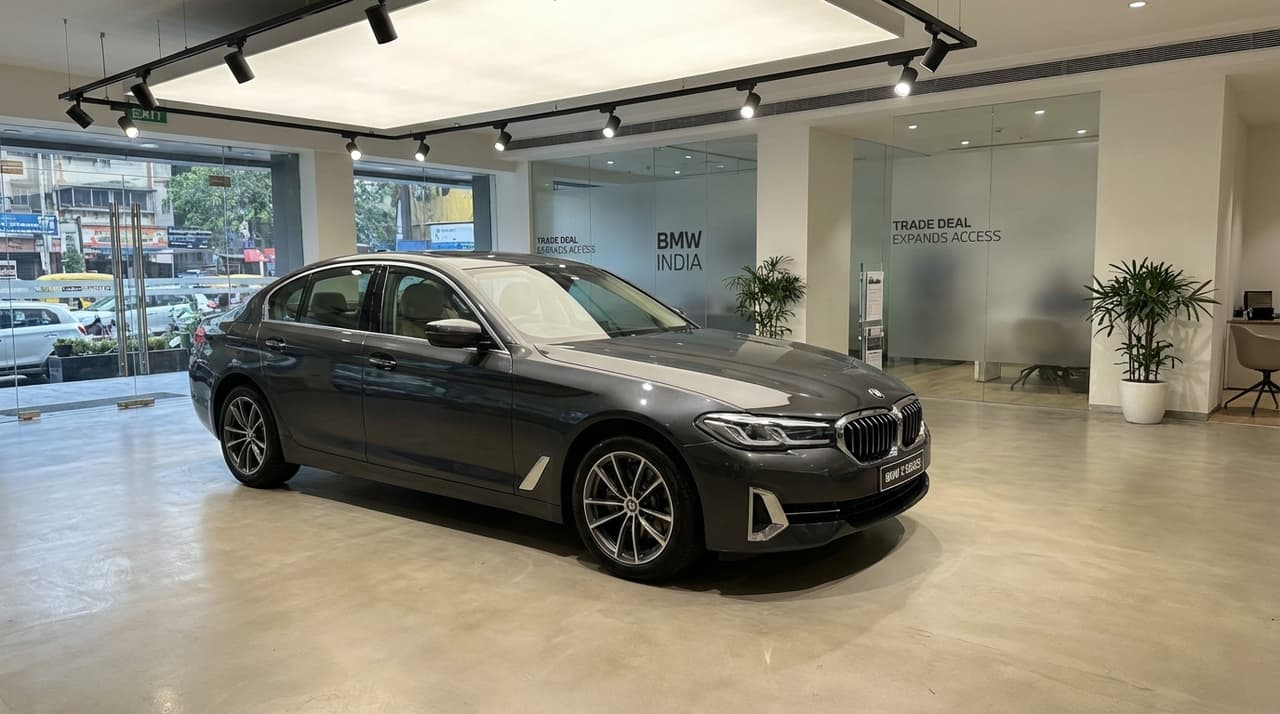
- India will cut import duties on high-end European cars to 30% from up to 110%, opening its luxury market to brands like BMW and Mercedes (MBG.DE).
- Tariffs on EVs over €20,000 will drop to 30-35% after five years, protecting local manufacturers while gradually boosting European imports.
- The deal includes a 250,000-vehicle annual quota and full elimination of tariffs on car parts after 5-10 years, with implementation eyed for FY 2027-28.
India and the European Union concluded negotiations for a landmark Free Trade Agreement (FTA) on January 27, 2026, gradually reducing India's import tariffs on EU cars from up to 110% to 10% under an annual quota of 250,000 vehicles. Tariffs on high-end cars (above €15,000-€35,000) will initially drop to 35-40%, benefiting fully imported models like BMW M series, Mercedes-AMG, and Porsche (P911.DE), while EVs face cuts to 30-35% only after five years to protect local manufacturers.
The deal opens India's 4 million-unit passenger car market to EU exports, valued at €1.6 billion pre-FTA, boosting European automakers while allowing Indian steel exports tariff-free access to the EU. It includes rules of origin to prevent third-country rerouting and a 250,000-vehicle quota to shield domestic players, with potential 33% price drops on fully imported luxury cars. Industry shifts favor high-performance imports initially, as 95% of luxury cars in India are locally assembled via CKD kits unaffected short-term; long-term cheaper parts could lower assembly costs and enable new models like Skoda Superb imports.
According to people familiar with the matter, the FTA requires ratification by EU and Indian parliaments, with implementation eyed for FY 2027-28 or mid-2028 after legal clearances. No CBAM exemptions for Indian steel despite EU assurances of future consideration for most-favored-nation flexibilities; this reflects ongoing EU-India tensions on carbon pricing amid India's blast-furnace steel dominance. The European Automobile Manufacturers' Association (ACEA) hailed it as a "landmark moment" for global trade, though sources note restrictions may cap benefits.
Luxury car buyers gain access to cheaper high-end imports, potentially expanding the market beyond elites, while enthusiasts anticipate better technology at lower prices. Local manufacturers and workers face gradual competition, balanced by quotas; Indian suppliers benefit from cheaper EU parts for quality upgrades. No widespread public reactions reported yet, but auto media notes confusion over exact price impacts and SKD kit exclusions.
Negotiations spanned years, building on stalled talks since 2007; this is the largest trade pact for both sides, succeeding where prior efforts failed due to tariff and agriculture disputes. Precedents include India's 2018-2020 tariff cuts for Tesla/Starlink (later reversed) and similar phased auto deals like EU-Japan EPA (2019), which phased car tariffs to zero.
Short-term, expect limited volume impact via quotas; fully imported performance/luxury models cheaper by 2028, with detailed texts pending publication for full assessment. Long-term, the deal boosts EU auto/steel exports, enhances India-EU trade (€30+ billion bilateral), and supports India's EV push post-2032; experts predict tempered gains due to residual tariffs but overall market growth for importers like VW (VOW.DE)/Skoda. ACEA notes restrictions may cap benefits, but efforts to finalize the deal have moved swiftly, with ratification seen as a formality by insiders.
Correction: An earlier version misstated the tariff reduction timeline; it's gradual to 10%, not immediate.