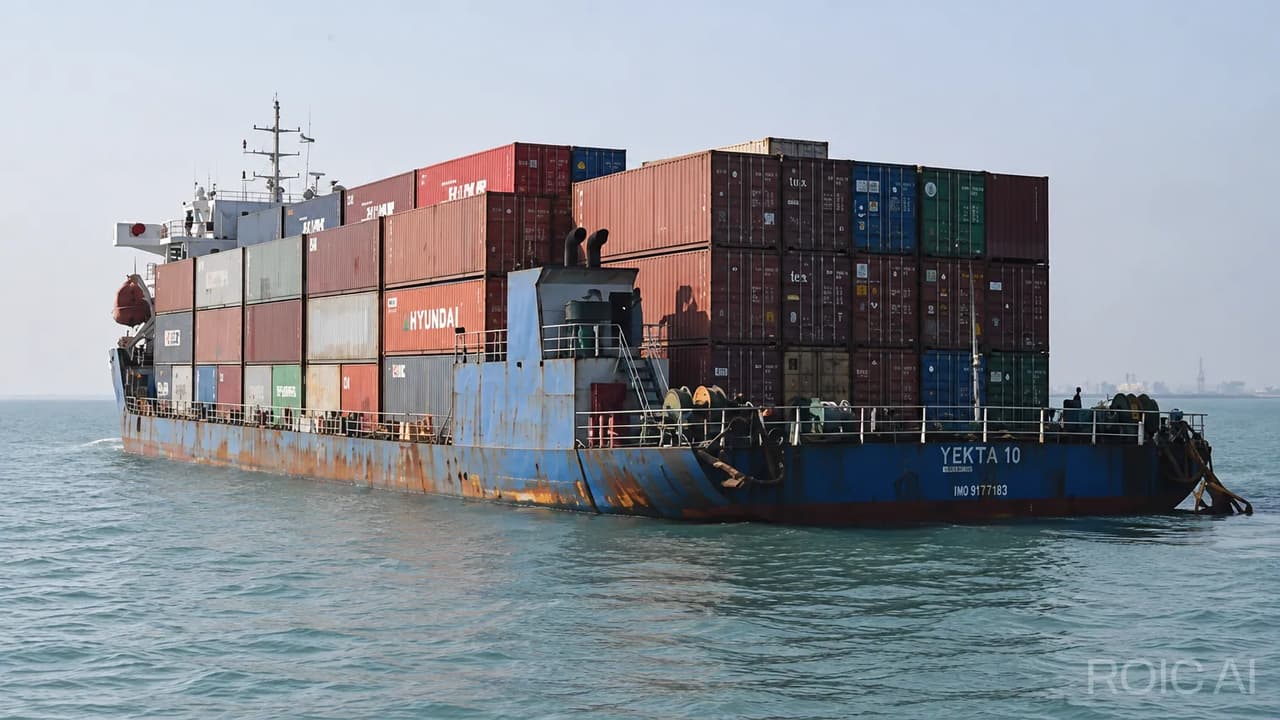
Mokhber, an adviser to Iran's supreme leader, said the Strait of Hormuz will not be reopened and Iran will not allow a blockade to remain in place, according to Iranian media.
The remarks reaffirm Tehran's standoff position: the strait stays closed while the US naval blockade of Iranian ports continues, but Iran also rejects the blockade as permanent.
Oil traffic through Hormuz is down about 40%, yet Brent crude remains near $88–90, its lowest since late August, as the US moves more oil out of the Gulf.
Iran Digs In on Hormuz
An adviser to Iran's supreme leader, Mohammad Mokhber, said neither will the Strait of Hormuz be reopened nor will Iran allow a blockade to remain in place, according to Iranian media reports on Friday. The statement restates Tehran's core demand: the strait remains closed as long as the US naval blockade of Iranian ports continues, but Iran will not accept the blockade as a permanent condition.
The comment fits Mokhber's earlier rhetoric. On 20 November, he claimed that President Trump "left China empty-handed," and on 23 November he warned that Iran's geopolitical interests are a "red line." He has also tied the Hormuz closure to a US-backed Armenian transit corridor, warning against routes that bypass Iran.
The war, which began on 28 February with US-Israeli strikes, shows no sign of resolution. A June memorandum of understanding has not ended hostilities, and talks remain stalled. Army chief Amir Hatami has ordered the strait closed "further day by day" until Iran's seven conditions are met, according to Parliament speaker and chief negotiator Mohammad Ghalibaf, who said there will be no negotiation until then. The conditions reportedly include ending the blockade, lifting sanctions, releasing frozen assets, and ending the war on all fronts, including Lebanon.
Iran insists that tanker owners must coordinate with its armed forces to pass. The Islamic Revolutionary Guard Corps claims that tankers have hit mines, though the reports remain unconfirmed. A drone attack reportedly killed two Italians in Kuwait, underscoring the risks to shipping and regional stability.
A Glimmer of Diplomacy?
On 27 November, one report suggested Iran had offered to reopen the strait within seven days, conditional on the US lifting the blockade, waiving oil sanctions, and observing a ceasefire that includes Lebanon. The offer, if confirmed, would mark a potential breakthrough, but it contrasts sharply with Mokhber's latest remarks and with statements from other officials who insist there will be no talks without all seven conditions. Foreign Minister Abbas Araghchi says Qatari and Pakistani mediation efforts are continuing.
Trump has reportedly given Iran until year-end to reach a deal and warned of possible military action in early 2027. He has rejected Iran's latest proposals.
Oil Markets Shrug—For Now
Despite the closure of the Strait of Hormuz, which removes about 20% of global oil supply, Brent crude has remained surprisingly subdued. The benchmark was trading near $88–90, close to its lowest since late August, as the US has ramped up oil exports from the Gulf. Prices peaked at about $126 in March and fell to about $72 in early July, highlighting extreme volatility.
Iran bears the heaviest economic cost. The blockade has largely halted its oil exports and now extends to flights and land trade. President Masoud Pezeshkian has acknowledged the economic pain, and Iranian households are feeling the strain.
Regional Tensions Simmer
Qatar's prime minister met with US officials, including Secretary of State Marco Rubio and Vice President JD Vance, in an effort to restart talks, warning that the region "cannot bear" renewed escalation. Meanwhile, hardliners and relative moderates in Iran are openly split over whether to escalate to break the blockade.
Some governments may seek separate deals with Tehran to reduce their exposure. Shipping crews, Gulf states, and oil importers continue to face attack risks and supply uncertainty, while analysts note that a "no war, no peace" stalemate is pushing Iranian officials toward considering force.
The coming weeks will be critical. Watch for the year-end Trump deadline, Iran's reported attempt to run the blockade with 14 tankers, and any further mine or drone incidents. A clash at sea could quickly reignite the war.