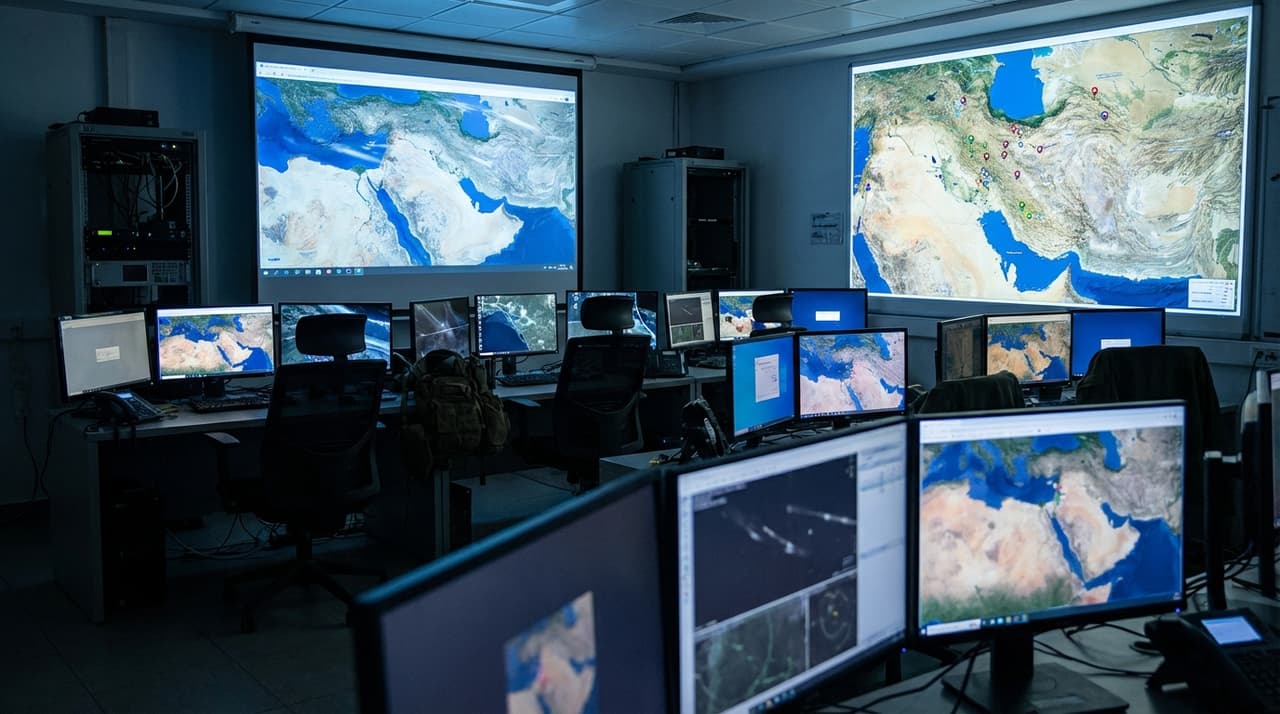
- Israel has alerted the U.S. that Iran's Islamic Revolutionary Guard Corps (IRGC) may use ongoing ballistic missile exercises as cover for a potential strike, with Israeli intelligence assessing the likelihood below 50 percent.
- Prime Minister Benjamin Netanyahu is preparing to present President Donald Trump with options for possible renewed military strikes on Iran, focusing on ballistic missile and air defense concerns over nuclear enrichment.
- Tensions have escalated as Israel's risk tolerance has lowered post-October 7, 2023 Hamas attack, with IDF Chief of Staff Lt. Gen. Eyal Zamir warning of strikes on enemies "wherever required."
Israel's security posture has shifted dramatically in recent months, with officials now viewing Iranian military activities through a lens of heightened vigilance. According to people familiar with the matter, Israeli intelligence services are closely tracking command-and-control signals, deployments, and logistical movements associated with the IRGC Air Force, drawing increased Western scrutiny due to the scale and synchronization of these operations. One Israeli source emphasized, "No one is willing to take the risk of assuming this is just an exercise," highlighting the stark change in threat assessment since Hamas's attack.
Iran reportedly conducted ballistic missile drills on December 22 across various cities, though Iranian state media later denied these were actual tests, attributing observed streaks in the sky to "high altitude aircraft." This ambiguity has fueled concerns in Tel Aviv, where officials have issued similar warnings six weeks prior when comparable missile movements were detected, though no attack materialized at that time. Efforts to clarify Iran's intentions have hit a snag, with diplomatic channels strained over Tehran's nuclear and missile programs.
Netanyahu's upcoming meeting with Trump at Mar-a-Lago later in December is seen as critical for aligning strategies. Trump is reportedly "much more in the peacemaking mode than attacking mode" on Iran and views the nuclear program as a more immediate threat, according to sources close to the administration. Without a deal on coordinated action, Israel could face increased isolation in its defensive preparations. Zamir met with U.S. military officials in Tel Aviv recently to urge close coordination, underscoring the urgency of the situation.
In a brief statement, an Israeli defense spokesperson noted that the country remains prepared to respond to any threats, but declined to comment further on specific operational plans. Attempts to reach Iranian officials for comment were unsuccessful. The developments come as European diplomats, cited by NBC News, suggest Israel could strike Iran again in 2026 even without U.S. approval, adding another layer of complexity to the geopolitical calculus.
As of late December, market reactions have been muted, with global oil prices holding steady amid the uncertainty, but analysts warn that any escalation could trigger volatility in energy markets. The focus remains on ongoing negotiations and breaking news, with little room for extensive historical context in this fast-evolving scenario.