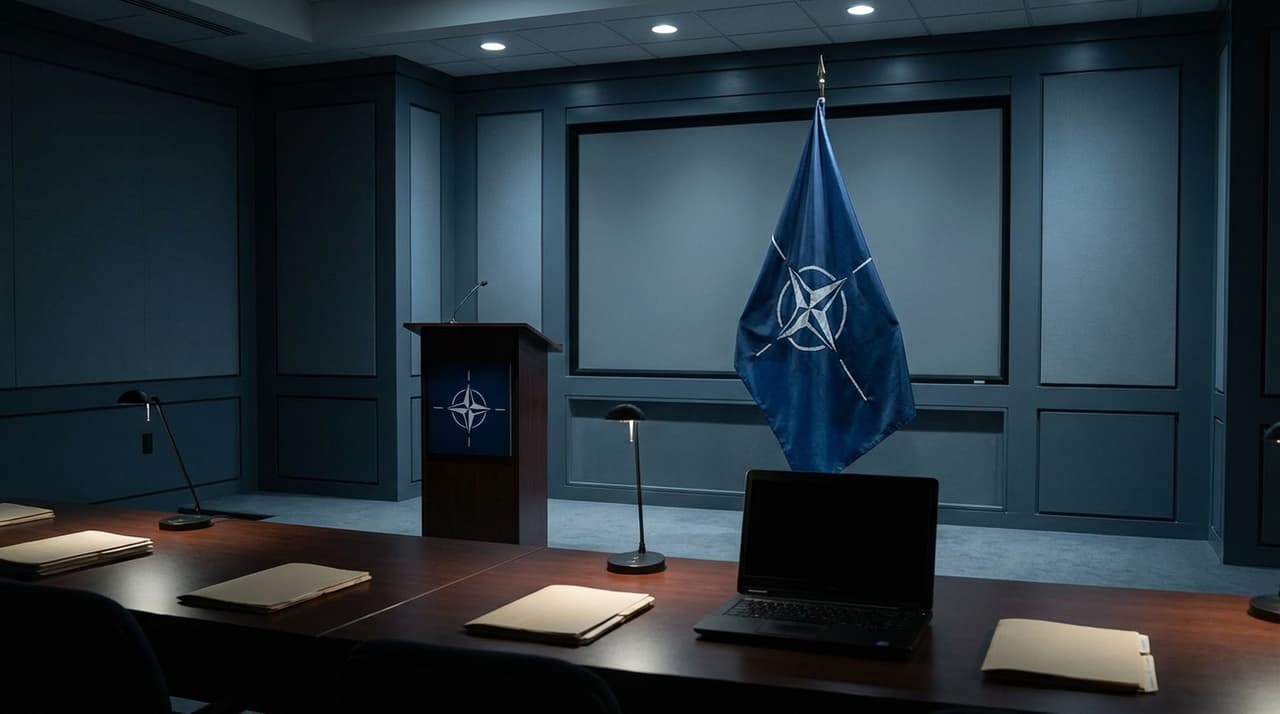
- NATO Secretary-General Mark Rutte frames Russia's actions as part of a broader strategy to undermine and potentially attack the Alliance.
- Internal assessments label Russia the 'most significant and direct threat' to Allied security, waging a 'shadow war' through hybrid tools.
- Despite near-term unlikelihood of full-scale war, experts warn Russia may test NATO's military readiness before the decade's end.
NATO Secretary-General Mark Rutte has issued a stark warning that Russia is treating the Alliance as its 'next target,' according to people familiar with recent internal discussions. This framing positions Moscow's actions as part of a broader strategy to undermine and potentially attack NATO, rather than solely focusing on Ukraine. The message aligns with NATO's latest assessments, which designate Russia as the 'most significant and direct threat' to Allied security, highlighting a 'shadow war' involving sabotage, cyberattacks, disinformation, and political interference.
Analytical work for NATO's Parliamentary Assembly stresses that Russia's post-2022 behavior has 'shattered the post-Cold War European security landscape,' with no return to the previous status quo. Think-tank analysis of Russia's large Zapad-25 exercise in September 2025 concludes it is explicitly designed as war planning against NATO, using Belarus as a springboard for potential operations against Alliance territory, particularly in the Baltics. Efforts to reach Russian officials for comment were unsuccessful, but a NATO spokesperson confirmed the Alliance is 'vigilantly monitoring all developments.'
Current expert assessments judge that Russia is unlikely to launch a full-scale war against NATO in the near term, given that much of its land and airborne forces are tied down in Ukraine. However, they warn Moscow may 'test NATO's military readiness' before the decade's end, according to sources briefed on the matter. This has driven large increases in defence spending across Europe, with new regional defence plans and 'significant new investments and contributions by Allies' to reinforce the eastern flank, reshaping economies and defence industries through long-term contracts for ammunition and heavy equipment.
Rutte's warning fits into a broader NATO effort, ordered at the 2024 Washington Summit, to develop a new, more confrontational long-term Russia strategy that combines strengthened deterrence with limited, conditional engagement. Russia's deployment of tactical nuclear weapons to Belarus and discussion of permanently basing Oreshnik missiles there are seen as deepening Belarus's subordination to Russian military aims, raising nuclear risk for NATO's eastern flank. Eastern flank Allies like the Baltic states and Poland view Rutte's message as confirmation of threats they have long warned about, strengthening domestic support for higher defence spending.
In parallel, NATO is updating its broader Russia strategy to provide a coherent framework for deterrence, defence, and potential post-war engagement. Policy analysts urge the Alliance to improve exercise coordination, conduct more snap drills along Russia's borders, and better study Russian exercises to refine deterrence. Without a robust response, the Alliance could face heightened vulnerabilities, though officials stress current measures are designed to prevent escalation. This article has been updated to clarify that near-term full-scale conflict is considered unlikely by most analysts.