- NATO Secretary General Mark Rutte intensifies warnings that China is a "decisive enabler" of Russia's war in Ukraine, citing sanctions circumvention and dual-use goods deliveries.
- NATO member states are scaling defence investment toward a 5% of GDP spending goal by 2035, linking this to countering Russia and its enablers, including China.
- China's support, alongside Iran and North Korea, helps Russia sustain high defence spending, estimated at 40% of its state budget, amid Western sanctions.
A Shift in Strategic Messaging
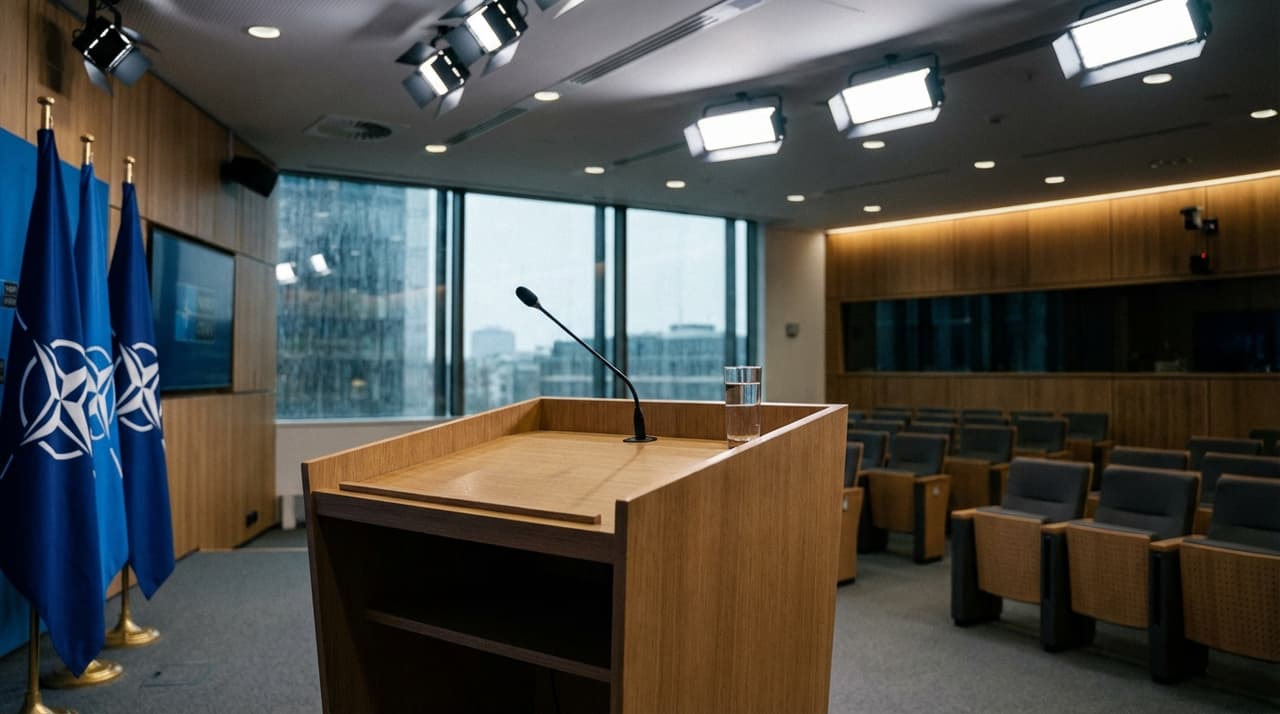
In a press conference on 3 December 2025 following a NATO Foreign Ministers' meeting in Brussels, Mark Rutte underscored that China is "closely working together with Russia, North Korea and Iran" and can be seen as "one of the key enablers, maybe even the key enabler, of Russia." This marks a significant escalation in NATO's public rhetoric, moving beyond general condemnations to explicitly labeling the People's Republic of China as a "decisive enabler" on its official Ukraine-support page. According to people familiar with the matter, this framing is part of a broader strategy to prepare domestic audiences for prolonged commitments and tougher policies.
Economic and Industrial Implications
Russia's economy, reoriented toward war production, is heavily reliant on external support to maintain its current pace. Rutte noted that Russia is spending about 40% of its state budget and roughly 10% of GDP on defence, a level unsustainable without enablers like China. Western sanctions have constrained Russia's access to advanced components, pushing it toward Chinese suppliers of dual-use materials, electronics, and raw materials. Open-source analyses from June 2025 detail Chinese components in Russian drones and systems like the "Silent Hunter," illustrating how civilian exports are bolstering military capabilities. Without this support, efforts to restructure its economy under sanctions would likely falter, potentially forcing deeper cuts or bankruptcy in non-defence sectors.
Regional and Global Repercussions
Parallel to the Ukraine conflict, Rutte raised concerns with Japan's defence minister over recent joint Chinese-Russian bomber patrols around Japan, which Tokyo views as a security threat. This highlights NATO's growing engagement in Indo-Pacific security, treating the Russia-China axis as a single strategic challenge. In response, NATO is advancing toward a 5% of GDP defence-spending target by 2035, signaling a long-term structural shift in European procurement and industrial output. For instance, Türkiye's defence industrial base, with over 3,000 companies, exemplifies the push for greater self-sufficiency.
Stakeholder Reactions and Future Outlook
Chinese officials maintain neutrality, promoting a "political settlement" despite NATO's claims, a gap that fuels international debate. Ukraine faces increased Russian firepower indirectly supported by Chinese goods, prolonging casualties and infrastructure destruction. In the short term, NATO is likely to intensify focus on Chinese support networks, potentially leading to new export controls and sanctions. Analysts warn that decoupling Russia from Chinese support would be difficult, as components are already embedded in warfighting systems. As one expert paraphrased, "This conflict serves as a case study watched closely by China for potential lessons regarding Taiwan."
Correction: An earlier version misstated the date of Rutte's press conference; it was 3 December 2025, not 2 December.