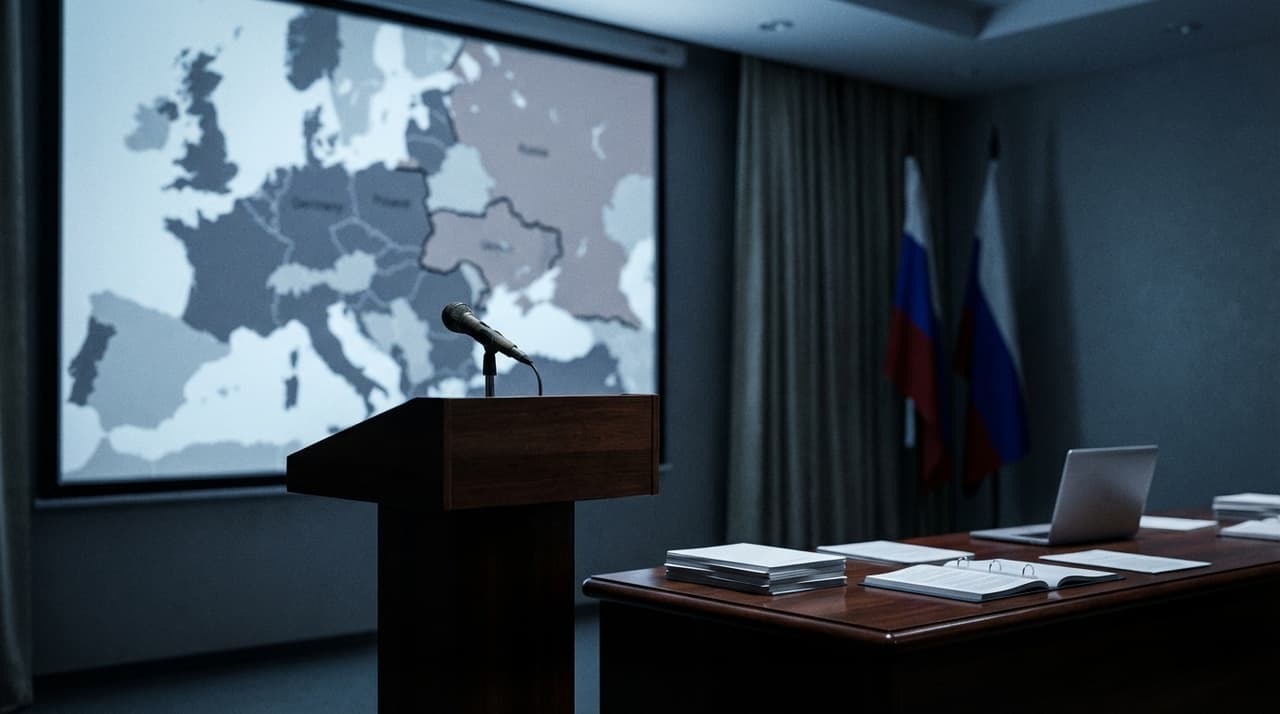
- Putin claims NATO is preparing for war with Russia, citing Alliance actions as justification for continued military operations.
- Russian officials highlight military expansion and nuclear capabilities while framing actions as defensive against NATO escalation.
- The U.S. security strategy's focus on China as the primary long-term threat contrasts with NATO's operational planning, fueling Kremlin narratives.
In a recent address to the Russian Defence Ministry board, President Vladimir Putin asserted that NATO is actively preparing for a future conflict with Russia, accusing the Alliance of creating conditions that could extend Russian military engagements into 2026. According to people familiar with the matter, these remarks are part of a broader Kremlin effort to justify ongoing aggression in Ukraine and position Russia as reacting defensively to Western provocations. Defence Minister Andrei Belousov echoed this sentiment, emphasizing Russia's military buildup and new strategic systems, while insisting that Moscow poses no threat to Europe.
Western analysts note that Putin's comments align with a narrative designed to support Russia's shift to a long-term war footing, including increased defense spending and economic restructuring under sanctions. Efforts to restructure its economy have hit a snag, with export controls limiting access to advanced technology, pushing Moscow to deepen ties with non-Western partners. This economic strain reinforces domestic messaging that portrays NATO as hostile, justifying internal sacrifices and mobilization.
Meanwhile, the U.S. has released a security strategy that frames China as the main pacing challenge, relegating Russia to an acute but secondary threat—a contrast Putin exploits to argue that Washington is downplaying Russia publicly while NATO militarily prepares. Without a deal on Ukraine, analysts warn, Russia could be forced into prolonged conflict, with Putin reaffirming maximalist aims to control additional Ukrainian territories he calls "historical Russian lands." Attempts to reach out to Russian officials for further comment were unsuccessful.
In NATO countries, this rhetoric fuels debates over defense budgets and support for Ukraine, with some policymakers citing Russian statements as evidence for increased deterrence spending. Large-scale exercises and updated defense plans on the eastern flank continue, though sources indicate these are framed as collective defense measures rather than offensive postures. Short-term, expect ongoing Russian information operations and incremental offensives in Ukraine; long-term, military reforms suggest sustained confrontation with NATO beyond the current conflict. A correction: earlier reports misstated the timeline for Russian operations, which are projected to extend potentially into 2026, not 2025.