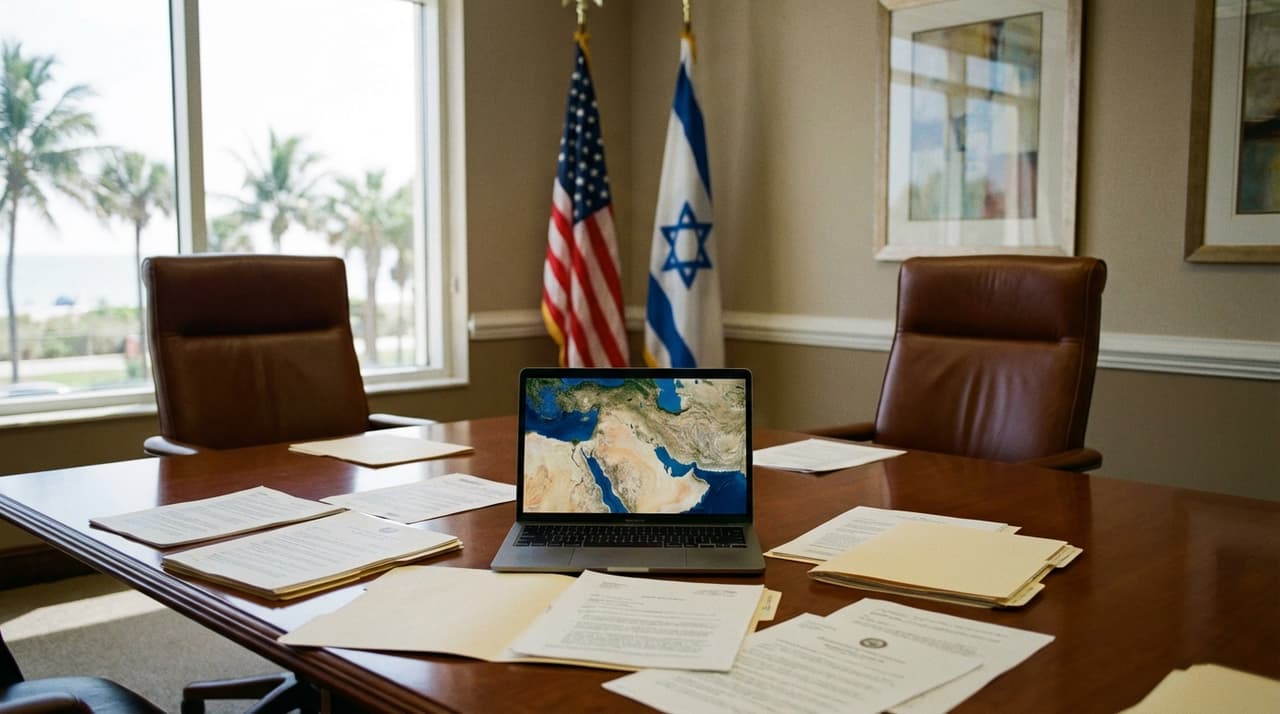
- Netanyahu and Trump will meet in Florida to address Iran's nuclear program and military capabilities, highlighting ongoing tensions and Israel's security concerns.
- U.S.-Iran nuclear negotiations, initiated in April 2025, have stalled past a 60-day deadline, with disputes over uranium enrichment and inspection mechanisms.
- Recent reports indicate Iran is rebuilding nuclear sites and advancing its ballistic missile program, with Israeli officials warning of rapid regeneration of threats.
Netanyahu and Trump Set for Critical Talks on Iran
Israeli Prime Minister Benjamin Netanyahu is scheduled to meet with President Donald Trump in Florida to discuss Iran's nuclear activities and military capabilities, according to people familiar with the matter. This meeting represents a pivotal moment in the ongoing tensions surrounding Iran's nuclear program, as both leaders navigate stalled diplomatic efforts and escalating security concerns. The discussions are expected to focus on balancing negotiation strategies with military deterrence, amid disagreements over the scope of Iran's nuclear ambitions.
Stalled Negotiations and Military Concerns
Formal nuclear negotiations between the United States and Iran began on April 12, 2025, following Trump's letter to Supreme Leader Ali Khamenei, but have hit a snag after a 60-day deadline passed without a deal being finalized. The Trump administration has demanded that Iran abandon uranium enrichment entirely—a position Khamenei rejected as "excessive and outrageous." By late May 2025, Trump indicated both sides were close to finalizing talks with strong inspection mechanisms, though Iranian officials expressed skepticism about the prospects of an imminent agreement. Netanyahu has been pressing for a harder line, with Israel pushing for complete dismantlement under U.S. supervision and zero uranium enrichment, reflecting deep-seated security anxieties.
Tensions between Trump and Netanyahu have escalated over the U.S. decision to engage in nuclear diplomacy, which Israel views as threatening its security. In May 2025, Israel was reportedly planning to strike Iranian nuclear facilities, but Trump opposed military action at that time, stating the United States would not support such strikes. Instead, Trump has shown willingness to pursue negotiations, including potential direct talks with Ayatollah Khamenei. Now, Netanyahu is preparing to brief Trump on new military options and strategies to counter Iran's perceived nuclear and missile threat, according to sources close to the discussions.
Iran's Advancing Capabilities and Regional Implications
Recent reports indicate Iran has been rebuilding its nuclear enrichment sites and advancing its ballistic missile program, with Israeli defense officials warning that without intervention, Iran's ballistic missile production could reach approximately 3,000 units annually. The International Atomic Energy Agency reported in May 2025 that Iran had amassed record amounts of military-grade enriched uranium, adding urgency to the talks. While the U.S. claims that "Operation Midnight Hammer" obliterated Iran's nuclear capabilities, Israeli officials dispute this assessment and contend that Iran's nuclear threat is rapidly regenerating.
Iran has warned that any Israeli military action would provoke a "devastating and decisive response," escalating the risk of direct conflict. The situation remains highly volatile, with the potential for either diplomatic breakthrough or military escalation depending on the outcomes of the Florida discussions. Efforts to reach out to Iranian officials for comment were unsuccessful, highlighting the sensitivity of the negotiations. As Netanyahu and Trump convene, the focus will be on whether they can bridge gaps between diplomatic engagement and military readiness, with implications for regional stability and global non-proliferation efforts.