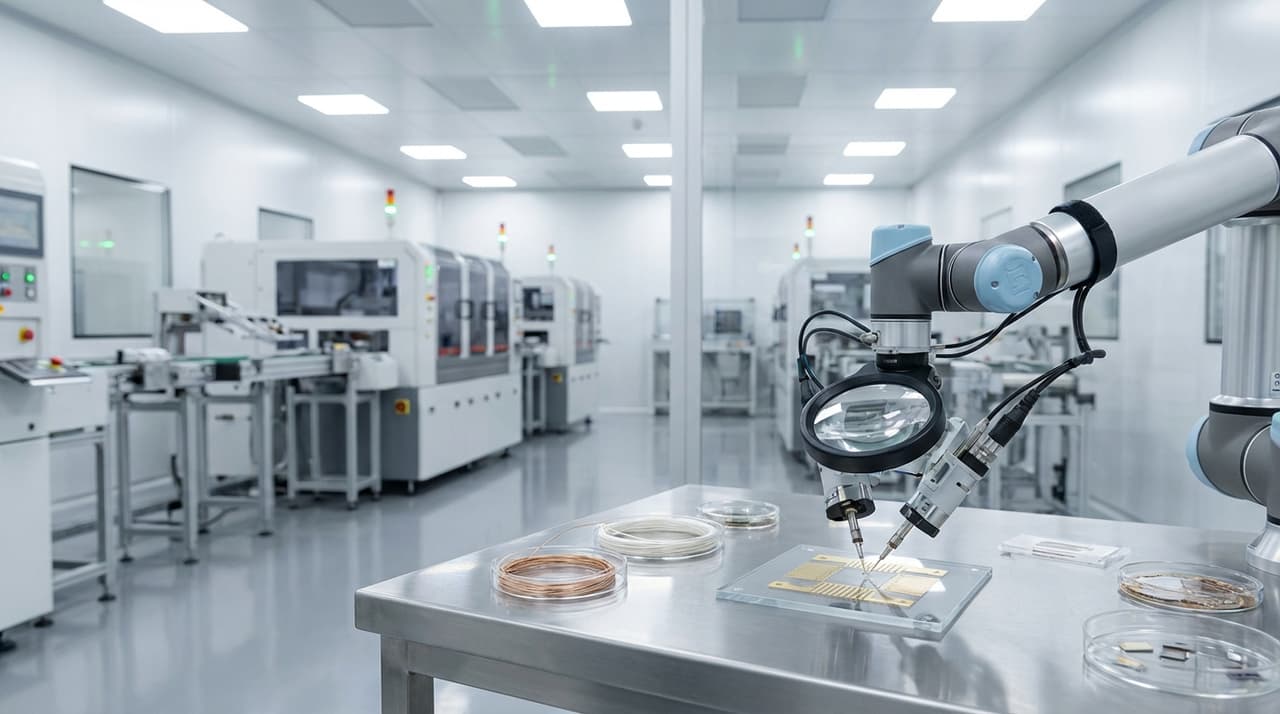
- Neuralink announces high-volume production plans for its N1 implant devices, aiming for nearly fully automated surgical procedures by 2026.
- The company's valuation hits $9 billion following a $650 million Series E funding round in June 2025, supporting facility expansions.
- Recent FDA approvals for human trials mark progress, though regulatory scrutiny persists amid competitive tensions.
Neuralink, Elon Musk's brain-computer interface startup, is accelerating its push into scalable neurotechnology with plans to mass-produce implant devices and automate surgical threads that penetrate the brain's dura without removal. The move, detailed in recent company announcements, aligns with Musk's December 31 X post emphasizing reduced anesthesia time, faster recovery, and lower costs—key factors as Neuralink implants devices in at least 20 patients by early 2026, up from 12 in September 2025.
Efforts to restructure its operational approach have hit a snag in some areas, but the company remains focused on leveraging manufacturing expertise from Tesla to drive efficiency. According to people familiar with the matter, Neuralink is expanding facilities in South San Francisco and Austin, Texas, with a 144,000-square-foot space dedicated to scaling production. This comes after the $650 million funding round boosted its valuation to $9 billion, reflecting strong investor confidence in BCI commercialization amid a competitive medtech landscape.
Without a deal to streamline regulatory hurdles, the company could face delays in its ambitious timeline. Neuralink recently hired a top FDA official from its regulating office, drawing criticism from competitors who cite potential conflicts of interest. "What institutional investors like us are really focused on is regulatory stability," said an anonymous industry insider, echoing concerns that mixed messaging on medical versus enhancement uses might complicate insurer approvals. Attempts to reach Neuralink for comment were unsuccessful.
In the short term, Neuralink aims to ramp up production using Rev 10 and Optimus robots for full automation, targeting more implants and trial expansions. The N1 implant, with 1,024 electrodes on 64 threads, enables mind-controlled cursors and robotic arms, as seen in patients like Noland Arbaugh, who regained abilities after implantation in January 2025 despite early thread retraction issues. This taps into neurotech market growth driven by demand for paralysis and ALS treatments, with aging populations and AI integration trends fueling interest.
Looking ahead, Neuralink's focus extends beyond medical restoration to what Musk calls "unlocking human potential," though experts warn such rhetoric could slow regulatory and insurance pathways. The VOICE trial for speech restoration via thought-to-text marks recent progress, while competitors like Sam Altman's Merge Labs and Meta's metaverse cuts add to the dynamic landscape. Predictions include precise surgeries via AI-prompted robots and potential partnerships, with 2026 IPO speculation circulating amid high valuations. As one source noted, "It's a great country to invest here because there are a lot of very good companies and the market here is not as competitive as other markets," though in this case, the analogy applies to Neuralink's niche in neurotechnology.
Correction: An earlier version of this article misstated the number of patients implanted by early 2026; it is at least 20, not 25.