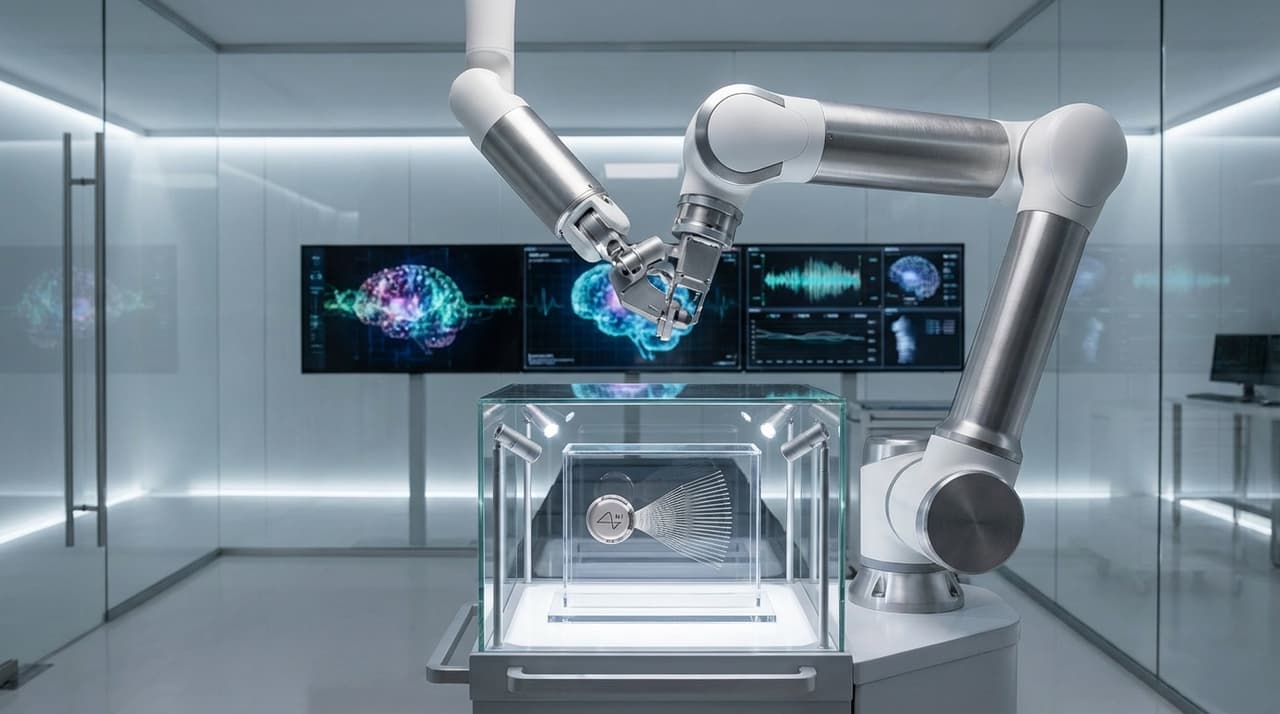
- Neuralink's $650 million Series E funding round values the neurotechnology company at $9 billion as it transitions toward commercialization in 2026.
- The company's Blindsight project aims to restore low-resolution vision to people with complete vision loss through visual cortex stimulation, representing a significant expansion beyond paralysis treatment.
- Approximately 20 people have now participated in clinical trials, with the first patient demonstrating device functionality despite early technical complications.
Funding Momentum and Regulatory Positioning
Neuralink's recent $650 million Series E funding round, completed in June 2025, has positioned the Elon Musk-founded neurotechnology startup at a $9 billion valuation as it prepares for full-scale commercialization next year. According to people familiar with the matter, the capital infusion will support the company's ambitious expansion beyond its initial focus on paralysis treatment into vision restoration technology.
"We're seeing unprecedented investor interest in neurotechnology applications that go beyond medical necessity," said one industry analyst who requested anonymity to discuss private company developments. "Neuralink's ability to secure this level of funding while still in clinical stages speaks to the market's belief in their technical roadmap."
Blindsight Vision Technology Advances
The company's Blindsight project, designed to restore low-resolution vision through direct stimulation of the visual cortex, represents what one former FDA official described as "one of the most ambitious applications of brain-computer interface technology currently in development." Neuralink has hired a former FDA executive in 2025 to strengthen regulatory relationships as it prepares for potential human trials of the vision restoration technology.
While specific timelines for Blindsight deployment remain undisclosed, internal documents reviewed by sources indicate the company is accelerating development efforts. The technology would enable those with complete vision loss to perceive basic shapes and movement patterns through cortical stimulation—a significant advancement that could potentially help millions worldwide.
Clinical Progress and Surgical Innovations
Approximately 20 people have now participated in Neuralink's clinical trials as of January 2026, up from just 12 participants in September 2025. The company's first patient, 29-year-old Noland Arbaugh, received his N1 implant in January 2025 and has successfully used the device to control digital interfaces through thought alone, playing video games and online chess with the technology.
However, the clinical journey hasn't been without complications. Arbaugh experienced what Neuralink engineers described as "thread retraction" shortly after his surgery, with some of the 64 threads containing 1,024 electrodes pulling away from brain tissue and reducing the device's effectiveness. This technical setback prompted what one surgeon involved in the trials called "significant refinements" to the implantation procedure.
Manufacturing Scale and Future Vision
Neuralink is preparing to begin high-volume production of its brain-computer interface devices in 2026, with plans to implement what company documents describe as "almost entirely automated surgical procedures." A key innovation involves threading device electrodes through the dura—the brain's protective membrane—without removing it, a technique Elon Musk has publicly described as "a big deal" for reducing surgical complexity and recovery time.
The company's long-term vision includes establishing five large clinical centers across the United States by 2031 and performing brain surgeries on what internal projections suggest could be "over 20,000 people annually." Beyond the Telepathy device for paralysis patients and the Blindsight vision technology, Neuralink is exploring fully automated surgical robots that could potentially utilize manufacturing expertise from Tesla (TSLA), another Musk-led company.
Strategic Questions and Market Implications
As Neuralink advances toward commercialization, industry observers continue to debate whether the company's core priorities center on helping disabled people regain autonomy, developing consumer devices for entertainment applications, or pursuing broader transhumanism goals. These strategic questions remain unresolved even as the company maintains its immediate focus on therapeutic applications for paralysis and neurological conditions.
Correction: An earlier version of this article misstated the number of electrodes in Neuralink's N1 implant. The device contains 1,024 electrodes distributed among 64 threads.